Special exhibition by Klaus Henning on how Münster housed its leprosy patients before and alongside the Kinderhaus leprosarium, opened on World Leprosy Day 2026. No closing date has been announced.
About the museum
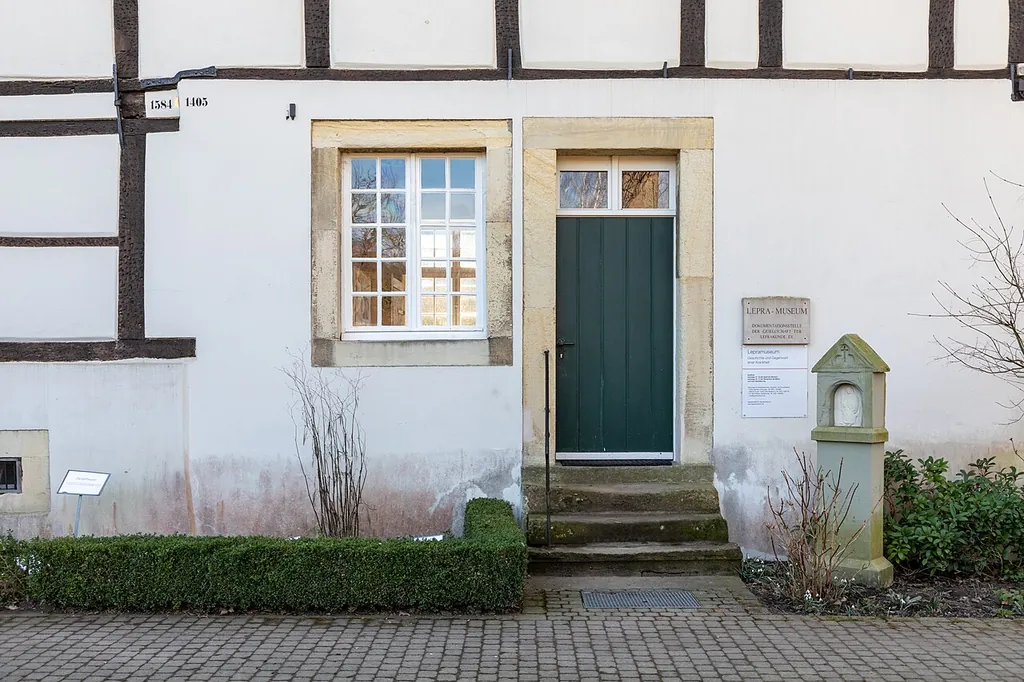
The Gesellschaft für Leprakunde (Society for Leprosy Studies) was founded in 1984 at the suggestion of the Deutsches Aussätzigen-Hilfswerk (German Leprosy Relief Association) and a local physician from Kinderhaus. The city of Münster offered it rooms on the grounds of the former municipal leprosarium. The exhibition grew out of objects from the city museum's show "Pest und Lepra in Münster"; the museum opened on World Leprosy Day in January 1986.
The location was chosen deliberately: from the 14th century onward, Münster's citizens who had leprosy lived here, a few kilometers outside the city. The name "Kinderhaus" – after the "poor children of God," as people with leprosy were called – was later adopted by the entire district. Surviving elements include parts of the hospital buildings, remnants of the enclosing wall, the former chapel (today St. Josef), the "Lazarushäuschen" (Lazarus cottage) and a well of medieval origin.
After several expansions, the exhibition was redesigned in 2013 with funding from the NRW-Stiftung and the LWL. It shows the lives of people with leprosy in Europe from the Middle Ages to the early modern period, explains medical aspects of the disease and its depiction in art, and provides information about leprosy relief today. A special exhibition opens every year on World Leprosy Day; the society also publishes the journal "Die Klapper" and has documented more than 1,100 historic leprosaria in Germany.
Highlights
The only leprosy museum in Germany
Historic site: Münster's former leprosarium (from the 14th century)
Outdoor grounds with the Lazarushäuschen, a well and the former lepers' chapel
Daily life of people with leprosy in the Middle Ages and the early modern period
Annual special exhibition for World Leprosy Day
Permanent exhibitions
Lepra in Europa – Leben am Rand der Gesellschaft – The permanent exhibition, redesigned in 2013, covers the daily life and care of people with leprosy from the Middle Ages to the early modern period, the medical background, art and leprosy relief today.
Founded
1986
Operated by
Gesellschaft für Leprakunde e.V.
Admission & discounts
Admission is free.
Children & teens
–Free admission for everyone.
Free admission to the museum. Prices for guided tours are not stated.
Accessibility
Wheelchair accessible: not available
Elevator: no information
Accessible restroom: no information
Accessible parking: no information
Service dogs welcome: no information
Tactile models & exhibits: no information
Sign language tours: no information
Easy-to-read materials: no information
Audio description: no information
Listed historic building: the entrance has four steps, and there are two steps between each of the exhibition rooms. Wheelchair users can visit only with assistance; not accessible with a power wheelchair.
Kids & families
The museum hasn’t published any information on this – please ask the museum directly.
Getting there & parking
By public transit
Kristiansandstraße · 5-min walk
Bus to Kristiansandstraße (about a 5-minute walk): line 15 from Hauptbahnhof/Altstadt (about 20 minutes), line 19 from Coerde (about 15 minutes).
The museum hasn’t published any information on this – please ask the museum directly.
Events & venue rental
The museum hasn’t published any information on this – please ask the museum directly.
Plan your visit
Guided tours
yes
School programs
yes
Good to know
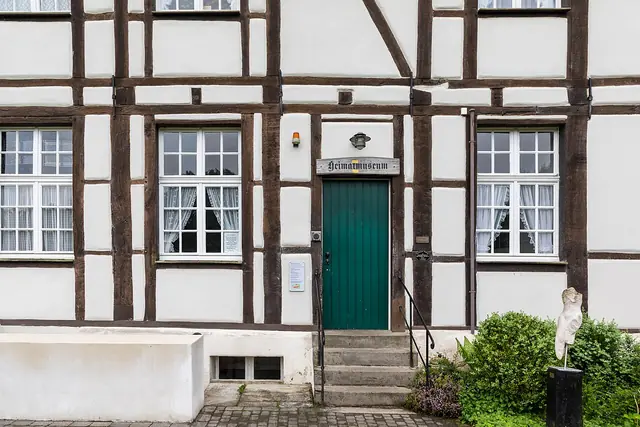
Guided tours of the museum and grounds for groups and school classes of all ages by appointment (Petra Jahnke, tel. 0251 234689, or by email); topics include the daily life of people with leprosy, the treatment of marginalized groups and the science of infection. Leaflet on the leprosarium available in German and English. The neighboring Heimatmuseum Kinderhaus (local history museum) has the same opening hours.