Cradle of the Ruhr industry: a museum in the director's house of the first ironworks in the Ruhr region, dating from 1758, with an industrial archaeology park and a blast furnace play tower.
Photo exhibition with photographs from the works photography department of the Gutehoffnungshütte: health services, housing, children's festivals and consumer facilities show how the company supplied its workforce and their families.
About the museum
In Klosterhardt, a district of Oberhausen, pig iron was first produced in the Ruhr region in 1758. St. Antony-Hütte was thus the starting point of the iron and steel industry in the Ruhr. It took almost ten years to build the ironworks, because its founder, Franz von der Wenge, had to wait so long for the permit. Well-known names later involved in the works include Gottlob Jacobi, Helene Amalie Krupp, and Franz and Gerhard Haniel.
Together with two neighboring ironworks, St. Antony-Hütte was absorbed into the Gutehoffnungshütte (GHH) group. The blast furnace was shut down in 1843. The works continued as an iron foundry for another thirty-odd years, until production was finally halted in 1877.
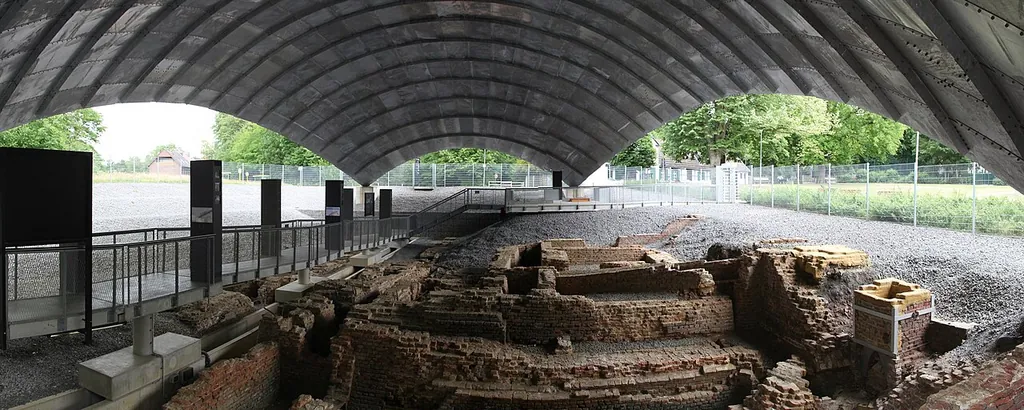
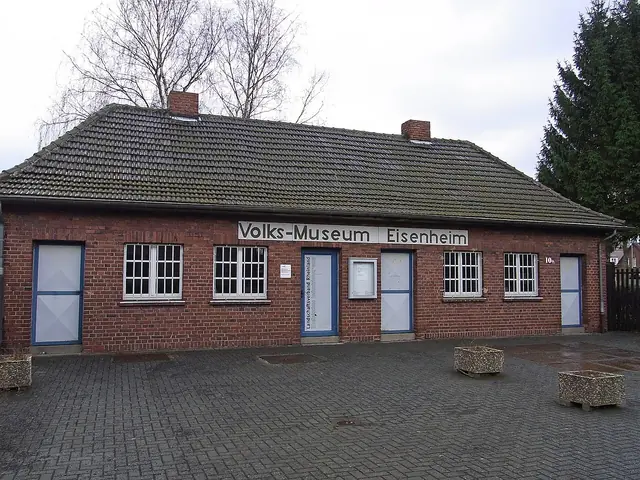
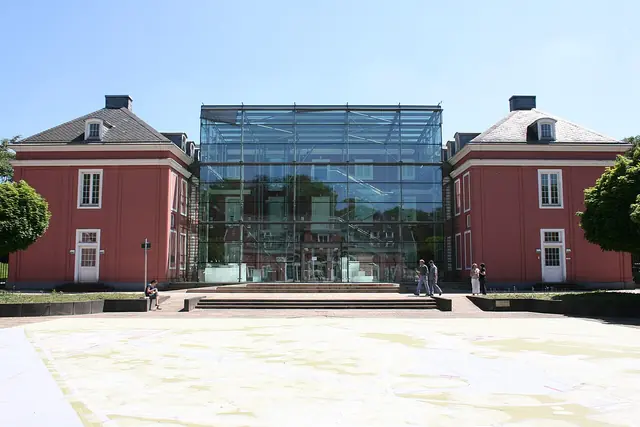
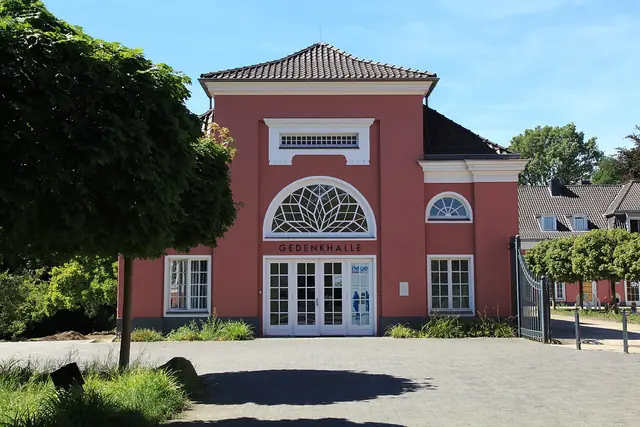
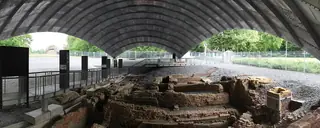
Of the works, only the director's residence has survived intact. It dates from the year the works were founded and today houses the permanent exhibition on the beginnings of iron smelting on the Ruhr. Next to it, a sail-like roof of steel shingles shelters the industrial archaeology park, where the foundations and walls of the former production site are exposed. The museum belongs to the LVR-Industriemuseum; the Museum Eisenheim is a satellite branch.
Highlights
Director's house from 1758 with a permanent exhibition on the beginnings of Ruhr industry
Industrial archaeology park under a roof of steel shingles
Multimedia animations bring the ironworks back to life
Playground with a ten-meter-high blast furnace climbing tower
Café, museum shop and St. Antony honey from the museum garden
Permanent exhibition
Wo alles begann – Dauerausstellung zur St. Antony-Hütte – In the preserved director's house, the exhibition tells the story of early iron smelting in the Ruhr region and of the people and conflicts surrounding the ironworks. The industrial archaeology park with multimedia reconstructions is part of the presentation.
Founded
2010
Operated by
Landschaftsverband Rheinland (LVR)
Admission & discounts
Adults
€6
Reduced
€5students, trainees, participants in the Federal Voluntary Service (Bundesfreiwilligendienst), people with severe disabilities, and recipients of benefits under SGB II and SGB XII
Children & teens
freefree up to age 17 · Children and young people under 18 enter free.
Visitors with disabilities
€5People with severe disabilities
Students & apprentices
€5Students, trainees and participants in the Federal Voluntary Service
Groups (10+ people)
€5.50 per personGroups of ten or more. School and day-care groups are free, including accompanying adults.
Holders of the NRW-Ehrenamtskarte
€3
Members of the Rheinischer Verein für Denkmalpflege und Landschaftsschutz
€4.50
LVR-Museumskarte (annual pass), single ticket
€50Valid for one year at all LVR and LWL museums.
LVR-Museumskarte (annual pass), partner ticket
€70
LVR-Museumskarte (annual pass) for students, trainees and participants in the Federal Voluntary Service
€15
Free admission:Admission is free for everyone on the first Friday of every month (not during events).
The ticket covers the permanent exhibition, the current special exhibition and the industrial archaeology park. Free admission is available with, among others, the RuhrTopCard and RuhrKulturCard (permanent exhibition once a year), for members of the Museumsbund and of ICOM, and with a press card. Separate prices apply to events. Payment on site in cash, by Girocard or by credit card.
Accessibility
Partially wheelchair accessible
Elevator: not available
Accessible restroom
Accessible parking
Service dogs welcome
Tactile models & exhibits
Sign language tours
Easy-to-read materials: no information
Audio description: no information
The museum is certified as "Reisen für alle" (Travel for All) and set up to be low-barrier. Mobile ramps bridge the low steps. Part of the exhibition can be reached at ground level through a second entrance, and in the half-timbered house a stair lift leads to the second floor. Wheelchairs for loan and folding seats are available. The industrial archaeology park is low-barrier. The accessible parking space is about 30 meters away. Guided tours with sign language interpretation (registration at least four weeks in advance) and tactile tours for blind visitors are available on request; a free audio guide is available against ID. No induction loop.
Kids & families
Great for kids & families
Kids’ admission
free up to age 17
Family tours & workshops
Playground / play area
Next to the museum is a playground with a ten-meter-high tower modeled on a blast furnace, with a slide, climbing walls, hanging ladders and pipe telephones. Family programs and evening events are held regularly, and guided tours are offered for children's groups and school classes.
Getting there & parking
By public transit
St. Antony-Hütte · 20 m
Bus to the stop "St. Antony-Hütte" (information from the Verkehrsverbund Rhein-Ruhr).
By car
Parking available
Marked parking spaces and parking strips along Antoniestraße. An accessible parking space is about 30 meters from the entrance.
Accessible parking
By car from the A 516 toward Arnheim, take the Sterkrade exit, then continue via Teutoburger Straße and Bockmühlenstraße to Antoniestraße. The area lies within an environmental zone (Umweltzone). Cycle route planning via the NRW cycle network.
Café with coffee specialties, cold drinks and small sweets. The museum shop sells, among other things, cast-iron pans, Solingen cutlery and St. Antony honey.
Events & venue rental
The museum hasn’t published any information on this.
Plan your visit
Guided tours
yes
Audio guide
yes
School programs
yes
Photography
Private photography and filming are allowed without tripods, art lights or flash. Selfie sticks are not permitted.
Good to know
Group tours (adults €63, children's groups and school classes €50, costumed tour "Der Hüttendirektor gibt sich die Ehre" €95, plus admission) and foreign-language tours in English and Dutch are booked through Kulturinfo Rheinland. Dogs are not allowed inside the museum; assistance dogs are welcome.