Memorial on the site of the largest concentration camp for women in the Nazi state, near Fürstenberg/Havel – grounds and exhibitions with free admission.
Limited operations (expected until 2028). The former cell block and its exhibition are closed for renovation; reopening is planned for 2028. Following a cyberattack on the foundation (August 2026), the memorial can only be reached by phone and email to a limited extent.
Outdoor exhibition presenting, at the historic locations on the grounds, the life stories of 20 women who resisted the SS in the camp in different ways. Created together with the German Resistance Memorial Center (Gedenkstätte Deutscher Widerstand).
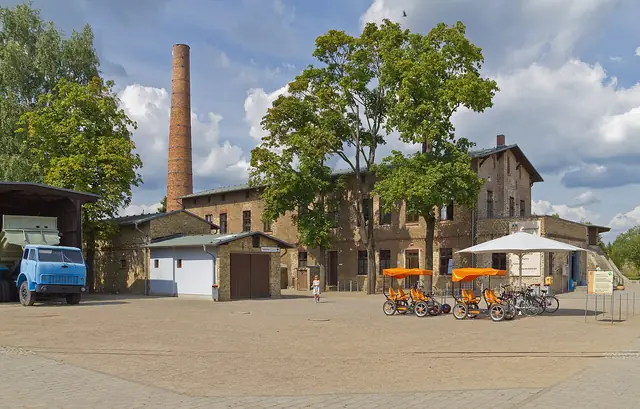
The Israeli artist uses rubbings and imprints of fallen poplars from the former camp road to question the landscape itself as a witness to history. On view in the former waterworks.
About the museum
Between 1939 and 1945, the SS ran the largest concentration camp for women in the German Reich on Lake Schwedtsee near Fürstenberg. The camp complex later also included a men's camp, the so-called Uckermark youth protection camp, and a production area of the Siemens company. By 1945, more than 120,000 women and children, around 20,000 men, and about 1,200 female adolescents from more than 30 countries had been registered; tens of thousands died from hunger, disease, medical experiments, shootings, or in the gas chamber. On April 30, 1945, the Red Army liberated the camp.
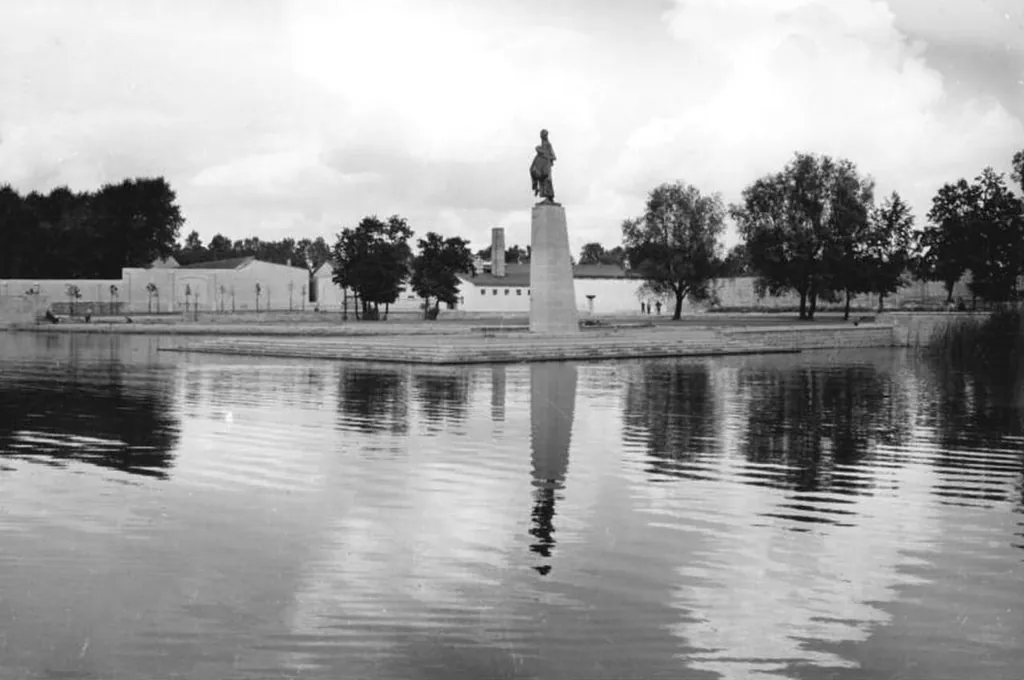
After the war, the Soviet army used large parts of the site as barracks. A memorial complex was built on the lakeshore and dedicated in September 1959 as the National Memorial (Nationale Mahn- und Gedenkstätte); Will Lammert's bronze sculpture "Tragende" (Woman Carrying) on a stele above the lake became its emblem. A first museum was set up in the former camp prison, the cell block, followed in 1984 by a larger exhibition in the former headquarters building (Kommandantur).
Since 1993, the memorial has been part of the Stiftung Brandenburgische Gedenkstätten (Brandenburg Memorials Foundation). After the troops withdrew in 1994, further parts of the historic site became accessible and were gradually opened up: a youth hostel and an international meeting center were established in the former houses of the female guards, and the visitor information center opened in 2007. Since 2013, the renovated headquarters building has housed a comprehensive permanent exhibition on the history of the camp complex and its aftermath.
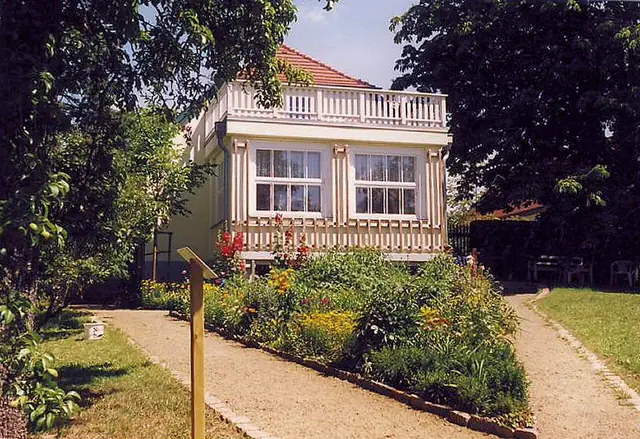
Additional exhibitions in the former commandant's house, the female guards' residence, and a hall of the former industrial yard provide information about the perpetrators and about forced labor in the SS-owned textile production. The cell block is currently being renovated.
Highlights
Permanent exhibition on the camp complex in the renovated former headquarters building
Extensive outdoor grounds with the Wall of Nations and the crematorium
Will Lammert's sculpture "Tragende" on the shore of Lake Schwedtsee
Exhibitions on female guards and SS officers in their former residences
Outdoor exhibition with biographies of 20 women in the resistance
Audio guides in five languages and an hourly film with survivors
Permanent exhibitions
Das Frauen-Konzentrationslager Ravensbrück – Geschichte und Erinnerung – Main exhibition on two floors of the former headquarters building covering the entire camp complex, including the men's camp, the Uckermark youth protection camp, the Siemens camp, and the subcamps, as well as the camp's aftermath.
„Im Gefolge der SS“ – Aufseherinnen des Frauen-Konzentrationslagers Ravensbrück – In the former residence of the female guards, this exhibition examines the backgrounds and careers of the female guard staff, violence in everyday camp life, and Ravensbrück's role as a training site for female guards.
Das »Führerhaus«: Alltag und Verbrechen der Ravensbrücker SS-Offiziere – The exhibition in the former camp commandant's house sheds light on the lives of the SS officers and their families right next to the prisoners' camp.
Founded
1959
Operated by
Stiftung Brandenburgische Gedenkstätten
Director
Andrea Genest
Visitors per year
approx. 74,000 (2025)
Admission & discounts
Admission is free.
Children & teens
–According to the memorial, the exhibitions and grounds are not suitable for children under 12; visits only recommended when accompanied by a parent or guardian.
Groups
–Free admission; group tours (up to 30 people) cost €90, or reduced (e.g., school classes, apprentices, university students) €50 in German and €90 in a foreign language. Study days per day: €140 (foreign language €160), reduced €75 (foreign language €110). Registration Tue–Fri 8:00–16:00 at +49 33093 608-185 or paedagogik@ravensbrueck.de.
Audio guide rental fee
€3Two 90-minute tours (outdoor grounds or main exhibition); deposit required.
Admission to the memorial and all exhibitions is free; donations are welcome.
Accessibility
Partially wheelchair accessible
Elevator
Accessible restroom
Accessible parking: no information
Service dogs welcome
Tactile models & exhibits: no information
Sign language tours: no information
Easy-to-read materials: no information
Audio description: no information
A historic site with listed buildings and extensive outdoor grounds; a fully accessible visit cannot be guaranteed, and bringing a companion is recommended. The main exhibition is wheelchair-accessible on all floors by elevator. Loaner wheelchair at the visitor information center; low-barrier restrooms in the visitor information center, the main exhibition, and the former garages. Animals are not allowed, except marked assistance dogs.
Kids & families
Only partly suitable for kidsRecommended for ages 12+
Family tours & workshops: not available
According to the memorial, the exhibitions and grounds are not suitable for children under 12; younger children only when accompanied by their guardians. The educational programs are aimed at young people aged 14 and up.
Getting there & parking
By public transit
Bahnhof Fürstenberg/Havel · 25-min walk
RE 5 (Berlin–Stralsund/Rostock) hourly to Fürstenberg/Havel station, then about a 25-minute walk. Alternatively, the MOHVER on-demand bus of Oberhavel Verkehrsgesellschaft to the parking lot at the visitor information center (book at least 90 minutes in advance via the OVG app or tel. 03306 2307, VBB fares). By car via the B 96, signposted from Fürstenberg.
By car
Free parking
Free parking lot at the visitor information center, which is also the stop for the on-demand bus.
There is no food service on the grounds; groups can pre-order meals at the Jugendherberge Ravensbrück (tel. +49 33093 605-90). Books are sold at the visitor information center, which also has lockers for medium-sized bags (no large luggage). Bicycle racks at the entrance; cycling and bringing bicycles onto the grounds are not permitted.
Events & venue rental
As far as we know, the museum does not rent out spaces for external events.
Memorial site; no rental for private or commercial events listed. Overnight accommodation for seminar groups is available at the youth hostel on the grounds.
Plan your visit
Guided tours
yes · approx. 2 hrs
Audio guide
yes (DE, EN, FR, NL, PL)
School programs
yes
Good to know
The two audio guide tours take 90 minutes each; for group project work, the memorial recommends at least five hours. Group tours (overview tour 120 minutes, self-guided tour, photo walk) as well as project days and seminars by advance registration only. In the former gate and guardhouse, the 30-minute film "Erinnern an Ravensbrück" (German, English, French) runs every hour. Since most of the site is outdoors, weatherproof clothing and sturdy footwear are advisable; please observe the visitor rules.