June 19, 2026 – December 6, 2026
Gabriele Stötzer: Dabei sein und nicht schweigen
The largest institutional solo show to date of the Erfurt artist, who has explored the body, gender and self-determination since the 1970s.
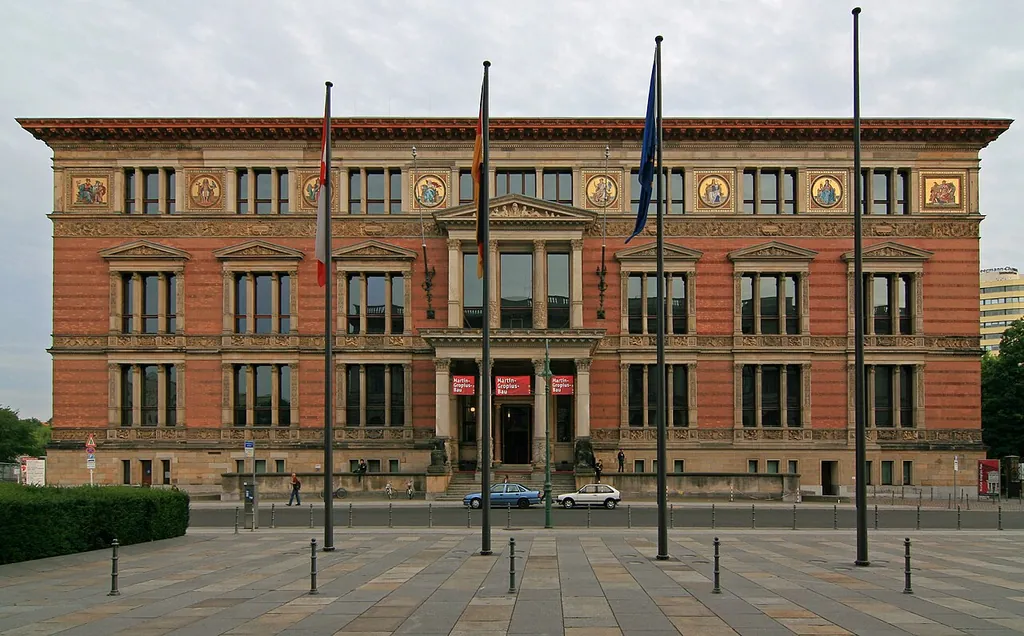
Exhibition venue of the Berliner Festspiele in Kreuzberg: major shows of contemporary art in a historic 1881 building with a glass-roofed atrium.
June 19, 2026 – December 6, 2026
The largest institutional solo show to date of the Erfurt artist, who has explored the body, gender and self-determination since the 1970s.
September 10, 2026 – January 17, 2027
A group exhibition with around 130 works on labor migration, housing, exclusion and solidarity in the district around the Gropius Bau.
October 9, 2026 – January 17, 2027
An overview of Schlingensief's cross-disciplinary work spanning political action, theater, opera, film and the visual arts.
Special exhibition
An adapted version of Holzinger's project for the Austrian Pavilion at the 2026 Venice Biennale, planned for spring 2027.
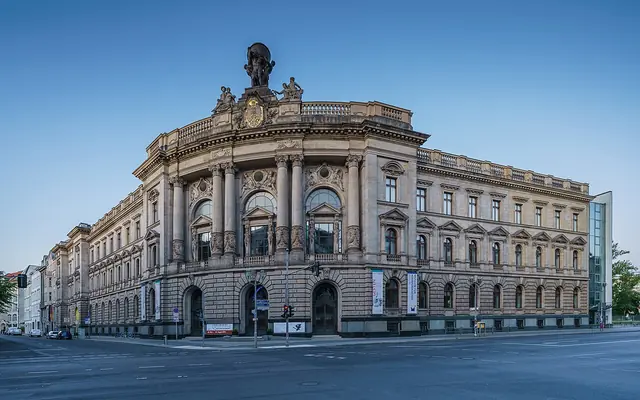
The building was designed by Martin Gropius and Heino Schmieden and opened in 1881 as the Kunstgewerbemuseum (Museum of Decorative Arts) with an affiliated teaching institution. Alongside the collection of European crafts and an art library, it housed classrooms and studios; the glass-roofed atrium formed the heart of the building.
During World War II, the building was gutted by fire, and the roof, upper floors and parts of the facades were destroyed. For decades afterward, the ruin stood directly beside the Berlin Wall. Walter Gropius, the builder's great-nephew, was among those who prevented a planned demolition; in 1966 the building was placed under heritage protection.
From 1978, Winnetou Kampmann and Ute Weström rebuilt the building, deliberately leaving traces of the war visible. Because of the Wall, the entrance was initially on the south side; the main portal on Niederkirchnerstraße was only reopened in 1999. Since its reopening in the 1980s, the building has served as an exhibition venue without a collection of its own.
Since 2001, the Gropius Bau has been part of the Berliner Festspiele. It shows changing exhibitions by contemporary artists, runs a residency program with studios on the second floor and, recently, the free children's play space BAUBAU.
| Adults | €15 |
|---|---|
| Reduced | €10University students, trainees aged 18 and over, volunteers, recipients of ALG I (unemployment benefit), retirees, people with severe disabilities (degree of disability 50 or higher) |
| Children & teens | freefree up to age 17 · Children and teens free until their 18th birthday; BAUBAU play space free. |
| Seniors | €10Reduced admission for retirees. |
| Visitors with disabilities | €10companion free · Reduced from degree of disability 50; a companion registered on the ID card is admitted free. |
| Students & apprentices | €10Student groups of 5 or more €5 per person. |
| Groups | –Group tours (60 minutes, German or English) €90, school classes €75; workshops for school classes (120 minutes) €140; booking through Museumsdienst Berlin. |
| BAUBAU – play space for children (timed-entry ticket) | freeFree; time slots are released on Mondays at 12:00 for the week, with limited places for walk-in visits. |
One ticket is valid for all current exhibitions (as of September 2026: Gabriele Stötzer and Kreuzberg). Until September 30, 2026, Kreuzberg residents pay the reduced price. Free admission for groups including recipients of social assistance/Bürgergeld (citizen's income), the press and members of ICOM, IGBK, CiMAM, BBK and the Deutscher Museumsbund. Prices may vary depending on the exhibition program.
Accessible entrance to the left of the main entrance; all three exhibition floors are accessible. Loan wheelchairs and portable stools at the coat check. Accessible restrooms on the 1st floor, all-gender restroom in the basement. Six accessible parking spaces in the building's parking lot, one on Niederkirchnerstraße. Visual story to help prepare your visit, website section in Leichte Sprache (Easy German). Contact: inclusion@gropiusbau.de.
Great for kids & families
| Kids’ admission | free up to age 17 |
|---|
Free children's play space BAUBAU on the ground floor (atrium) for children accompanied by an adult, supervised by playworkers; timed-entry ticket recommended, with a stroller check there as well. The accessible entrance to the left of the main entrance is suitable for strollers.
U2 Potsdamer Platz, U6 Kochstraße; S1, S2, S25 Potsdamer Platz or Anhalter Bahnhof; bus M29 (Anhalter Bahnhof), M41 (Abgeordnetenhaus)
Paid parking
A limited number of public spaces in the building's own parking lot on the west side (Stresemannstraße 110, corner of Niederkirchnerstraße), €2.50 per hour or €40 per day, card payment only; six accessible parking spaces, one more on Niederkirchnerstraße.
Restaurant Beba (Jewish-inspired cuisine, coffee, pastries; brunch on weekends). Walther König bookshop.
Available for receptions, dinners, conferences, talks, film screenings and readings; contact via the marketing department (tel. 030 25486-123). Private dinners can also be arranged through Restaurant Beba.
Inquiries & details| Guided tours | yes · approx. 60 min |
|---|---|
| School programs | yes |
| Good to know | Guided tours of the exhibitions and of the building, its architecture and history can be booked through Museumsdienst Berlin. Regular evening program "Spätschicht" (late shift) and other events. |
Cookies help you use this website. We only load the map and statistics with your consent.