July 29, 2026 – April 25, 2027
Die Berge Tirols
Covering about 300 m², this exhibition explores people's relationships with the Tyrolean mountains, from alpine farming to tourism and climate change, with hands-on stations for families.
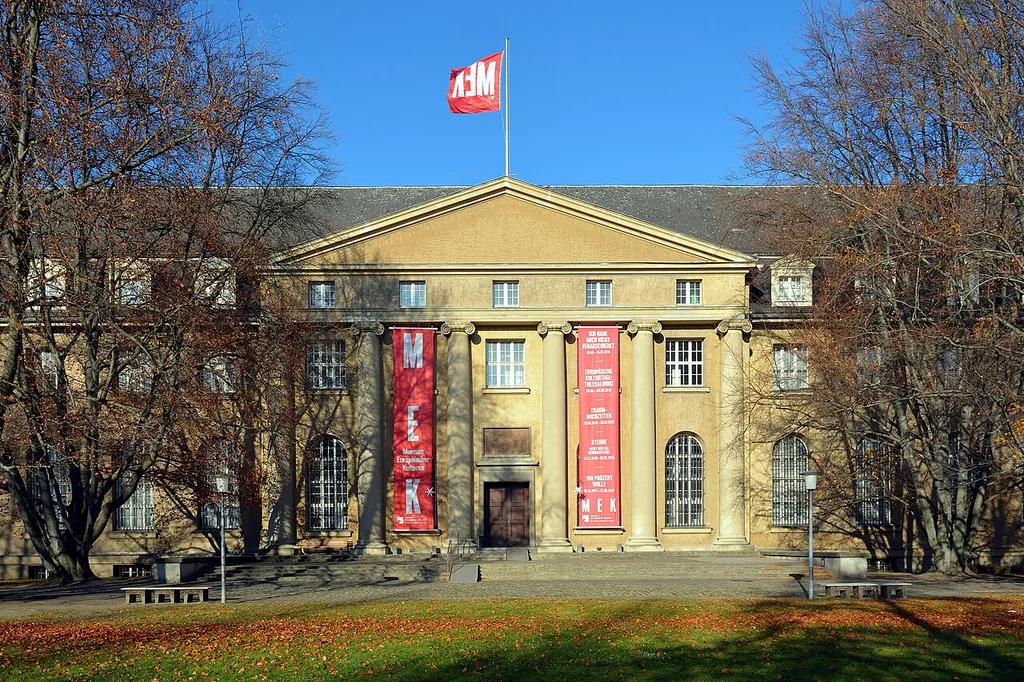
Museum of the Staatliche Museen zu Berlin in Dahlem, devoted to everyday cultures and ways of life in Europe from the 18th century to the present.
July 29, 2026 – April 25, 2027
Covering about 300 m², this exhibition explores people's relationships with the Tyrolean mountains, from alpine farming to tourism and climate change, with hands-on stations for families.
April 24, 2026 – March 29, 2027
Guest exhibition from the Donauschwäbisches Zentralmuseum Ulm that uses traditional dress and photographs to tell the life stories of Danube Swabian women.
The Museum Europäischer Kulturen (Museum of European Cultures) was created in 1999 when the European collection of the former Museum für Völkerkunde (ethnology museum) was merged with the holdings of the Museum für Volkskunde (folklore museum). Its roots go back to 1889, when the Museum für deutsche Volkstrachten und Erzeugnisse des Hausgewerbes was founded on the private initiative of Rudolf Virchow. Germany's first central folklore museum, it became part of the Royal Prussian Museums in 1904.
Most of the folklore collection was destroyed in World War II. After 1949 the holdings were divided: in the East, a Museum für Volkskunde was established on Museum Island; in the West, the collection was initially looked after by the Museum für Völkerkunde and, from 1963, run again as a separate Museum für Deutsche Volkskunde in Dahlem. The two parts were reunited in 1992.
With its refounding in 1999, the museum adopted a comparative, European perspective on everyday culture. Since 2011 it has presented the collection exhibition "Kulturkontakte. Leben in Europa" (Cultural Contacts: Living in Europe) in the Bruno-Paul-Bau on Arnimallee. Since the Ethnologisches Museum and the Museum für Asiatische Kunst moved to the Humboldt Forum, the MEK has been the only museum open to the public at the Dahlem site since 2017. Annual events such as the Europäische Kulturtage (European Culture Days), the Textile Day, and the Fête de la Musique complement the exhibitions.
| Adults | €10 |
|---|---|
| Reduced | €5Pupils, trainees, students, volunteer service participants, job seekers receiving unemployment benefit (ALG I), and people with severe disabilities with a disability rating (GdB) of 50 or more (proof required in each case) |
| Children & teens | freefree up to age 17 · Children and young people under 18 get free admission. |
| Seniors | –No senior discount. |
| Visitors with disabilities | €5companion free · Reduced with a disability rating (GdB) of 50 or more; a companion whose need is medically recognized and noted on the ID is admitted free. |
| Students & apprentices | €5Free admission for registered university courses and school class visits. |
| Groups | –Bookable guided tours (60 minutes) for groups through the Staatliche Museen info service. |
| Families | –No family ticket; admission is free for under-18s. |
| Museumspass Berlin (3 days, permanent exhibitions) | €32reduced €16 |
Day ticket ("Museumskarte"), available on site or online; advance sales open four weeks ahead. Free admission for, among others, recipients of Bürgergeld (basic income support), housing benefit, basic social security, or benefits under the Asylum Seekers' Benefits Act, ICOM/Museumsbund members, members of the friends' association, and press. Annual passes of the Staatliche Museen are valid depending on pass type.
According to the museum, only partially accessible: the main entrance and permanent exhibition are reached via ramps; the Christmas mountain, special exhibition area, and café via stair lifts (assistance through the ticket desk, tel. 030 8301429). Loaner wheelchairs, buggies, and folding chairs in the foyer. Accessible, gender-neutral restroom with baby changing table, reached by ramp. No tactile guidance system, no Braille texts, and no sign language offerings; listening stations and some tactile exhibits. Videos in the permanent exhibition mostly have German subtitles.
Great for kids & families
| Kids’ admission | free up to age 17 |
|---|
Open workshops and activities for families, plus programs for children aged 6 to 12. Baby changing facilities in the accessible restroom.
U Dahlem-Dorf · 400 m
U3 to Dahlem-Dorf (approx. 400 m; elevator at the far end of the station toward Fabeckstraße); bus 101 to Limonenstraße and X83 to Arnimallee (approx. 500–600 m).
No on-site parking at the museum.
The museum has no parking of its own.
Museum café KAFFEE! (also accessible from Arnimallee 23), Thu/Fri 12:00–17:00, Sat/Sun 12:00–18:00; according to the accessibility page, currently open only irregularly. Restaurant eß kultur at Takustraße 38–40 (Mon–Fri 10:00–16:00).
The museum hasn’t published any information on this – please ask the museum directly.
| Guided tours | yes |
|---|---|
| Audio guide | yes (DE, EN) |
| School programs | yes |
| Good to know | Audio guide (German/English) only for the special exhibition "Die Berge Tirols"; there are no audio guides for the other exhibitions. Public guided tours, curator tours, and bookable tours and workshops for schools and daycare centers. |
Cookies help you use this website. We only load the map and statistics with your consent.