Deutsches Blinden-Museum
Museum on the history of education for blind people and Braille in Berlin-Steglitz, currently closed for accessibility renovations.
About the museum
The museum was founded in 1890 at the Royal Institution for the Blind in Steglitz on the initiative of its director, Karl Wulff, making it one of the oldest collections on the history of blind people in Germany. In 1906 it moved into a building of its own with more than 250 square meters of exhibition space; in 1939 it was renamed "Museum für Blindenwesen".
Air raids and fighting between 1943 and 1945 cost part of the holdings, but most of the library and archive survived. After the war the building was assigned to the school, and the objects were stored for years in poor conditions. The collection went back on display for the 1956 congress of teachers of the blind, but in 1971 the exhibition had to make way again because the neighboring high school needed the rooms.
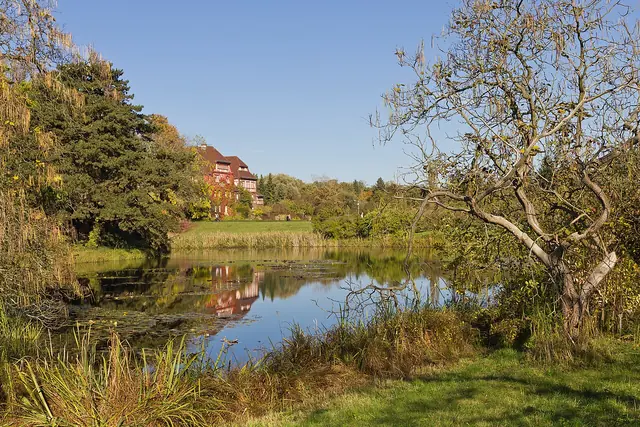
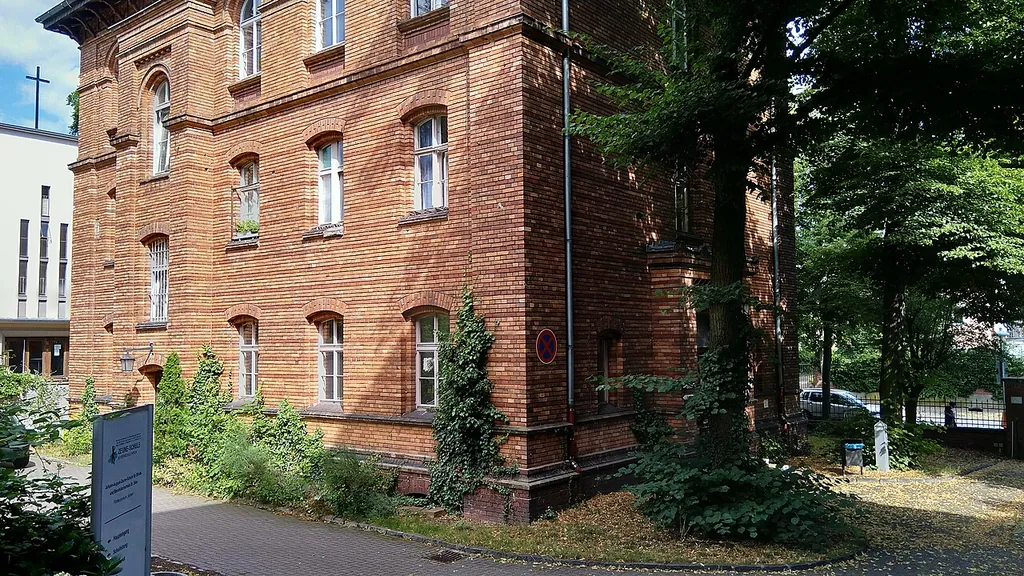
Since 1983 the museum has been housed in the former director's apartment on the third floor of a building on the grounds of today's Johann-August-Zeune-Schule. A friends' association founded in 1986 runs the museum without public funding; in 2005 the museum and the association received their current names.
Since 2010 the permanent exhibition "Sechs Richtige" (Six Right Ones) has shown how Louis Braille invented his raised-dot script and how it changed the education, working lives and everyday lives of blind people. The collection also includes assistive devices, typewriters, teaching materials and a not yet fully cataloged archive of historical Braille literature. The museum is currently closed for lengthy accessibility renovations.
Highlights
- Permanent exhibition "Sechs Richtige" on Louis Braille and his raised-dot script
- Hands-on stations for exploring scripts by touch
- Historic Braille typewriters and everyday aids
- Early embossed scripts from the 18th and 19th centuries
- Archive and library with historical Braille literature
Permanent exhibitions
- Sechs Richtige – Louis Braille und die Blindenschrift – Five themed sections cover the story from early embossed scripts to Braille's six-dot system and Braille in school, work and everyday life. Many stations invite visitors to touch and try things out.
- Founded
- 1890
- Operated by
- Förderverein des Deutschen Blinden-Museums e. V.
Admission & discounts
The museum hasn’t published any information on this – please ask the museum directly.
Accessibility
- Wheelchair accessible: no information
- Elevator: no information
- Accessible restroom: no information
- Accessible parking: no information
- Service dogs welcome: no information
- Tactile models & exhibits
- Sign language tours: no information
- Easy-to-read materials: no information
- Audio description: no information
The exhibition is on the third floor; the building is currently being renovated for accessibility. The website offers directions for blind and for sighted visitors as well as exhibition texts in Leichte Sprache (easy-to-read German).
Kids & families
The museum hasn’t published any information on this – please ask the museum directly.
Getting there & parking
By public transit
Rathaus Steglitz
S1 and U9 to Rathaus Steglitz (subway exit Grunewaldstraße/Schloßparktheater); buses M48, M82, M85, 170, 186, 188, 282, 283, 284, 285, 380 and X83 to Rathaus Steglitz. From there, via Schloßstraße and Grunewaldstraße to Rothenburgstraße.
The museum offers detailed directions for blind people (Word file) and for sighted people (PDF) to download. Entrance via the grounds of the Johann-August-Zeune-Schule, exhibition on the third floor.
Get directionsAmenities & dining
The museum hasn’t published any information on this – please ask the museum directly.
Events & venue rental
The museum hasn’t published any information on this – please ask the museum directly.
Plan your visit
| Good to know | The archive and library can be consulted on site by prior appointment. |
|---|