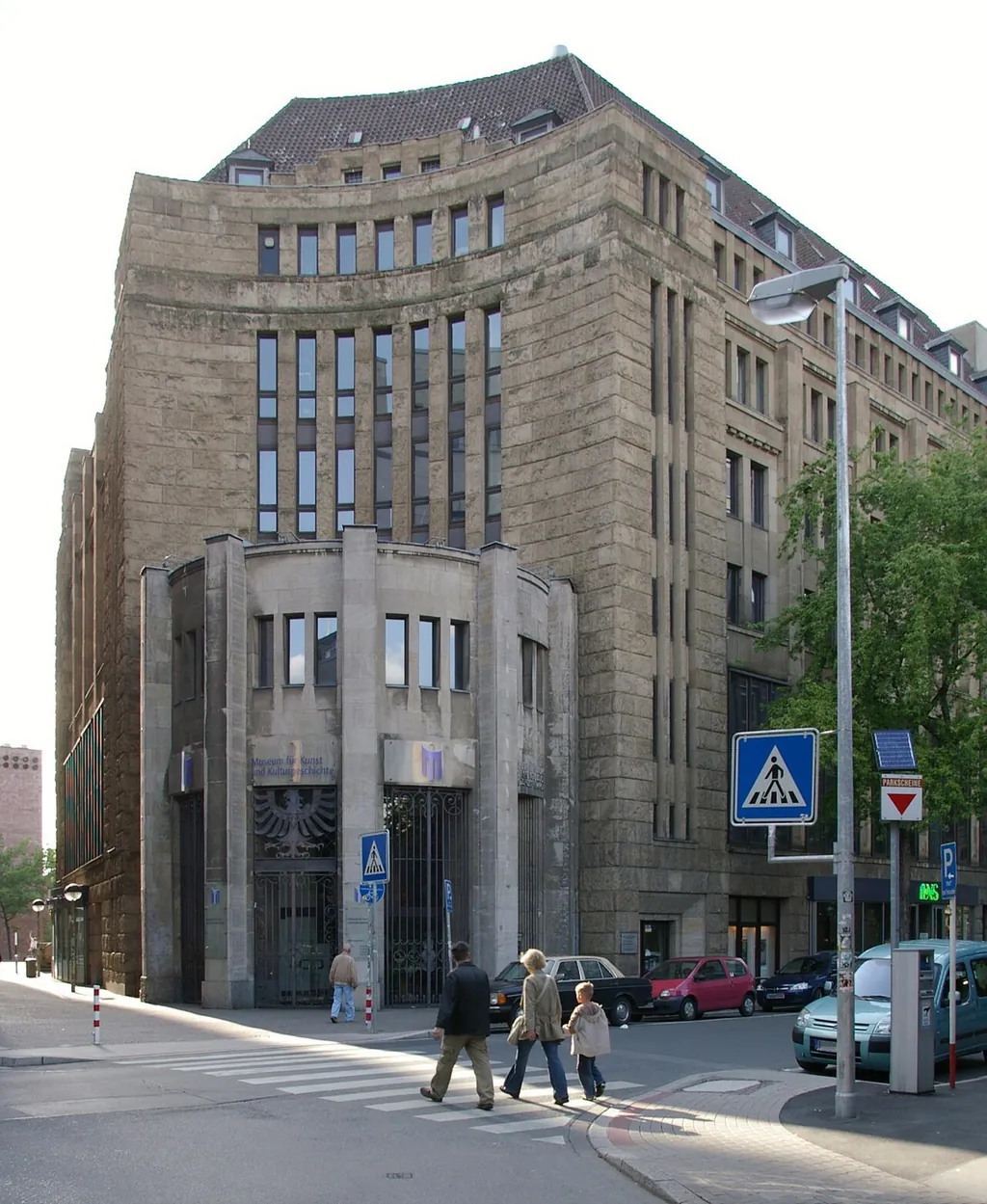
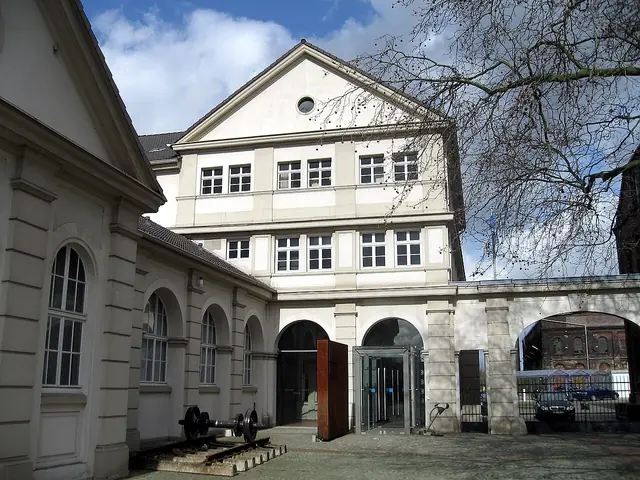
The Ruhr region's oldest museum of cultural history, housed in the Art Deco building of the former municipal savings bank – currently under renovation, with free special exhibitions.
Limited operations. Because of the building's renovation, the permanent exhibition is no longer accessible; special exhibitions, the STADT_RAUM, workshops and events continue. The entrance is currently on Platz von Amiens. Renovation and redesign are expected to take about five to six years.
Major exhibition drawn mostly from the museum's own collection about the things we surround ourselves with, and what possessions reveal about status, desires and habits. Accompanied by the website konsum-mkk.de.
Participatory companion exhibition to KONSUM: residents of Dortmund present personal objects and the stories of origin, arrival and belonging behind them.
In the STADT_RAUM, artist Susanne Keichel explores social inequality in school and work as well as migration in a globalized world.
About the museum
At the suggestion of the educator Eduard Roese, Dortmund's city council decided in 1883 to found a municipal museum to collect historical and artistic testimonies of the city. It was the first museum of its kind in the Ruhr region and moved several times over the following decades, including into the former Oberbergamt (mining authority) on Ostwall and, for a time, into the former Reichsbank building on Königswall. Under its first director, Albert Baum, a wide-ranging collection was built up.
During the Nazi era, in 1937, the museum lost numerous modernist works that were confiscated as "degenerate." Because of the air raids in World War II, the holdings were moved to Schloss Cappenberg, where the museum maintained a presence for decades.
For its 100th anniversary, in November 1983, the museum moved into the former Städtische Sparkasse (municipal savings bank) on Hansastraße, a listed Art Deco building designed by Hugo Steinbach in 1924. Spread over several floors, it presented cultural history from prehistory to the 20th century – with painting and sculpture up to 1900, furniture, decorative arts and design, prints and drawings, photography, textiles, city history, archaeology and the history of surveying.
Since 2025 the building has been undergoing renovation in stages; the permanent exhibition is no longer accessible and is to be completely redesigned. The museum remains open, however, and shows special exhibitions from its own collection as well as projects in the STADT_RAUM. The new director is art historian Tanja Pirsig-Marshall.
Highlights
Listed Art Deco building of the former municipal savings bank (1924, Hugo Steinbach)
Collection spanning prehistory to 20th-century design
Terrestrial globe by Gerhard Mercator (1541) and a collection on the history of surveying
Special exhibition KONSUM featuring objects from the museum's own collection
STADT_RAUM for city history, debates and participatory projects
Free admission to special exhibitions and the STADT_RAUM.
Accessibility
Wheelchair accessible
Elevator
Accessible restroom: no information
Accessible parking
Service dogs welcome: no information
Tactile models & exhibits: no information
Sign language tours: no information
Easy-to-read materials: no information
Audio description: no information
The special exhibition areas and the STADT_RAUM are on the first floor and accessible; upper floors by elevator. Accessible parking spaces on Hansastraße. Seating and folding stools available.
Kids & families
Great for kids & families
Family tours & workshops
Stroller-friendly
Kids’ birthday parties
Family workshop every second Sunday of the month 14:00–17:00 for children ages 6 and up with a companion (no registration, free). Creative workshops and children's birthday parties for ages 5 or 8 and up (2 hours, extendable). Permanent exhibition reachable with strollers via elevator.
Getting there & parking
By public transit
Kampstraße
Subway stop Kampstraße (U41, U43, U44, U45, U47, U49) or Reinoldikirche (U42, U46); a few minutes from the main station.
By car
Parking available
Parking garage Freistuhl directly beneath the museum, more parking garages nearby. Public accessible parking spaces on Hansastraße.
No café and no museum shop; catalogs at the information desk. Free coat check (mandatory for jackets, bags larger than A4, backpacks, umbrellas). Freifunk Wi-Fi.
Events & venue rental
The museum hasn’t published any information on this – please ask the museum directly.
Plan your visit
Guided tours
yes
Audio guide
no
School programs
yes
Photography
Allowed for private use without flash or tripod; commercial photography only with written permission.
Good to know
Public guided tours without registration (e.g., textile tour every 3rd Sunday of the month at 14:00). Group tours at info.mkk@stadtdo.de or +49 231 50-26028. Eating and drinking are not allowed in the exhibitions.