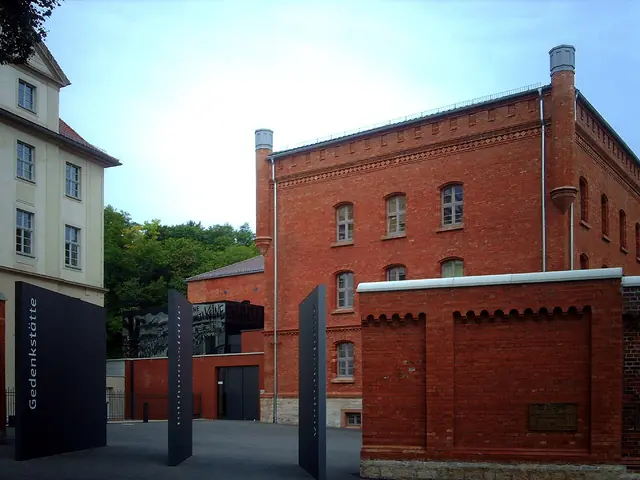
Photographs by Karen Weinert and Thomas Bachler from a research project on small erotic shops in provincial eastern Germany and the paths their owners have taken since 1989.
About the museum
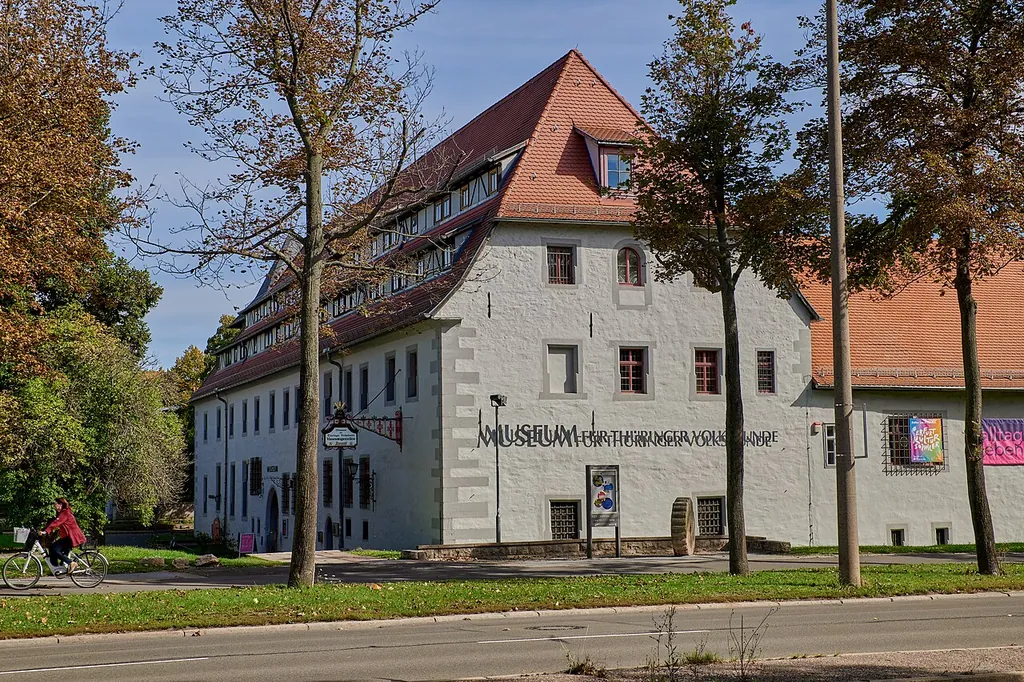
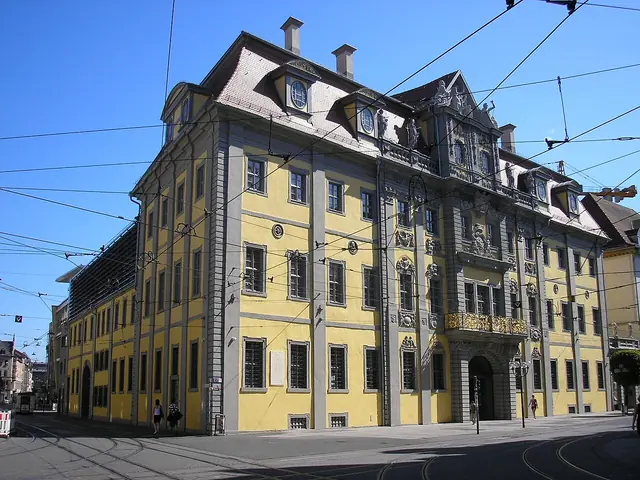
The museum is located in the main building of the former Großes Hospital (Great Hospital) on today's Juri-Gagarin-Ring, a listed ensemble of buildings on the edge of Erfurt's old town. Its holdings go back to the folk life collections of the municipal museum, which at the time was combined in the Angermuseum.
The Museum für Thüringer Volkskunde (Museum of Thuringian Folk Life) opened on July 31, 1955, as a department of the Angermuseum. Initially the displays were dominated by a costume hall and re-created rural workshops. In 1966 Wilhelm Knappe's South Seas collection, assembled in the 1880s, was shown for the first time.
Egon Henning directed the museum from 1969 to 1993, followed by Marina Moritz until 2019. The collections have grown steadily since the 1970s; from 1997 onward, visible storage areas were created for historic textiles and for ceramics and porcelain. The building was renovated in stages, for example the facade in 2010/11 and a section affected by dry rot in 2013/14.
Today the museum is considered one of the largest folk life museums in Germany. The permanent exhibition sheds light on rural everyday life in 19th-century Thuringia without romanticizing or belittling it. It is complemented by displays on traditional costumes, painted furniture and traditional crafts such as glassblowing, mask making and wooden toy making.
Highlights
Permanent exhibition "Erfahren. Verändern. Beharren." (Experience. Change. Persist.) on Thuringian village life in the 19th century
Thuringian traditional costumes and virtual costume mannequins
Painted rural furniture
Historic workshops of a glassblower, mask maker and wooden toy maker
Visible storage areas, including Wilhelm Knappe's South Seas collection (on request)
Permanent exhibitions
Erfahren. Verändern. Beharren. Dorfleben im 19. Jahrhundert – Shows housing, work, family fortunes and technological change in rural 19th-century Thuringia – beyond both idyll and the cliché of backwardness.
Alles Tracht? Ländliche Kleidung im 19. und beginnenden 20. Jahrhundert – A presentation of rural clothing from Thuringia that asks what actually counts as traditional costume.
Historische Werkstätten: Maskenmacher, Glasbläser, Holzspielzeugmacher – Furnished workshops illustrate traditional Thuringian crafts and how they were practiced.
Founded
1955
Operated by
Landeshauptstadt Erfurt
Admission & discounts
Adults
€6
Reduced
€4Children of school age, trainees/apprentices, university students, retirees, people with disabilities, holders of the Erfurter Sozialausweis (social benefits ID), members of the Verband Bildender Künstler Thüringen (association of visual artists) (proof required in each case)
Children & teens
€4free up to age 5 · Children under 6 free (according to the museum website; the municipal fee schedule says "up to 6 years"). Children of school age pay the reduced price; school classes and kindergarten groups free Tue–Fri.
Seniors
€4Reduced for retirees.
Visitors with disabilities
€4companion free · Reduced; companions of people with disabilities free.
Students & apprentices
€4Reduced.
Groups (10+ people)
€3 per personGroups of 10 or more €3 per person; guided tours up to 60 min. €40, up to 90 min. €60, plus €3 admission per person.
Families
€13Max. 2 adults and 5 children/young people up to age 18.
Free admission:Every 1st Tuesday of the month and on Tag des offenen Denkmals (Heritage Open Day); according to the city, on days of 30 °C or more at all municipal museums
Prices for the permanent exhibitions according to the museum website. According to the municipal fee schedule, free admission for, among others, school classes from general education schools, companions of people with disabilities, holders of the Erfurt-Card, Thüringen-Card, Familienpass (family pass) and Ehrenamtscard (volunteer card), and members of ICOM, DMB and MVT. According to the fee schedule, audio and video guides are included in admission.
Accessibility
Wheelchair accessible: not available
Elevator: not available
Accessible restroom: no information
Accessible parking: no information
Service dogs welcome: no information
Tactile models & exhibits: no information
Sign language tours: no information
Easy-to-read materials: no information
Audio description: no information
Level access to the main entrance, then two steps to the ticket desk and three more to the exhibition rooms on the first floor. The historic elevator (built in 1910) may not be used by passengers. Visitors with limited mobility can get assistance on request.
Kids & families
Great for kids & families
Kids’ admission
free up to age 5
Family ticket
€13 · Max. 2 adults and 5 children/young people up to age 18.
Family tours & workshops
Museum education workshops (paper, historical writing with slate and quill, printing, wash day) for groups ages 9 and up or 3rd grade, about 2 hours, registration 2–3 weeks in advance.
Getting there & parking
By public transit
Krämpfertor
Light rail line 2 to Krämpfertor, lines 1 and 5 to Stadtmuseum/Kaisersaal
By car
Parking available
Parkhaus Anger.
By car via the A4, exit Erfurt-West, toward the city center. About a 5-minute walk from the Anger.
The museum hasn’t published any information on this – please ask the museum directly.
Plan your visit
Guided tours
yes
Audio guide
yes
School programs
yes
Good to know
Audio guide for the permanent exhibition "Dorfleben im 19. Jahrhundert" (Village Life in the 19th Century). Guided tours and educational programs by advance booking; visible storage areas (South Seas collection, historic textiles, ceramics and porcelain) on request.