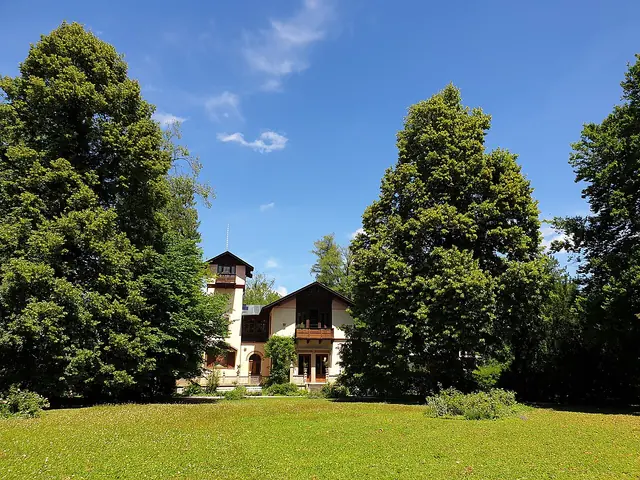
The exhibition presents Rupprecht Geiger as an architect: five houses he designed between 1950 and 1962 are shown with photographs, documents and plans, accompanied by paintings from the period in which they were created.
Light installation by Luisa Baldhuber in the chamber of the Lochmannhaus, made from digitally edited photographs of the Starnberger See; for the opening, live sound work by Ophelia Flassig. Part of the Kammerspiel series (next opening 12 November 2026).
About the museum
The museum arose from civic engagement: as the "Museum für den Würmseegau," it was intended to preserve the cultural and art-historical heritage of the region around the lake. In 1912 the initiators acquired the Lochmannhaus at the city's expense, and in 1913 a museum association was founded as the operator. King Ludwig III attended the opening on July 9, 1914 with his family; the ash tree planted in the inner courtyard at that time still stands today. During the Nazi era the association was dissolved and the operation passed to the city, where it has remained.
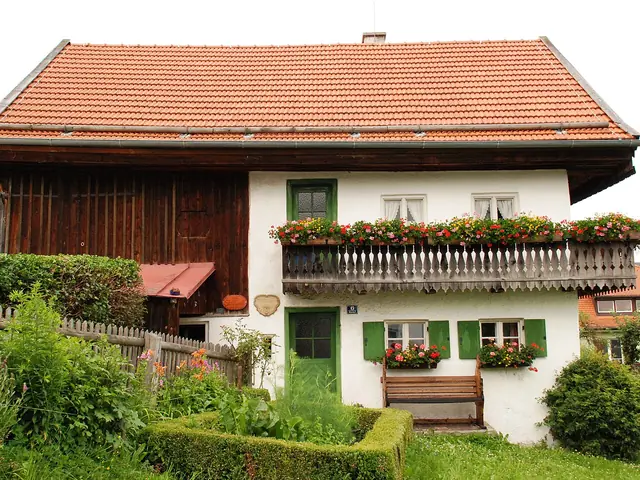
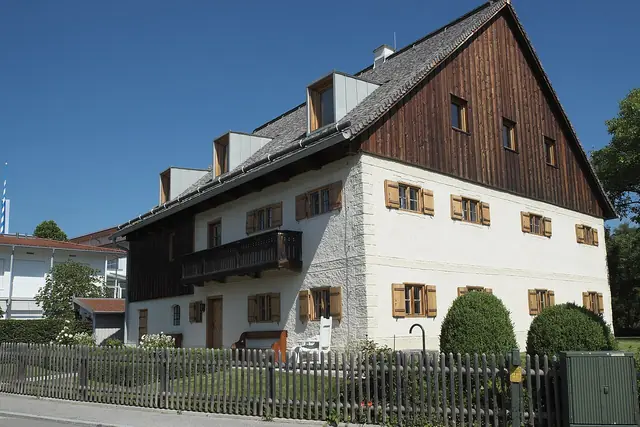
The Lochmannhaus is both a building and the most important exhibit. Its wood paneling on the upper floor dates from around 1520, and its present form goes back to a conversion around 1691/93. Its dual use is unusual: a fishing and farming family lived below, while the stately upper floor served the manorial lords as a pied-à-terre. After renovation, the house reopened in 1985 as a local history museum.
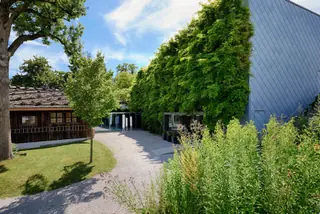
Since 2008 a modern new building by the architects Guggenbichler & Netzer has complemented the ensemble, and the museum has borne its present name. There the permanent exhibition tells of dugout canoes, the lavish court navigation of the Wittelsbachs, railways, steamships, and villa colonies. The centerpiece is the Delphin, the last surviving boat of the royal fleet. The collection comprises over 6,000 objects, including the Rococo figure of the Starnberger Heilige by Ignaz Günther (1755) and a map of Bavaria by Philipp Apian.
Highlights
Lochmannhaus with parlors and paneling from the 16th and 17th centuries
Gondola ship Delphin, last surviving boat of the royal fleet
Starnberger Heilige by Ignaz Günther (1755)
Model of the state barge Bucentaur
Museum and garden café
Permanent exhibitions
Höfische Schifffahrt und Seegeschichte – Tour through the new building from dugout canoes and fishing to the state barges of the Wittelsbachs, railways, steamships, and villa colonies, with the gondola ship Delphin at its center.
Lochmannhaus – The historic fishing and farming house with a stately upper floor, an old kitchen, and an attached chapel with the Starnberger Heilige.
Founded
1914
Operated by
Stadt Starnberg
Director
Benjamin Tillig
Admission & discounts
Adults
€7
Reduced
€5Retirees, trainees, school students, university students, volunteer service participants, people with a social ID card, job seekers, people with disabilities (from a degree of disability of 50), holders of the Ehrenamtskarte of the Free State of Bavaria
Children & teens
freefree up to age 18 · Free admission for everyone up to age 18; school classes free.
Seniors
€5Retirees
Visitors with disabilities
€5From a degree of disability of 50.
Students & apprentices
€5
Groups (10+ people)
€5 per personPer person for 10 or more people.
Families
€8Two adults with their own children under 18.
Museum Day (every first Sunday of the month)
€1
Every first Sunday of the month is Museum Day with €1 admission. Free admission also applies to, among others, accompanying persons of school classes and children's groups, members of ICOM and the tour guide association, press, and members of the friends' circle.
Accessibility
Partially wheelchair accessible
Elevator
Accessible restroom
Accessible parking
Service dogs welcome
Tactile models & exhibits: no information
Sign language tours: no information
Easy-to-read materials: no information
Audio description: no information
Accessible entrance on Possenhofener Straße; in the new building, all exhibition and visitor areas are reachable by elevator. The historic Lochmannhaus is only partially accessible. Accessible restroom in the museum and café, two accessible parking spaces in front of the building. Induction loop system for all tours and lectures; folding stools that also serve as walking aids in the exhibition rooms.
Kids & families
Great for kids & families
Kids’ admission
free up to age 18
Family ticket
€8 · Two adults with their own children under 18.
Family tours & workshops
Group tours can be booked as a family tour. For children's and youth groups there are creative tours with a hands-on part, such as shaking butter for the snack. Everyone up to age 18 has free admission.
Getting there & parking
By public transit
Starnberg See · 3-min walk
S-Bahn or regional train to Bahnhof Starnberg See (from Munich approx. 30 or 20 minutes), then about a three-minute walk along the lakeshore. Bus stop for line 964 directly in front of the museum.
By car
Parking between the Bahnhofplatz and the museum; two accessible parking spaces in front of the museum on Possenhofener Straße. Tour buses can stop in front of the museum, bus parking at Bahnhof Starnberg See.
Accessible parking
By car, follow the signs to Bahnhof Starnberg, then the signs to the museum.
Museum and garden café (redesigned in 2020) with coffee from the Andechser Kaffeerösterei, open during museum hours; can be booked for receptions.
Events & venue rental
Spaces for rent
Private parties
Weddings / ceremonies
Up to 50 guests.
Civil wedding ceremonies in the Bauernstube (farmhouse parlor) of the Lochmannhaus (up to 25 people) or in the orchard (up to 50 people), flat fee €390 plus additional costs; a reception in the garden, inner courtyard, or café is possible afterward. The café can be booked for receptions on request.
Group tours for up to 20 people (approx. 1–1.5 hours, €85 plus admission), also as a family tour; registration via info@museum-starnberger-see.de. Creative tours for daycare centers, schools, and youth groups (ages 4–16, approx. 1.5 hours, €50) via fuehrungen-im-museum@starnberg.de.