The exhibition shows unusual and forgotten objects from the archive, such as old school satchels and quirky teaching aids, and gives an insight into the structure and cataloguing of the collection.
About the museum
The school museum was set up by the city of Bergisch Gladbach in 1990. The foundation was laid by Carl Cüppers, a former school administration official who had been collecting teaching materials and objects from school life since the late 1960s. Today the collection comprises thousands of objects, including around 8,000 school wall charts and a handicraft collection of about 4,600 pieces, which is considered unique among German school museums.
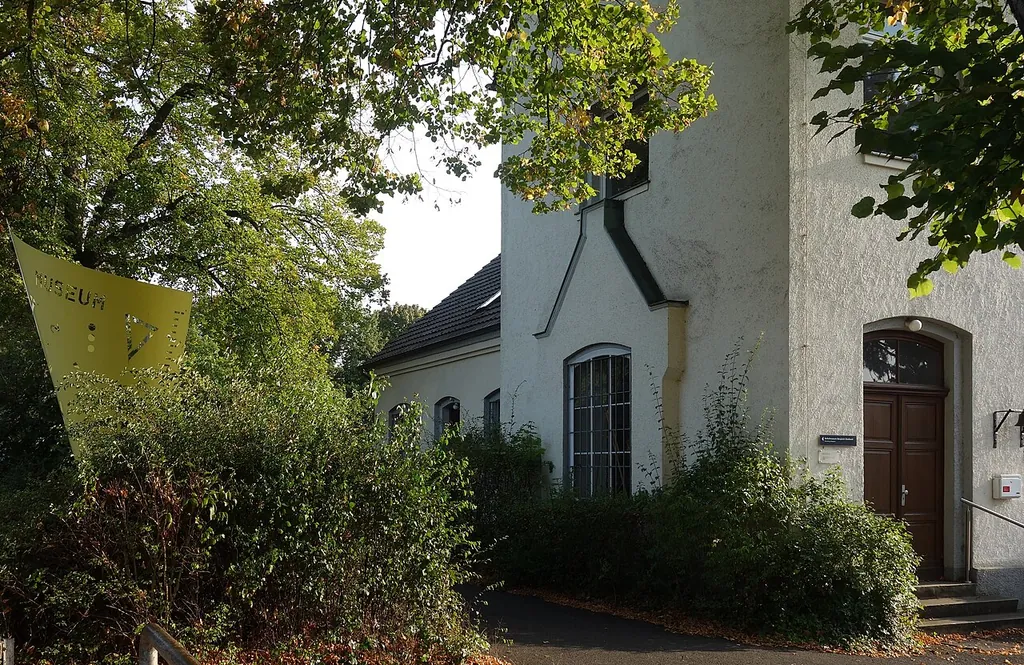
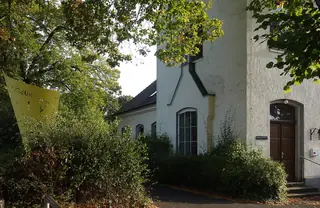
The museum is housed in the former Katterbach public elementary school. The plain brick building went up in 1871, a second storey was added in 1893, and several extensions were later built for the growing number of pupils. Citizens' protests prevented the demolition of the old building in 1974, which made its later use as a museum possible. In 2012 the “Blue Box”, an extension for events, was added. Since 2011 the administration has been in the hands of the Förderverein (friends' association), founded in 2008.
The permanent exhibition was first set up in 2000 and completely redesigned in 2021 for the school's 150th anniversary. It follows the history of the Katterbach school from the imperial era through the Weimar Republic, the Nazi period and the postwar years to the present. Interviews with contemporary witnesses and hands-on stations make it accessible to children too. The house also includes a teachers' garden laid out after a historical model.
Highlights
Historic classroom from around 1900 with “lessons as in the imperial era”
Permanent exhibition on school history from 1871 to today, with contemporary witness interviews
Handicraft collection in the Magdalene Trier room
Hands-on room “Touching allowed” with a discovery wall
Teachers' garden modeled on a historical example
Permanent exhibitions
Schulgeschichte von 1871 bis heute – The history of the Katterbach school from the imperial era to the present, with contemporary witness interviews and hands-on stations.
Magdalene-Trier-Raum – A collection on needlework lessons in the former kitchen of the teacher's family, unique among German school museums.
Founded
1990
Operated by
Förderverein des Schulmuseums Bergisch Gladbach – Sammlung Cüppers e. V.
Director
Dominik Olbrisch
Admission & discounts
Adults
€3
Reduced
€1
Guided tour of the permanent exhibition, school class (per group)
€25Plus €1 admission per person.
Historic lesson, school class (per group)
€30Plus €1 admission per person.
Guided tour of the permanent exhibition, private group
€25On weekends and public holidays €40; plus €3 admission per person.
Historic lesson, private group
€40On weekends and public holidays €50; plus €3 admission per person.
Free admission:Every first Sunday of the month (family Sunday)
Admission is paid in cash. Guided tours are limited to a maximum of 20 people.
Accessibility
The museum hasn’t published any information on this.
Kids & families
Great for kids & families
Family tours & workshops
Hands-on stations
Family Sunday takes place on the first Sunday of every month with free admission, lessons as in the imperial era and a guided tour. Hands-on stations and a discovery wall appeal to children, and workshops take place during school holidays.
Getting there & parking
By public transit
Katterbach
S-Bahn line S11 from Köln Hbf to S-Bahnhof Bergisch Gladbach, then bus lines 222 or 227 toward Leverkusen to the Katterbach stop.
The stop is directly in front of the museum. By car: A 3, Leverkusen exit, toward Bergisch Gladbach-Bensberg via Schildgen. At Altenberger-Dom-Straße turn right to the Zentrum junction, then turn left into Kempener Straße. The museum is on the right after about 1 km.
Historic lesson “as in the imperial era” in the classroom from around 1900, for school classes and groups, and also for adults' birthday or anniversary celebrations. Groups are asked to book by phone in advance.