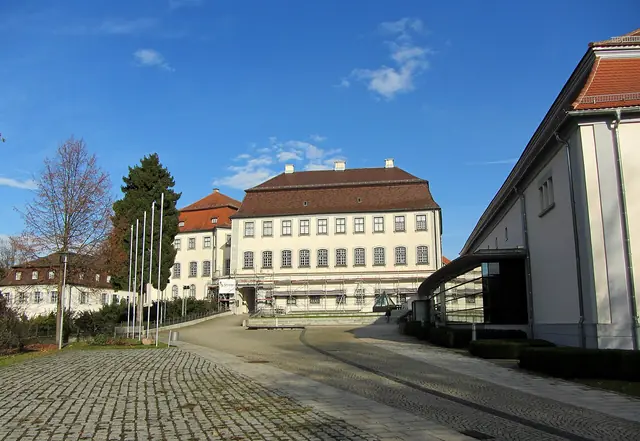
Joint project with the University of Konstanz as part of the Literatursommer Baden-Württemberg (literary summer): students present their favorite books in short films they made themselves, shown in a staged student room in the Pauly-Haus.
About the museum
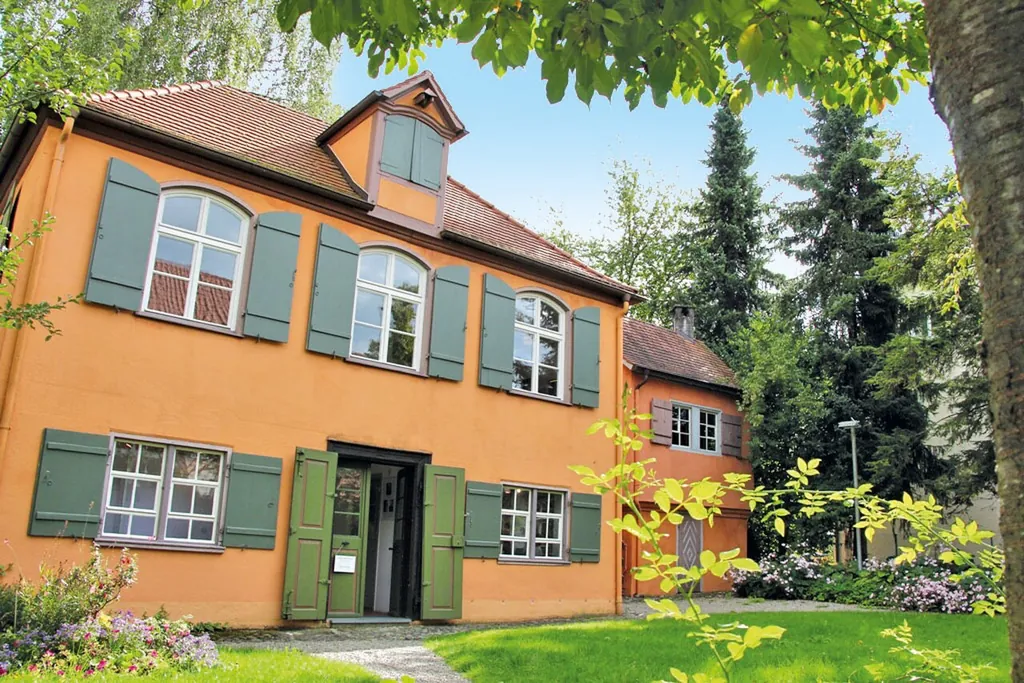
Christoph Martin Wieland (1733–1813), a pastor's son from Oberholzheim, grew up in Biberach and returned to the Free Imperial City in 1760 as its chancery administrator. From 1766 to 1769 he rented the upper floor of a garden house as a quiet place to work, where he read, wrote and worked on, among other things, his novel "Geschichte des Agathon" (The History of Agathon). Wieland later became one of the most widely read German authors of his time and shaped German literature with his Shakespeare translations.
The Biberacher Kunst- und Altertumsverein (Biberach art and antiquities society) founded a memorial to the poet in 1905, which opened in the garden house in 1907. After decades under volunteer management, the museum passed to the town of Biberach in 1972. Since 2009 it has belonged, together with the Wieland-Archiv – a research library with around 16,000 volumes plus manuscripts and letters – to the municipal Christoph Martin Wieland-Stiftung Biberach.
From 2009 until the end of 2025 the garden house showed an exhibition devoted mainly to Wieland's years in Biberach. On May 21, 2026 a completely redesigned permanent exhibition opened, presenting Wieland as a thinker of the Enlightenment, as editor of the magazine "Teutscher Merkur", as a translator of Shakespeare and as the lifelong confidant of his cousin Sophie von La Roche. On the first floor, Café 1800 – with engravings of Wieland and his contemporaries and items from his possession – invites visitors to read and talk. Thanks to flexible furniture, the exhibition room on the second floor can be used for readings, salon evenings and civil wedding ceremonies.
Highlights
Historic garden house where Wieland wrote from 1766 to 1769
Portrait of Wieland from 1768 that greets visitors through an animation
Café 1800 with engravings and objects owned by Wieland
First editions of Wieland's Shakespeare translations
Section on Sophie von La Roche and her novel "Geschichte des Fräuleins von Sternheim" (The History of Lady Sophia Sternheim)
Permanent exhibitions
Neue Dauerausstellung im Wieland-Gartenhaus – Redesigned exhibition in Wieland's former garden house covering the Enlightenment, journalism, Shakespeare and Sophie von La Roche, complemented by the literary Café 1800 on the first floor.
Founded
1905
Operated by
Christoph Martin Wieland-Stiftung Biberach
Director
Kerstin Bönsch
Admission & discounts
Adults
€5
Children & teens
–School students get free admission.
Students & apprentices
freeSchool and university students free.
Groups
–Exclusive group visit outside opening hours for up to 12 people (60–90 minutes, with a short introduction to the exhibition, coffee and tea): flat rate €75. School classes visit the museum free of charge by appointment.
Admission includes a coffee or tea at Café 1800.
Accessibility
The museum hasn’t published any information on this – please ask the museum directly.
Kids & families
The museum hasn’t published any information on this – please ask the museum directly.
Getting there & parking
The museum hasn’t published any information on this – please ask the museum directly.
Amenities & dining
Café
Museum shop
Café 1800 on the first floor (one coffee or tea is included in admission); small museum shop in the reception area.
Events & venue rental
Spaces for rent
Weddings / ceremonies
Up to 30 guests.
Civil wedding ceremonies on the second floor for up to 30 people (room rental €95), dates through the Biberach registry office (Standesamt). The room is also used as a venue for readings and salon evenings hosted by the Wieland-Stiftung.
The museum deliberately does not offer conventional guided tours. Groups of up to 12 people can visit exclusively outside opening hours, starting with a 15- to 20-minute introduction to the exhibition (inquiries to the Wieland-Stiftung, tel. 07351 51-161). School classes explore the exhibition on their own, optionally combined with an introduction at the Wieland-Archiv and a walk through the Wieland-Park (Tuesdays or Thursdays, free of charge).