National Museum of Ireland – Archaeology
Ireland's national archaeology museum in Dublin city centre, with free entry and treasures from prehistory, the Viking Age and the Middle Ages.
Have only individual sections read aloud
About the museum
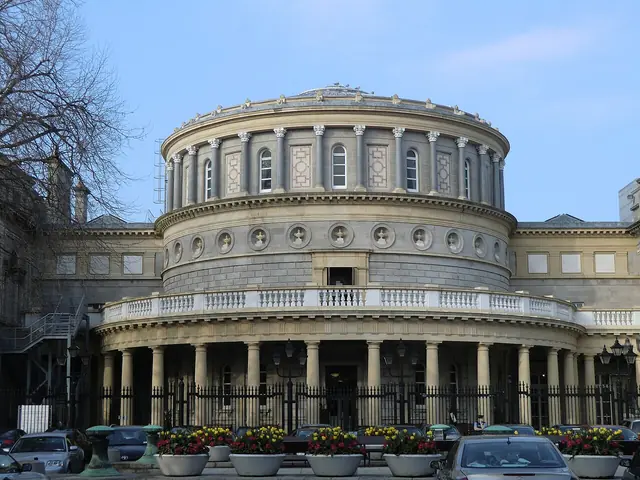
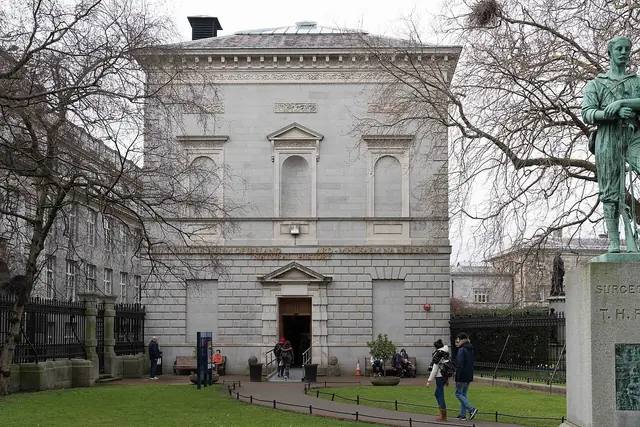
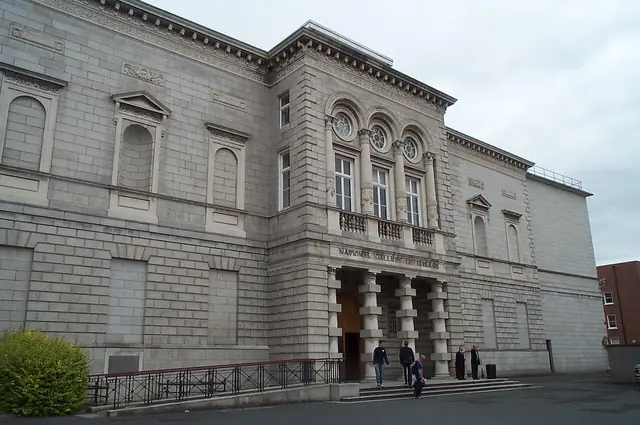
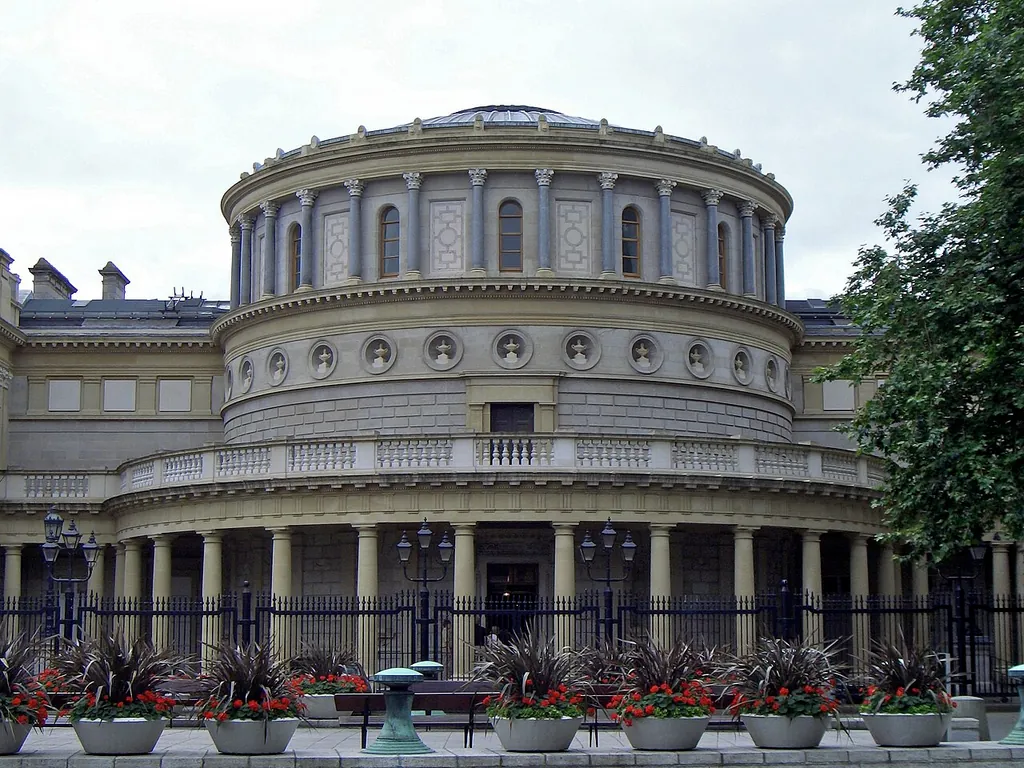
The museum was created by the Dublin Science and Art Museum Act of 1877, which brought together the collections of the Royal Irish Academy and the Royal Dublin Society. Its purpose-built home on Kildare Street, designed by Thomas Newenham Deane and his son Thomas Manly Deane in a Victorian Palladian style, opened in August 1890. The building was known as the National Museum of Science and Art from 1908 and has carried the name National Museum of Ireland since 1921.
The entrance is a domed rotunda of Irish marble and granite with a mosaic floor showing scenes from classical mythology. The floor was restored in the 2010s and is one of the first things visitors see. The galleries around it hold the national collection of Irish archaeology, from the first settlers in about 7000 BC through the Bronze Age, the Iron Age, the early Christian period, the Viking Age and the later Middle Ages.
The museum is best known for objects such as the Ardagh Chalice, the Tara Brooch, the Cross of Cong and the Derrynaflan Hoard, together with a large group of prehistoric gold. It also shows Iron Age bog bodies, the Faddan More Psalter and a small Ancient Egypt gallery. Together with Collins Barracks, Turlough Park in County Mayo and the Natural History museum on Merrion Street, it forms the National Museum of Ireland, and admission to all sites is free.
Highlights
- The Treasury with the Ardagh Chalice, the Tara Brooch and the Cross of Cong
- Ór – Ireland's Gold, a large display of prehistoric goldwork
- Kingship and Sacrifice with Iron Age bog bodies
- Viking Ireland with finds from excavations in Dublin
- Faddan More Psalter, an early medieval book of psalms
- Ancient Egypt gallery with a mummy case and Roman-period mummy portraits
Permanent exhibitions
- The Treasury – Three galleries on Irish art and metalwork from the Iron Age to the 12th century, including the Ardagh Chalice and the Faddan More Psalter.
- Ór – Ireland's Gold – Prehistoric gold jewellery made between 2200 BC and 500 BC, including sun discs, lunulae, torcs and collars.
- Viking Ireland – Objects from Viking graves and settlements, with a large display of finds from excavations in Dublin.
- Founded
- 1877
- Operated by
- National Museum of Ireland
Admission & discounts
Admission is free.
Admission to all four sites of the National Museum of Ireland is free. Groups of eight or more must book in advance through the Bookings Office.
Accessibility
- Partially wheelchair accessible
- Elevator: not available
- Accessible restroom
- Accessible parking
- Service dogs welcome
- Tactile models & exhibits
- Sign language tours: no information
- Easy-to-read materials: no information
- Audio description: no information
The entrance has three stone steps and a wheelchair ramp. All ground floor galleries are accessible, but there is no lift to the first floor. Wheelchairs can be borrowed from reception (please call ahead to reserve one). Seats and mobile stools are available on request. Some touchable exhibits are available; ask a member of staff. Lighting is low in some displays for conservation reasons. Induction loops are not installed. A visual guide and a sensory map can be downloaded. Public blue badge parking bays are on Dawson Street, St Stephen's Green and Merrion Square West. Access officer: accessofficer@museum.ie.
Kids & families
Great for kids & families
- Family tours & workshops
- Baby changing facilities
Family events such as storytelling and mythology sessions take place regularly. Baby changing facilities are in all toilets. Children under 18 must be supervised by an adult.
Getting there & parking
By car
Paid parking
The nearest public pay car parks are off Dawson Street and at Setanta Place. On-street metered parking is available around Merrion Square, about 10 minutes' walk away.
- Accessible parking
The only entrance is on Kildare Street, next to Government Buildings, in the centre of Dublin.
Get directionsAmenities & dining
- Museum shop
- Coat check: not available
The museum shop is open during opening hours. The cloakroom is currently unavailable, so large bags, suitcases and motorcycle helmets should not be brought into the galleries. Baby changing facilities are in all toilets.
Events & venue rental
- Spaces for rent
- Corporate events
Two spaces for corporate events and receptions: the Rotunda entrance hall and the Kildare Room. Enquiries: hire@museum.ie.
Inquiries & detailsPlan your visit
| Guided tours | yes |
|---|---|
| School programs | yes |
| Photography | Hand-held cameras may be used in the galleries for personal use. Flash, video, tripods and professional equipment are not allowed. |
| Good to know | Public tours run on selected dates (for example the October tours on the archaeology collection), and a year-round programme of talks and workshops is offered. Museum maps and a guidebook are available in several languages. Under-18s in groups need one adult for every 15 young people; unaccompanied under-18s may be refused entry. |