Museo civico di scienze naturali Enrico Caffi
Civic museum in Città Alta with over a million specimens of zoology, geology, paleontology and ethnography, including a mammoth and fossils from the Triassic of Bergamo.
Have only individual sections read aloud
About the museum
The museum originated in 1871, when the natural history collections assembled between 1860 and 1870 by the teachers of the Regio Istituto Tecnico were reorganised. Between 1905 and 1914 the discovery of mammoth remains in a clay pit at Petosino, near Bergamo, led to the idea of an independent museum. The institution opened on 14 June 1918 in Palazzo Nuovo, today home to the Biblioteca civica Angelo Mai, with the priest Enrico Caffi as its first director, a post he held until 1947.
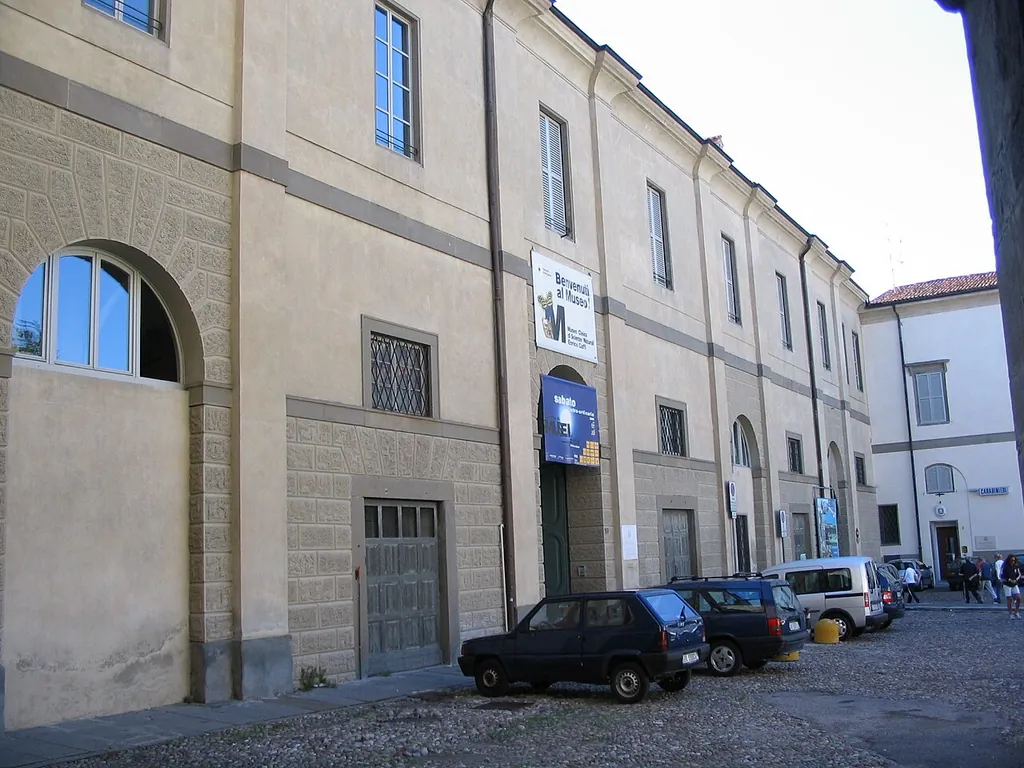
In 1960 the collections moved to their present home, the Cittadella Viscontea palace in Città Alta. The museum holds over a million specimens, including historic collections of butterflies and moths, birds and molluscs. It devotes space to zoology, earth sciences and, more recently, ethnography.
The exhibition area is on the first floor. At the entrance, visitors are greeted by a reconstruction of a mammoth, a symbol of the museum's ties to the area. Particular attention is paid to education and to non-digital interactivity, with microscopes, touch displays and a sensory route with Braille captions.
Highlights
- Reconstruction of a mammoth at the entrance to the exhibition route
- Fossils from the Triassic of Bergamo, including Eudimorphodon ranzii
- Sensory route with touch stations, microscopes and Braille captions
- Sections on zoology, earth sciences and ethnography
- Sala dei Mammiferi Marini (marine mammals hall)
- Audio guides that can be played on smartphones via QR codes
Permanent exhibitions
- Scienze della Terra e paleontologia – Sections on the geology of Bergamo, mineralogy, karst and paleontology, with dinosaurs, Triassic fossils from Bergamo and proboscidean remains.
- Zoologia – Rooms devoted to fish, amphibians, reptiles, birds, mammals, marine mammals and invertebrates.
- Percorso sensoriale ed etnografia – Touch route with specimens to handle, microscopes and sound descriptions, next to the ethnography room.
- Founded
- 1918
- Operated by
- Comune di Bergamo
- Visitors per year
- approx. 97,029
Admission & discounts
| Adults | €3 |
|---|---|
| Children & teens | freefree up to age 17 · Free admission for under-18s. |
| Visitors with disabilities | freecompanion free · Free admission for people with disabilities and their companions. |
| Annual pass to Bergamo's two civic museums (Natural History and Archaeological) | €10Valid for one year from the date of issue. |
The combined ticket for €3 is valid for both the Natural History Museum and the Archaeological Museum at the same time. Free admission also for school groups with accompanying teachers, members of the Associazione Amici del Museo di Scienze Naturali and the Associazione Amici del Museo Archeologico, and holders of the Abbonamento Musei Lombardia. Tickets are sold only at the museum ticket office.
Accessibility
- Wheelchair accessible
- Elevator
- Accessible restroom: no information
- Accessible parking: no information
- Service dogs welcome: no information
- Tactile models & exhibits
- Sign language tours: no information
- Easy-to-read materials: no information
- Audio description: no information
Visitors with reduced mobility enter from Piazza Cittadella 8 (Carabinieri side). The route is fully accessible, both on the first floor and in the sections on the ground floor. To use the lifts and the platform lift, visitors should ask the staff. Touch stations with Braille captions are available in the main exhibition areas. Guide dogs are allowed.
Kids & families
Great for kids & families
| Kids’ admission | free up to age 17 |
|---|
- Family tours & workshops
- Hands-on stations
- Baby changing facilities
The sensory route lets children touch specimens, do simple experiments and use microscopes. Educational activities and summer weeks for children focused on natural sciences are also offered. Along the route there are toilets and a baby-changing area.
Getting there & parking
By public transit
Colle Aperto
From Bergamo railway station take bus 1 to Colle Aperto (ticket from the station or on board). The museum can also be reached by the funicular to Città Alta.
By car
Paid parking
Paid parking along the walls and in the immediate vicinity.
A4 motorway exit “Bergamo”, then follow the signs for “Città Alta” and “Largo Colle Aperto”. Piazza Cittadella is closed to traffic. On Sunday afternoons and public holidays, access to Città Alta is allowed only for authorised vehicles.
Get directionsAmenities & dining
- Museum shop
- Lockers
Lockers with locks at the entrance. In the refreshment area next to the Marine Mammals Hall there are vending machines for snacks and drinks and a UNICEF Baby Pit-Stop for breastfeeding. Eating packed lunches in the rooms is not permitted. Publications, postcards and gifts are sold at the entrance.
Events & venue rental
The museum hasn’t published any information on this.
Plan your visit
| Guided tours | yes |
|---|---|
| Audio guide | yes |
| School programs | yes |
| Photography | Photos and filming are allowed. For video and professional photography, written permission from the museum management is required. |
| Good to know | Audio guides can be played on your smartphone via the QR codes in the rooms. In addition to the school programmes, guided tours can be requested by contacting the museum's education service. Small animals are allowed if carried or kept in a suitable carrier. |