Museo d'arte e scienza
Private museum in Palazzo Bonacossa, founded to expose forgeries in the art market, with African and Buddhist art, antiquities and a scientific laboratory.
Have only individual sections read aloud
About the museum
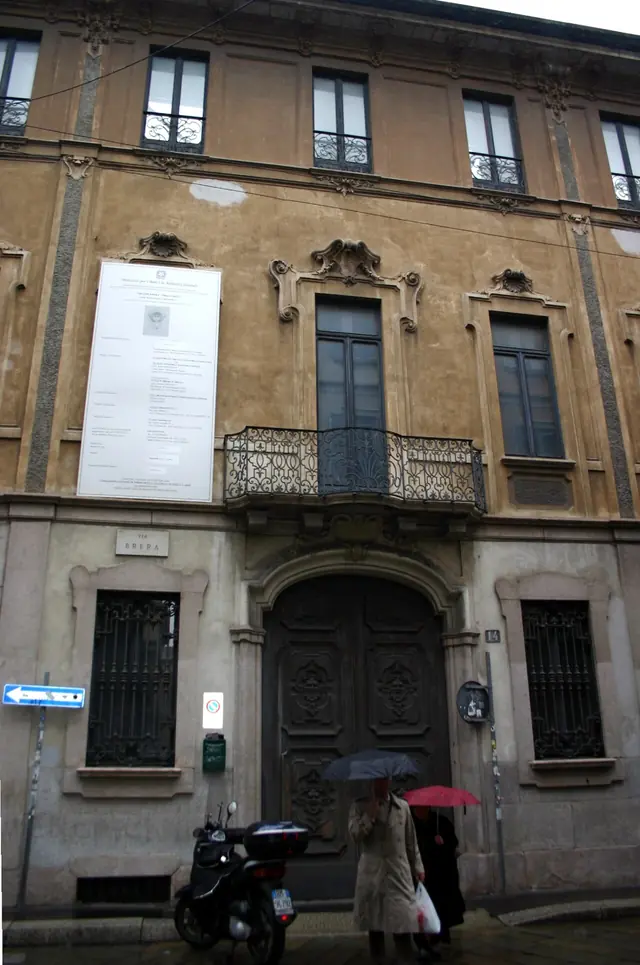
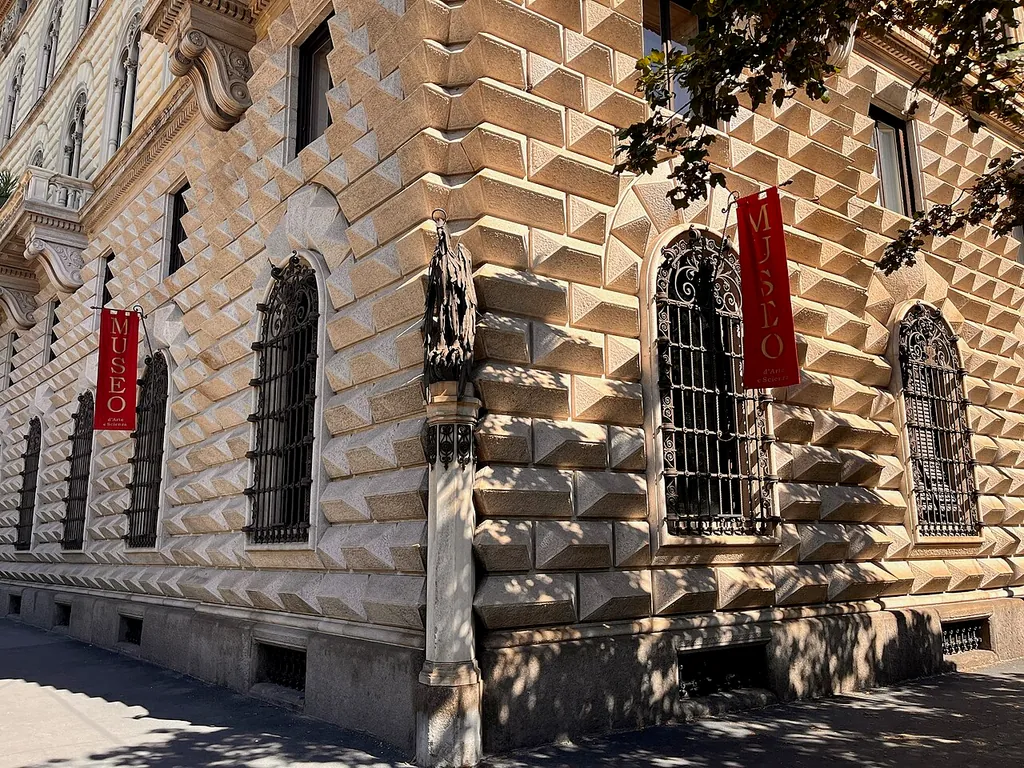
The museum was founded in 1990 by the physicist Gottfried Matthaes, who had left industry to devote himself to the recognition of forgeries in art. After a career in the printed circuit board sector, he had developed a more reliable dating method for over a thousand wooden objects in his collection, and he bought two floors of Palazzo Bonacossa, near the Castello Sforzesco, to create an educational museum on authenticity. It was originally called Museo del Collezionista d'Arte; today it bears its present name.
The collections originate in the painting school founded in Dresda in 1906 by Matthaes's aunt Gertrude Matthaes and her husband Walter Kurau, who assembled a teaching collection of Greco-Roman and Etruscan art. The Ministero per i Beni culturali (Ministry for Cultural Heritage) recognised it in 1997 as being of exceptional historical and cultural interest. In 2001 a section of African art was added, with over 300 objects from sub-Saharan Africa, followed later by Buddhist art from Thailand and Burma.
The museum houses the scientific laboratory “Arte Autentica”, specialised in spectroscopic dating. After the founder's death in 2010, management passed to his children, Peter and Patrizia, who also created the Associazione Amici del Museo d'Arte e Scienza. The route includes African art, East Asian Buddhist art, two educational exhibitions on Leonardo da Vinci and a route on authenticity in art and antiquities.
Highlights
- African art: statues, thrones, textiles, drums and masks
- Buddhist art from Thailand, Burma, China and Japan
- Two educational exhibitions on Leonardo da Vinci
- Route “Autenticità nell'arte” and scientific laboratory
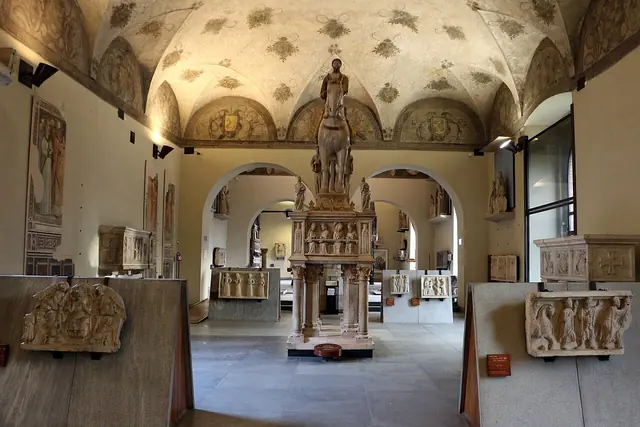
- Sala degli Arazzi with tapestries from the 18th and 19th century
Permanent exhibitions
- Arte africana – Four rooms with statues, thrones, textiles, drums and masks from sub-Saharan Africa.
- Arte buddhista – Permanent display of East Asian Buddhist art: Thailand, Burma, China and Japan.
- Leonardo da Vinci – Two educational exhibitions: Leonardo's Milanese period and his Treatise on Painting.
- Founded
- 1990
- Operated by
- Museo d'Arte e Scienza di G. Matthaes
- Visitors per year
- approx. 4,000
Admission & discounts
| Adults | €10 |
|---|---|
| Reduced | €5Students |
| Children & teens | freefree up to age 12 · Free admission up to age 12. |
| Seniors | €8Visitors over 65. |
| Students & apprentices | €5 |
| Groups (8+ people) | –Guided group visits carry a supplement of €50 for groups of 8 to 15 people and €100 for groups of 16 to 25 people, divided into two groups. |
The website refers to a dedicated page for agreements with other bodies. Tickets are also available online.
Accessibility
The museum hasn’t published any information on this.
Kids & families
| Kids’ admission | free up to age 12 |
|---|
- Family tours & workshops
Educational programmes and investigation games for schools and families; free admission up to age 12.
Getting there & parking
By public transit
Cairoli (M1)
Metro line M1 to Cairoli or M2 to Lanza; trams 2, 12 and 14 to Lanza / Teatro Strehler; bus 57 to Cairoli or bus 61 to Pontaccio.
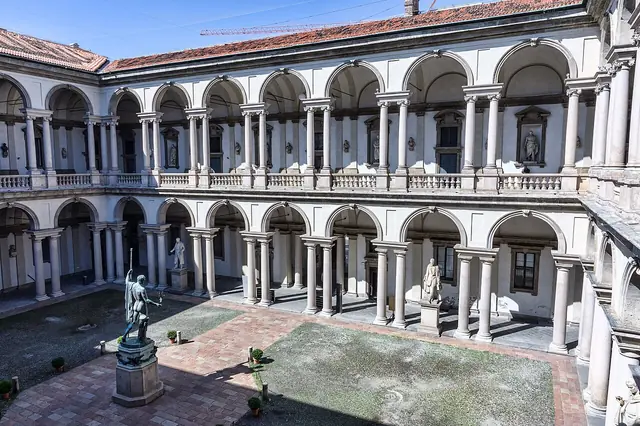
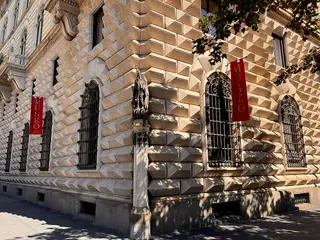
The museum is located in Palazzo Bonacossa, near the Castello Sforzesco.
Get directionsAmenities & dining
The museum hasn’t published any information on this.
Events & venue rental
- Spaces for rent
Sala degli Arazzi, a vaulted room with tapestries from the 18th and 19th centuries, and equipment for conferences, events and concerts; Sala Goffredo and Sala Giovanna, with large windows overlooking the Castello Sforzesco, suitable for events and temporary exhibitions. Requests via the form on the website.
Inquiries & detailsPlan your visit
| Guided tours | yes |
|---|---|
| School programs | yes |
| Good to know | Guided group visits on request, with a supplement. The room texts are available in six languages: Italian, English, German, French, Spanish and Russian. Educational programmes for schools include “Detective dell'arte”, “Percorso multiculturale” and the investigation game “Furto al museo”. |