Complesso Monumentale e Museo della Certosa di Pavia
Renaissance monastery founded by the Visconti, with church, cloisters and a museum housed in the Palazzo Ducale, with a plaster-cast gallery, a picture gallery and a frescoed studiolo.
Have only individual sections read aloud
About the museum
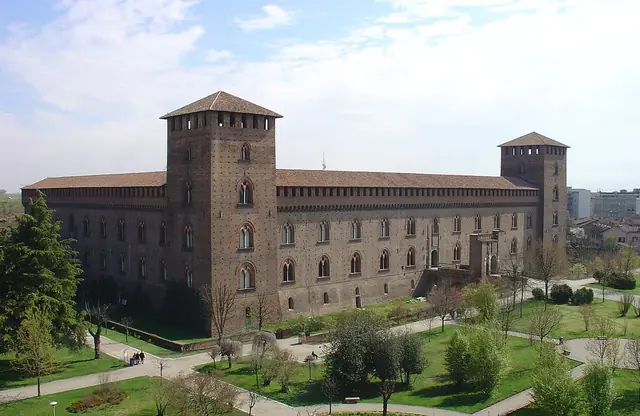
The Certosa di Pavia was built between the late 14th and the 15th century at the wish of Gian Galeazzo Visconti, lord of Milan. The church and monastery were originally entrusted to the Carthusians, then to the Cistercians and, for a short period, also to the Benedictines. The church's façade is among the masterpieces of Lombard Renaissance sculpture.
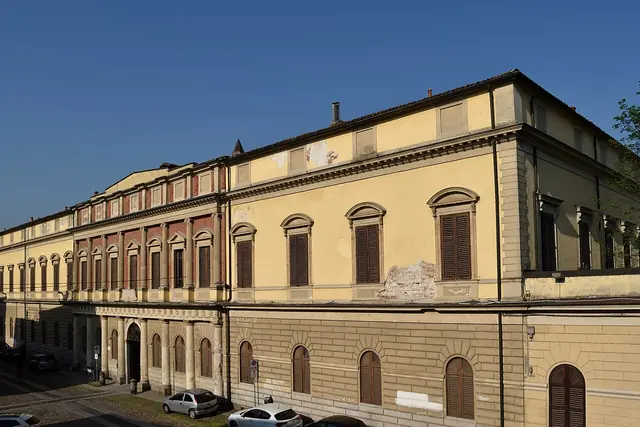
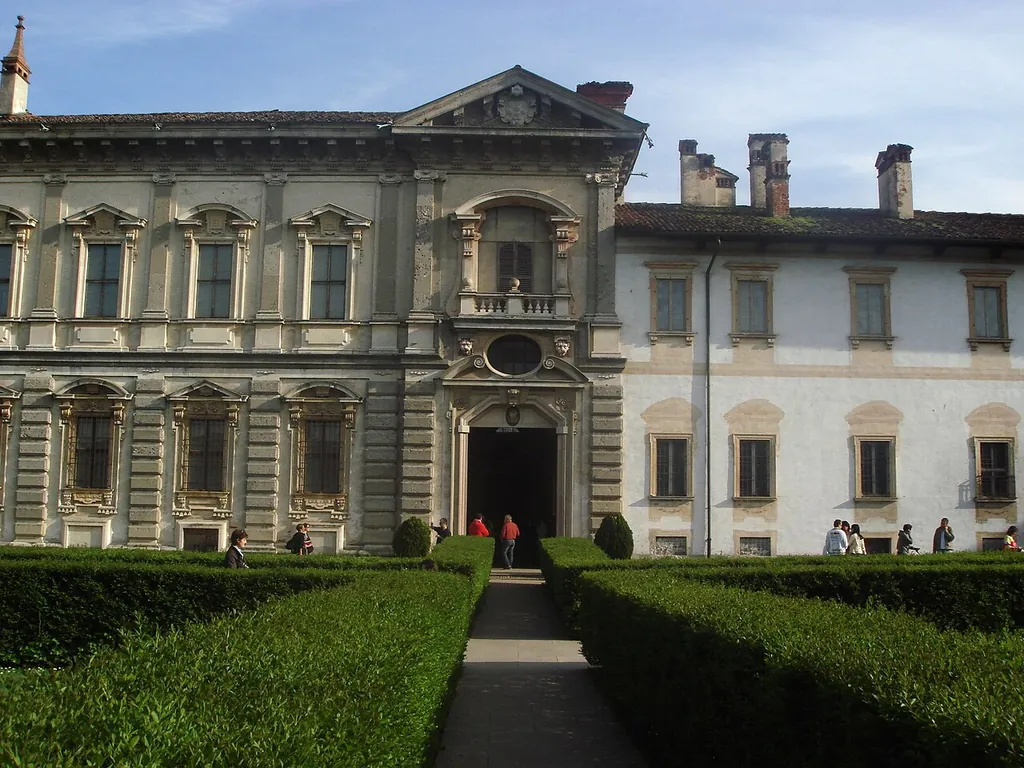
The Museo della Certosa is housed in the Palazzo Ducale, the summer residence of the Visconti-Sforza, which overlooks the large entrance courtyard; the palace's façade was altered in 1625 by Francesco Maria Richini. The idea of a museum arose at the end of the 19th century, with restoration works on the monument directed by Luca Beltrami, who also curated the display: opened in 1911, it was closed the following year and reopened permanently only in 2008.
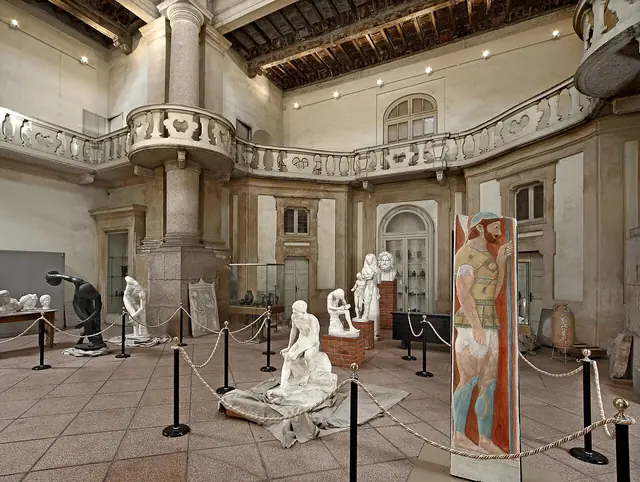
The collections occupy two floors: on the ground floor the Gipsoteca (plaster-cast gallery), with casts of the façade reliefs and other works from the monument; on the first floor the Pinacoteca (picture gallery) and the collection of sculptures in Beltrami's arrangement, as well as the Studiolo, fully frescoed in the second half of the 16th century. Among the works are panels by Bartolomeo Montagna and Bernardino Luini and a cast of the funerary monument of Ludovico il Moro and Beatrice d'Este.
The complex is now run by the Ministry of Culture through the Direzione regionale Musei nazionali Lombardia.
Highlights
- Church and cloisters of the Certosa
- Gipsoteca with casts of the façade reliefs
- Pinacoteca with panels by Bartolomeo Montagna and Bernardino Luini
- Fully frescoed ducal Studiolo
- Cast of the funerary monument of Ludovico il Moro and Beatrice d'Este
- Relief panel of the Flagellation by Antonio Mantegazza
Permanent exhibition
- Museo della Certosa: Gipsoteca, Pinacoteca e Studiolo – Plaster casts of the façade on the ground floor; paintings, sculptures and the frescoed Studiolo on the first floor of the Palazzo Ducale.
- Founded
- 1911
- Operated by
- Ministero della Cultura – Direzione regionale Musei nazionali Lombardia
- Visitors per year
- approx. 52,646
Admission & discounts
| Adults | €10 |
|---|---|
| Reduced | €2EU citizens aged 18 to 25 |
Tickets can be bought online on the Musei Italiani portal, through the app or on site. Payment in cash or by credit card. The full list of free admissions is on the Ministry of Culture website (concessions).
Accessibility
- Partially wheelchair accessible
- Elevator: no information
- Accessible restroom
- Accessible parking: no information
- Service dogs welcome: no information
- Tactile models & exhibits
- Sign language tours
- Easy-to-read materials: no information
- Audio description
The monumental complex is partly accessible to people with mobility impairments: access to the Cortile d'Onore, the Chiostro Piccolo and Chiostro Grande cloisters and the church is guaranteed, with some limitations in the presbytery area. The museum is fully accessible. Along the route there are tactile panels, raised-line drawings, Descrivedendo descriptions and audio-video guides in LIS and ISL (Musei Polisensoriali project). Toilets for people with disabilities are also available.
Kids & families
The museum hasn’t published any information on this.
Getting there & parking
By public transit
Certosa di Pavia (stazione)
By train: Milan–Genoa line with regional trains, Certosa di Pavia station. By bus: connections to Pavia (Via Trieste, opposite the railway station) and to Milan (Famagosta).
By car from Milan, take the Strada Statale 35 towards Pavia; from Pavia take the state road towards Milan and, after the first traffic light, turn right.
Get directionsAmenities & dining
The museum hasn’t published any information on this.
Events & venue rental
The museum hasn’t published any information on this.