Museo per la Storia dell’Università di Pavia
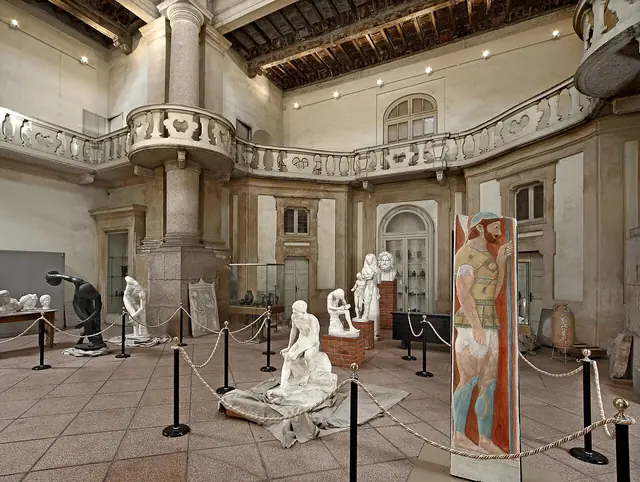
Museum in the Palazzo Centrale of the University of Pavia, with scientific instruments, preparations and relics of Volta, Scarpa, Golgi and Porta.
Have only individual sections read aloud
About the museum
The core of the collections dates back to the reforms under Maria Theresa of Austria and Joseph II, who in the second half of the eighteenth century modernised the University of Pavia with new teaching facilities: a library, an anatomy theatre, a physics theatre, a natural history museum, a chemistry laboratory, a botanical garden and cabinets of experimental physics and anatomy.
The idea of founding a museum devoted to the history of the university arose after the first national exhibition of the history of science, held in Florence in 1929, to which Pavia had contributed valuable relics. The museum was set up in the rooms of Antonio Scarpa's former museum, freed when pathological anatomy moved out, and opened in 1936. The collection assembled by the surgeon Luigi Porta at the San Matteo Hospital was also brought in.
In the following years the collections grew through the bequest of Camillo Golgi's relics and archive, and through numerous instruments from the Institute of Physics. These made it possible to reconstruct a collection of scientific instruments from the Habsburg period to the nineteenth century. The Volta collection comprises about 150 instruments. The rooms are named after Alessandro Volta, Antonio Scarpa, Luigi Porta and Camillo Golgi, plus a nineteenth-century Physics Cabinet.
Highlights
- Volta Room with about 150 Voltaic instruments and a re-created laboratory
- Rooms dedicated to Antonio Scarpa, Luigi Porta and Camillo Golgi
- Nineteenth-century Physics Cabinet
- Gallery of busts, portraits and medallions of university professors
- Historical documents from the museum archive, shown on rotation
Permanent exhibition
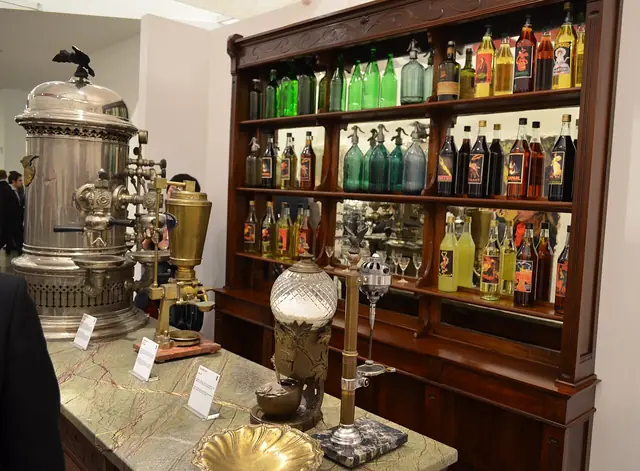
- Sale del museo – Five rooms dedicated to Volta, Scarpa, Porta, Golgi and the nineteenth-century Physics Cabinet, with scientific instruments, preparations and relics of the university.
- Founded
- 1936
- Operated by
- Università degli Studi di Pavia – Sistema museale di Ateneo
Admission & discounts
| Adults | €5 |
|---|---|
| Reduced | €3Young people aged 14 to 26, over-65s, groups of at least 10 people, University of Pavia staff, members of the Amici dell'Orto Botanico, teachers and law enforcement officers |
| Children & teens | freefree up to age 13 · Free admission up to age 13. |
| Visitors with disabilities | freecompanion free · Free admission for people with disabilities and one companion. |
| Students & apprentices | freeFree admission for students of the University of Pavia. |
| Groups (10+ people) | €3 per personGroups of at least 10 people: reduced ticket. For guided tours, groups should not exceed 25 participants. |
| Families | €12Two adults and one or more children aged 14 to 26. |
| Guided tour for adults and non-school groups (per person, in addition to the ticket) | €5 |
| Suspended ticket (a free admission offered to a family in need, valid in every university museum) | €4 |
| Monthly 6 Museums pass | €6One admission to each university museum within one month of first use. |
| Annual pass to the Museum for the History of the University | €15 |
| Annual pass to the university museum system | €20 |
| Upper secondary schools: admission and guided tour | €3 |
| Upper secondary schools: admission, guided tour and workshop | €5 |
Free admission also for licensed tourist guides and translators, licensed journalists, ICOM and ANMS members, holders of the Abbonamento Musei Lombardia, members of “Nati con la cultura”, and visitors on their birthday. Reduced rates for holders of the APC Gold Card (€1.50) and for Fedegari (€2.50, reduced to €1.50). Tickets are paid in cash or by card at the ticket office, or online.
Accessibility
- Wheelchair accessible
- Elevator: no information
- Accessible restroom
- Accessible parking: no information
- Service dogs welcome: no information
- Tactile models & exhibits: no information
- Sign language tours: no information
- Easy-to-read materials: no information
- Audio description: no information
There are no significant architectural barriers, and a small ramp makes the entrance easier. People with reduced mobility can contact the museum to arrange their arrival and to request a parking permit in the University area. The outdoor toilets, which have a ramp, are equipped for people with disabilities and are reserved for students; they are also available to museum visitors (a badge is requested at the entrance). A free facilitated guide is available for visitors with specific communication needs.
Kids & families
| Kids’ admission | free up to age 13 |
|---|---|
| Family ticket | €12 · Two adults and one or more children aged 14 to 26. |
- Family tours & workshops
For schools the museum offers the annual Scuola+Museo project with themed routes and workshops and, from time to time, an inflatable planetarium in the room next to the museum (by reservation).
Getting there & parking
By car
No on-site parking at the museum.
The museum is in the historic centre, in a limited traffic zone (ZTL): a temporary permit can be bought from the Comune di Pavia. There are paid car parks nearby (the Cattaneo car park near San Pietro in Ciel d'Oro, the Castello Visconteo area and viale Matteotti, piazza Petrarca except in the mornings). A large free area is on viale Indipendenza, behind the ATS building, about 15 minutes on foot.
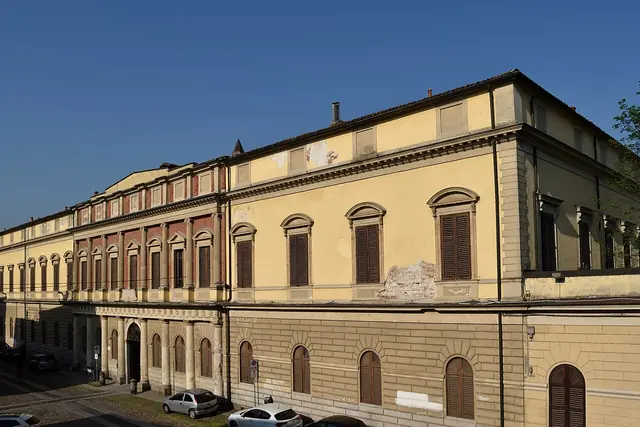
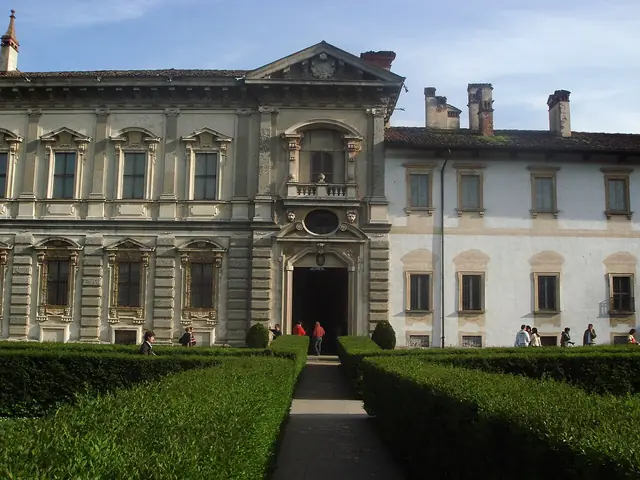
The museum is in the University's Palazzo Centrale, overlooking the Cortile dei Caduti.
Get directionsAmenities & dining
- Coat check: not available
- Lockers: not available
There is no cloakroom with lockers: backpacks and bulky coats can be left at the entrance. A compact guide to the collections and the history of the museum is on sale.
Events & venue rental
The museum hasn’t published any information on this.
Plan your visit
| Guided tours | yes |
|---|---|
| Audio guide | yes |
| School programs | yes |
| Good to know | The augmented reality app, audio guides and mobile guide sheets are free and can be downloaded to your phone before the visit. Themed guided tours (for example Alessandro Volta and the battery, the history of the university through its people, or medicine from Scarpa to Golgi) can be booked by email or phone. |