Palazzo Tursi
16th-century palace in Via Garibaldi, seat of the City Council and part of the Musei di Strada Nuova, with Paganini's “Cannone” violin, coins and ceramics.
Have only individual sections read aloud
About the museum
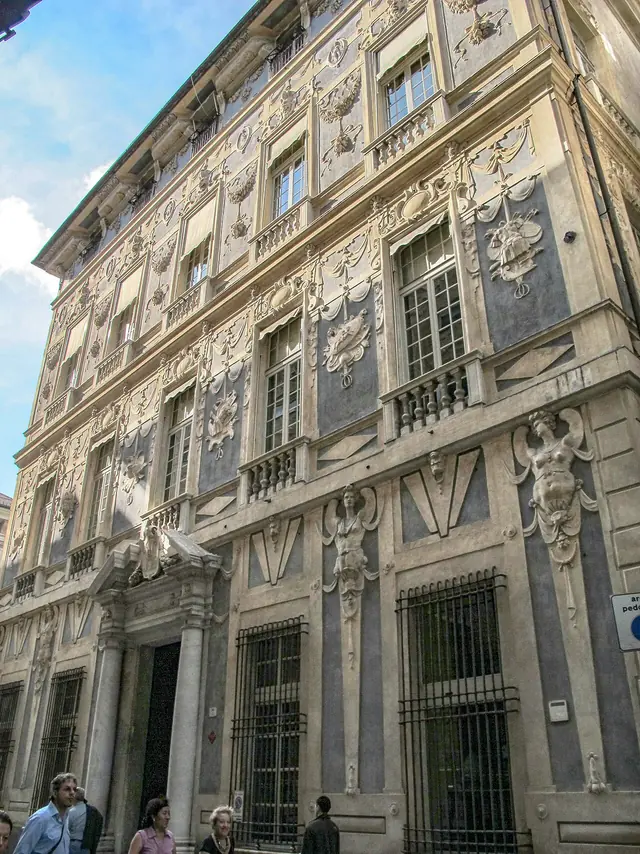
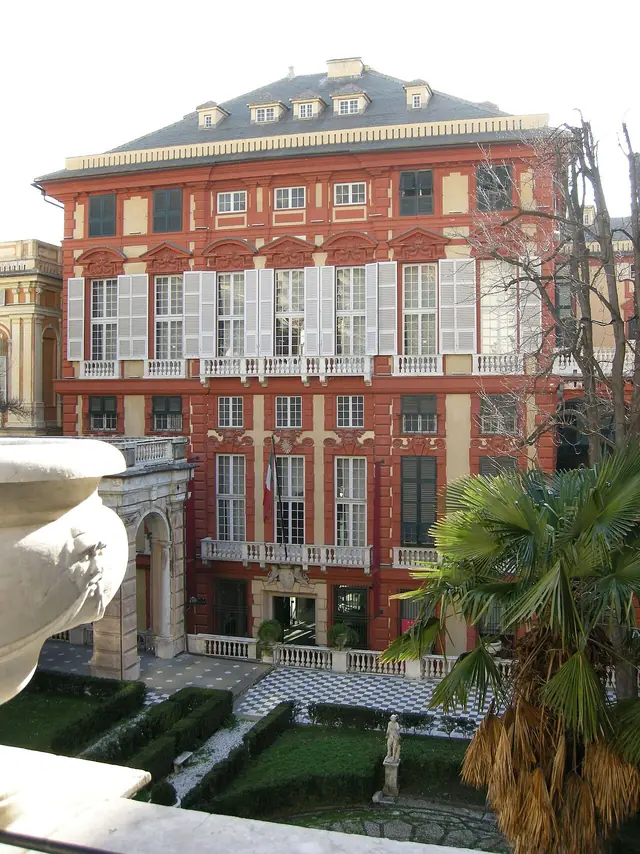
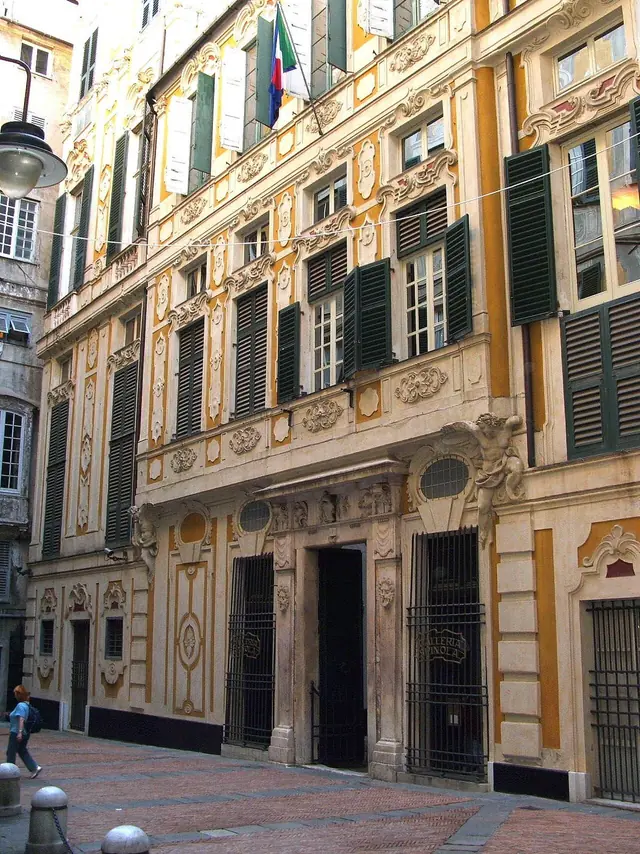
Palazzo Tursi was built from 1565 by Domenico and Giovanni Ponsello for Niccolò Grimaldi, known as “il Monarca”, a banker to Philip II of Spain. It is the most majestic building in Via Garibaldi, the only one built on three plots, with two large gardens. When Philip II suspended payments in 1575, Grimaldi was ruined and the decorative works stopped, so the palace does not have large fresco cycles.
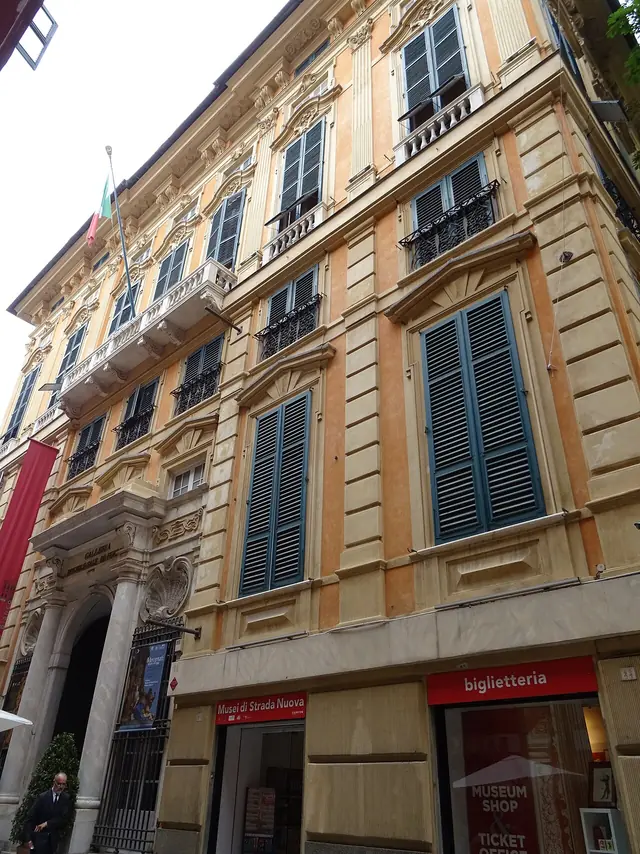
In 1820 the House of Savoy bought the palace from Maria Giovanna Doria, fifth Duchess of Tursi: a “Piedmontese phase” began, with the completion of the rear section, the clock tower and the renewal of the interiors. The façade alternates pink stone from Finale, grey-black slate and white Carrara marble; the vestibule, the staircase and the courtyard create a striking play of perspectives.
After the 2003–2004 works, the whole noble floor is open to the public and integrated into the Musei di Strada Nuova: five rooms complete the Palazzo Bianco picture gallery with 18th-century paintings, including Alessandro Magnasco's “Trattenimento in un giardino di Albaro” and the Maddalena by Antonio Canova. Visitors can also see the monumental spaces and rooms with the weights and measures of the former Republic of Genoa, coins and medals, ceramics and tapestries.
The Sale Paganiniane (Paganini rooms) hold the violin of Nicolò Paganini, which the musician bequeathed to his native city, along with other memorabilia of the violinist.
Highlights
- Paganini's violin and the Sale Paganiniane
- Maddalena by Antonio Canova
- Trattenimento in un giardino di Albaro by Alessandro Magnasco
- Coins and medals, ceramics and tapestries
- Weights and measures of the ancient Republic of Genoa
- Noble floor and monumental spaces
Permanent exhibition
- Piano nobile di Palazzo Tursi – 18th-century rooms, the Paganini rooms, coins, ceramics and tapestries from the civic collections.
- Operated by
- Comune di Genova
Admission & discounts
| Adults | €14 |
|---|---|
| Reduced | €9Reduced combined ticket for the Musei di Strada Nuova; young people aged 18 to 25 pay €2 |
| Children & teens | freefree up to age 17 · Free admission up to the age of 18. |
| Visitors with disabilities | freecompanion free · Free with a European Disability Card or suitable certification; also free for the companion. |
Free admission: Free for residents of the Metropolitan City of Genoa every Sunday and in the last time slot of the day; free for over-65s throughout August.
The ticket (full €14, reduced €9) is a combined ticket valid for Palazzo Rosso, Palazzo Bianco, Palazzo Tursi and the Museo di Sant'Agostino. Also free for journalists, tour guides, ICOM members and teachers with school cards. The price may vary for special events or temporary exhibitions.
Accessibility
- Wheelchair accessible: no information
- Elevator: no information
- Accessible restroom: no information
- Accessible parking: no information
- Service dogs welcome: no information
- Tactile models & exhibits: no information
- Sign language tours: no information
- Easy-to-read materials: no information
- Audio description: no information
For the accessibility of the Musei di Strada Nuova, see the museum entry and the services of Palazzo Bianco and Palazzo Rosso.
Kids & families
| Kids’ admission | free up to age 17 |
|---|
The Educational Services periodically offer activities for families.
Getting there & parking
By public transit
De Ferrari (metropolitana) · 5-min walk
Buses 18, 20 and 34; metro, De Ferrari stop, then about 5 minutes on foot; funiculars Sant'Anna and Zecca-Righi.
Via Garibaldi is in the historic centre of Genoa.
Get directionsAmenities & dining
- Museum shop
The bookshop with the ticket office is in the Musei di Strada Nuova building.
Events & venue rental
The museum hasn’t published any information on this.
Plan your visit
| Good to know | During the Rolli Days access is allowed only by reservation and with guided tours along a selected route. Some spaces and works may not always be accessible due to displays, restorations or loans. The Dogs & Museum service allows you to leave your dog with a dog sitter during your visit. |
|---|