Villa di Massenzio
Imperial complex on the Via Appia Antica with the palace, the circus and the dynastic mausoleum known as the Tomba di Romolo, built for Maxentius.
Have only individual sections read aloud
About the museum
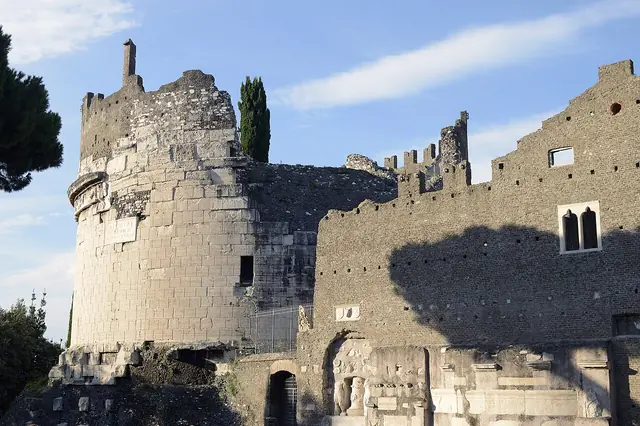
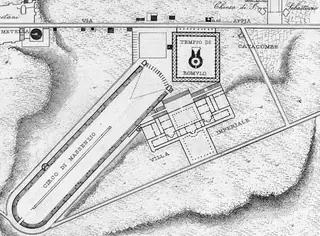
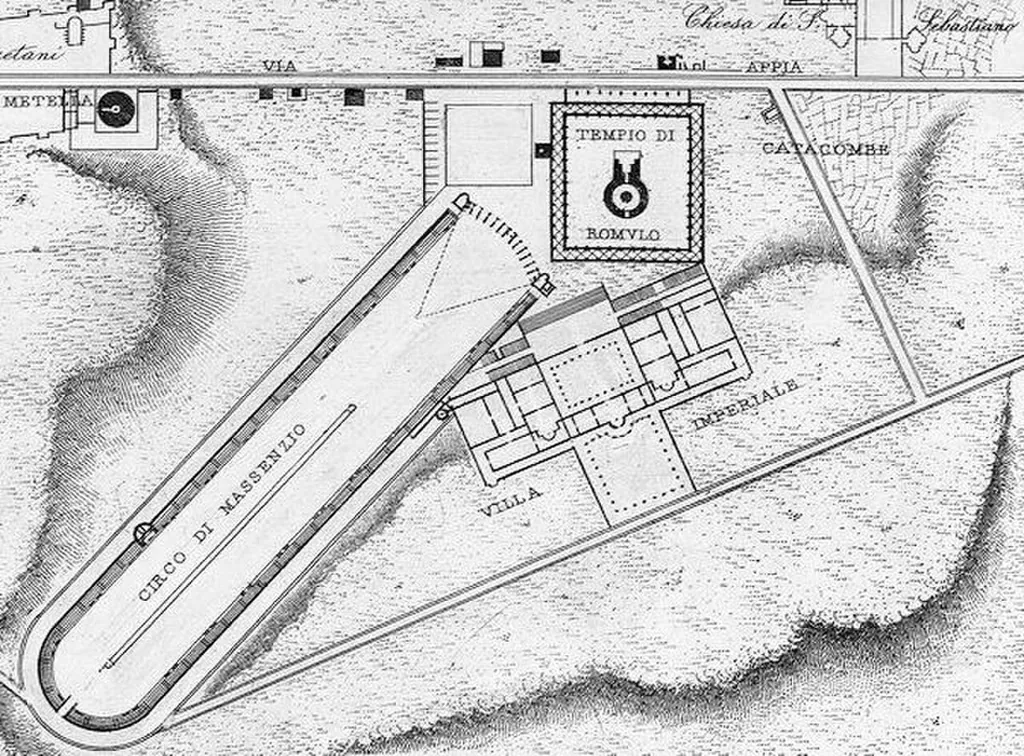
The Maxentian complex extends between the second and third milestones of the Via Appia Antica and consists of three buildings designed as a single architectural unit: the palace, the circus and a dynastic mausoleum. It was built to celebrate the emperor Maxentius (AD 306–312), who was defeated by Constantine at the battle of the Milvian Bridge (Ponte Milvio). The mausoleum, known as the Tomba di Romolo after the emperor’s young son, is the central core of the ensemble; the circus could hold more than ten thousand spectators.
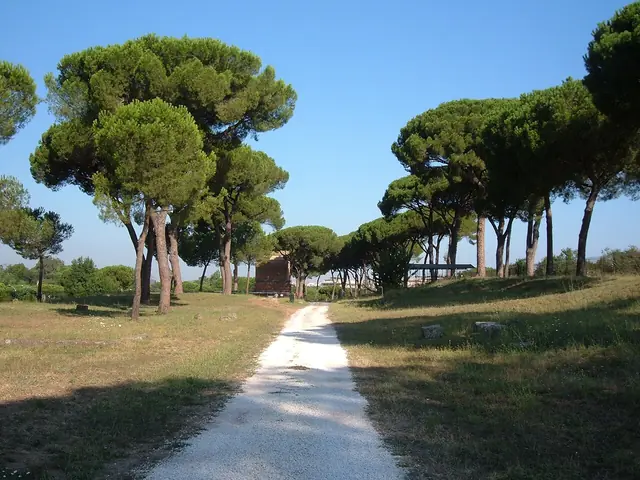
The buildings follow the natural lie of the land: the palace stands on the remains of earlier structures, and the circus occupies the valley that rises from the Via Appia Antica towards the present-day Via Appia Pignatelli. After Maxentius’ defeat the structures probably passed to the Church of Rome; in the following centuries they were divided among several owners, and in the 19th century the circus and mausoleum were acquired by the Torlonia, who included them in the Caffarella estate.
Systematic excavations began in 1825 at the initiative of Prince Giovanni Torlonia. In the 20th century the complex was included in the protection plans for the Via Appia Antica; in 1943 the Comune di Roma expropriated most of the structures, and only from 1960 did regular excavation and restoration work follow. The archaeological area has been open to the public since 1980.
Highlights
- Circus of Maxentius with the carceres (starting gates)
- Dynastic mausoleum known as the Tomba di Romolo
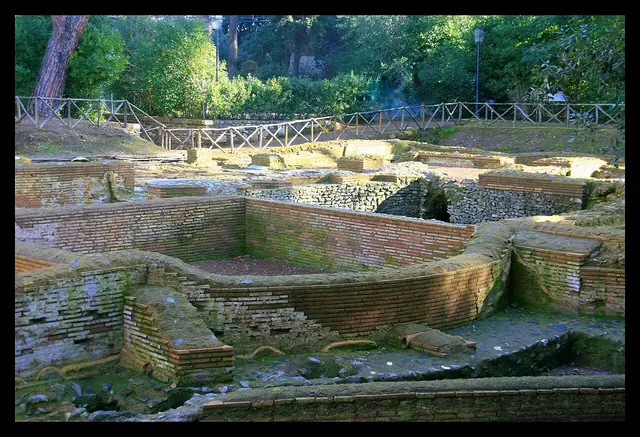
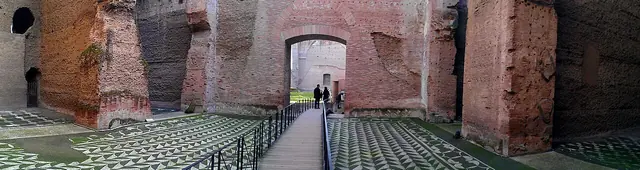
- Remains of the imperial palace
- Tactile map and tactile supports at the entrance
- Location on the Via Appia Antica
- Founded
- 1980
- Operated by
- Roma Capitale – Sovrintendenza Capitolina ai Beni Culturali (servizi: Zètema)
- Visitors per year
- approx. 50,000
Admission & discounts
| Adults | €7.50 |
|---|---|
| Reduced | €6categories set out in the current Roma Capitale tariff |
| Visitors with disabilities | freecompanion free · Free admission for people with disabilities and one companion, under the conditions for free entry. |
| Groups (5+ people) | –Groups of 5 to 25 people plus the guide, only with free booking on 06 0608 and advance purchase of at least 5 tickets. |
| Advance-sale fee (online purchase, by call centre or at the ticket office for later days) | €1On the same day you buy at the ticket office with a credit card, without an advance-sale fee. |
Free admission: First Sunday of the month: free admission for everyone to the civic museums and archaeological sites of Roma Capitale. Residents of Rome and the Città Metropolitana: free admission from February 2026 with an identity card.
Free admission also for holders of the MIC card (€5, valid 12 months in the Sistema Musei di Roma Capitale). Schools must book free of charge; for school groups with a named list, admission is free (one companion per 10 pupils). Pre-purchased tickets are neither refundable nor changeable.
Accessibility
- Partially wheelchair accessible
- Elevator: no information
- Accessible restroom
- Accessible parking: no information
- Service dogs welcome: no information
- Tactile models & exhibits
- Sign language tours: no information
- Easy-to-read materials: no information
- Audio description: no information
The site has routes for people with mobility disabilities entering from Via Appia Antica 149: the carceres of the circus and the area of the Mausoleo di Romolo are easily reached up to the entrance. The accessible toilet is at the entrance on Via Appia Antica 153, behind the ticket office. For blind and partially sighted visitors there is a tactile orientation map near the ticket office and permanent tactile supports in the reception area. For deaf visitors there is a video station in Italian Sign Language (LIS) about the history of the monument at the entrance, and a multimedia room with videos subtitled in Italian and English.
Kids & families
- Stroller-friendly
Prams are permitted inside the museum.
Getting there & parking
The museum hasn’t published any information on this.
Amenities & dining
- Museum shop
Small bookshop with publications on the museum; guides and catalogues can also be bought online. Food and drink may not be consumed in the archaeological area.
Events & venue rental
The museum hasn’t published any information on this.
Plan your visit
| Guided tours | yes |
|---|---|
| School programs | yes |
| Photography | Photographing and filming the works is permitted for personal and study use, without tripods, selfie sticks or additional lights; professional filming requires authorisation from the Sovrintendenza Capitolina. |
| Good to know | Guided tours in several languages, for a fee and by booking (06 0608, every day 9:00–19:00). In the archaeological area it is not permitted to bring domestic animals, except small dogs in a carrier, nor bicycles or motorcycles, and smoking is not allowed. |