Villa Reale di Marlia
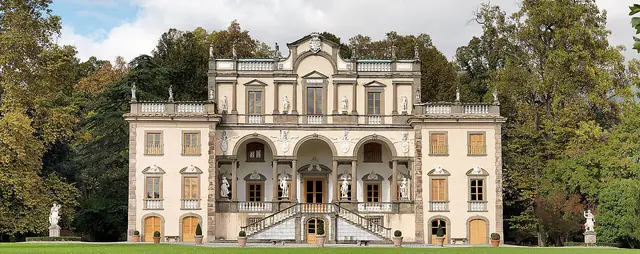
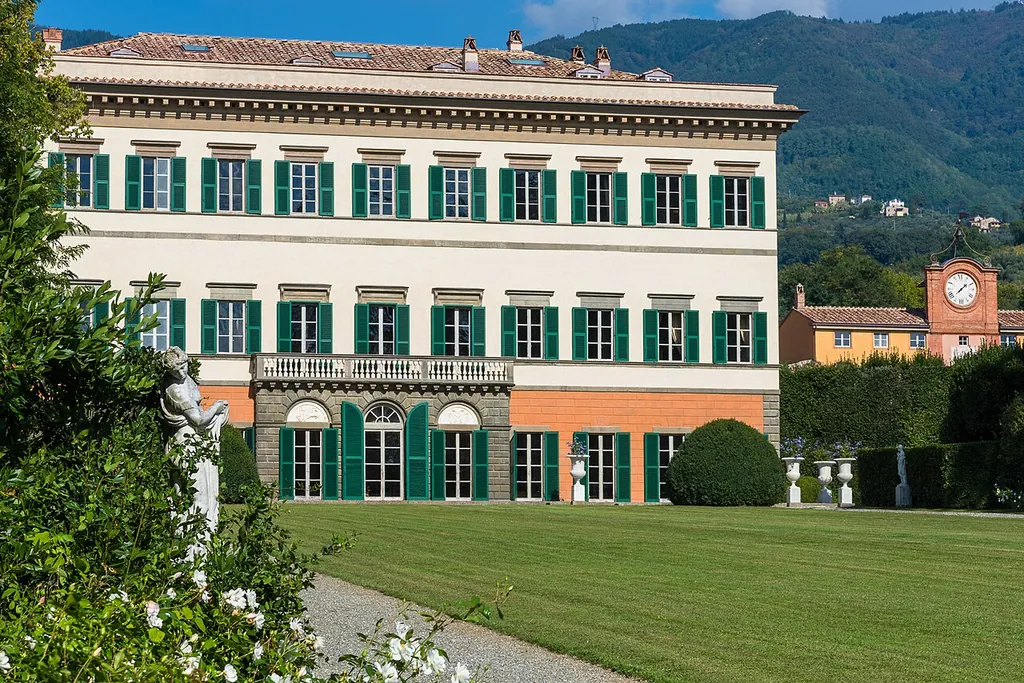
Villa and monumental park at Marlia, formerly the residence of Elisa Bonaparte Baciocchi, with two museums, historic gardens and a water theatre.
Have only individual sections read aloud
About the museum
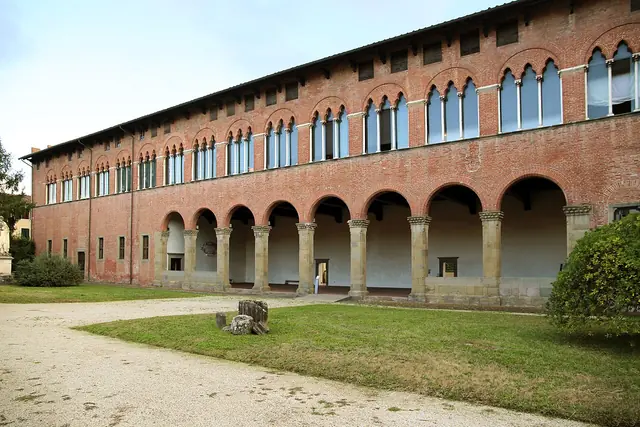
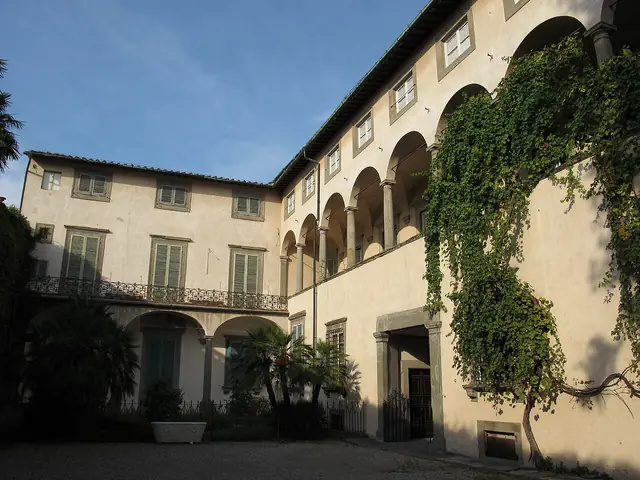
The original core of the villa was a medieval fortress, later transformed by Lucchese merchant and banking families into a noble residence. In 1651 the property passed to the Orsetti family, who enlarged the building and gave the park a Baroque layout with avenues, the Teatro di Verzura (green theatre) and the Giardino dei Limoni (lemon garden); in the 17th century the Palazzina dell’Orologio (clock pavilion) was also built.
In 1806 it was bought by Elisa Bonaparte Baciocchi, Napoleon’s sister and Princess of Lucca, who joined the neighbouring Villa del Vescovo with the Grotta di Pan, renewed the façades in the Neoclassical style and had the interiors decorated in the Empire style; the park was partly redesigned in the English manner and camellias were planted there. After 1814 the villa became the summer residence of the Bourbon court of Lucca, and then passed to the Savoy family and other owners.
In 1923 Count Pecci-Blunt and his wife Anna Laetitia, known as Mimì, bought it and made it a summer residence and cultural centre; in 1924 the park was restored by the landscape architect Jacques Greber. In 2015 the property passed to Henric and Marina Grönberg, who began the restorations and opened the villa to the public. Today two museums, housed in the restored buildings, tell the story of the residence: the Museo Villa Reale, devoted to the Empire style, and the Museo Palazzina dell’Orologio, with memorabilia of Anna Laetitia Pecci-Blunt.
Highlights
- Rooms of Elisa Bonaparte Baciocchi in the Museo Villa Reale, an example of the Italian Empire style
- Museo Palazzina dell’Orologio with memorabilia and books of Anna Laetitia Pecci-Blunt
- Teatro di Verzura, Giardino dei Limoni and Giardino spagnolo
- Teatro d’Acqua and Grotta di Pan
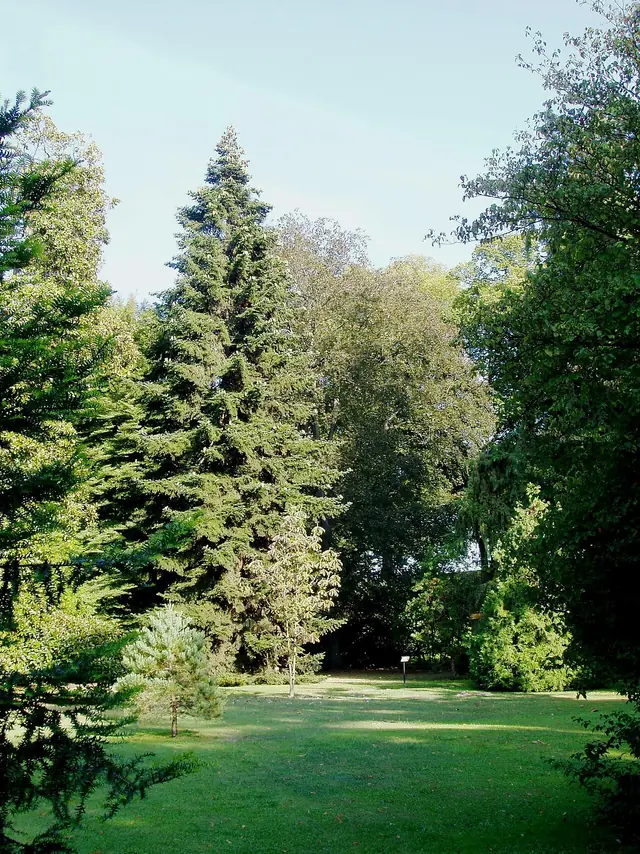
- Camellia avenue and lake in the park of about 16 hectares
Permanent exhibitions
- Museo Villa Reale – Route devoted to the Italian Empire style, with the rooms of Elisa Bonaparte Baciocchi.
- Museo Palazzina dell'Orologio – On the first floor of the Palazzina are displayed memorabilia, keepsakes and books of Countess Anna Laetitia Pecci-Blunt, patron and collector.
- Operated by
- Proprietà privata (famiglia Grönberg)
- Visitors per year
- approx. 43,063
Admission & discounts
| Adults | €12 |
|---|---|
| Reduced | €9young people aged 10 to 17, adults over 65, university students and groups of more than 10 people |
| Children & teens | freefree up to age 9 · Free admission up to age 9 (excluding groups); young people aged 10 to 17 pay the reduced rate. |
| Visitors with disabilities | freecompanion free · Free admission for people with disabilities and one companion. |
| Students & apprentices | €5Rate reserved for school groups up to secondary school; accompanying adults enter free. |
| Groups (11+ people) | €9 per personPark, groups of more than 10 people; park and museums €15. |
| Park and museums | €18Reduced €15; students €10. |
| Botanical treasure hunt | €5Per child, museum admission included. |
| Annual pass | €60Valid for 365 days for the park and museums; on the occasion of events only any surcharge is payable. |
Tickets are bought online on the website. The “Parco” ticket costs €12 (reduced €9, students €5), the “Parco e musei” ticket €18 (reduced €15, students €10). Group guides and escorts enter free. Prices may change on the occasion of events.
Accessibility
- Partially wheelchair accessible
- Elevator
- Accessible restroom: no information
- Accessible parking: no information
- Service dogs welcome: no information
- Tactile models & exhibits: no information
- Sign language tours: no information
- Easy-to-read materials: no information
- Audio description: no information
The park has routes accessible to people with motor disabilities, shown on a map on the website, and all toilets are easy to reach. The Museo Villa Reale is accessible thanks to recently installed lifts, while the Museo Palazzina dell’Orologio is not yet.
Kids & families
Great for kids & families
| Time needed | approx. 2 hrs |
|---|---|
| Kids’ admission | free up to age 9 |
- Family tours & workshops
- Activity booklet, scavenger hunt or kids’ audio guide
The botanical treasure hunt (€5 per child, with museum admission) starts at the ticket office with the official app; for schools, the guided games “Mitologia in Villa” and “Enigmi a Villa Reale” are also offered.
Getting there & parking
By public transit
Bus line 59 from Lucca (Piazzale Verdi and the railway station), with a stop in front of the park; by train from Florence Santa Maria Novella or Pisa Centrale to Lucca.
By car
Free parking
Free parking outside the park, near the entrance.
By car: A11 motorway, Lucca Est exit, then signs for Abetone for about 6 km and for Matraia and Villa Reale. The nearest airports are Pisa (about 43 km) and Florence (about 70 km).
Get directionsAmenities & dining
- Café
- Museum shop
Café Villa Reale is in a games pavilion from the early 20th century in the park (every day 10:30–17:30); there is also a bookshop and a gift shop. There are restaurants nearby.
Events & venue rental
- Spaces for rent
- Private parties
- Weddings / ceremonies
For private events the villa façade, the Teatro d’Acqua, the Giardino dei Limoni, the Giardino spagnolo with the Grotta di Pan, the lake, the Scuderie (about 430 m²) and two lemon houses are available. The villa also has 11 suites.
Inquiries & detailsPlan your visit
| Guided tours | yes |
|---|---|
| Audio guide | yes |
| School programs | yes |
| Photography | Personal photos and videos are permitted in the park; in the museums photos are allowed without flash, while photo shoots are forbidden. |
| Good to know | Recommended visit duration: at least two hours. Free audio and video guides with the “Villa Reale” app. Guided tours of the gardens can be booked through the website’s online shop. Dogs are admitted to the park on a lead; in the buildings only small dogs in a carrier. Food and non-alcoholic drinks may be brought into the park, but not into the museums. |