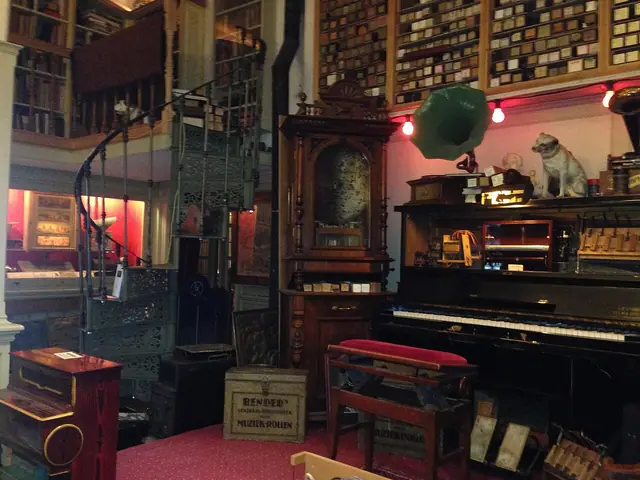
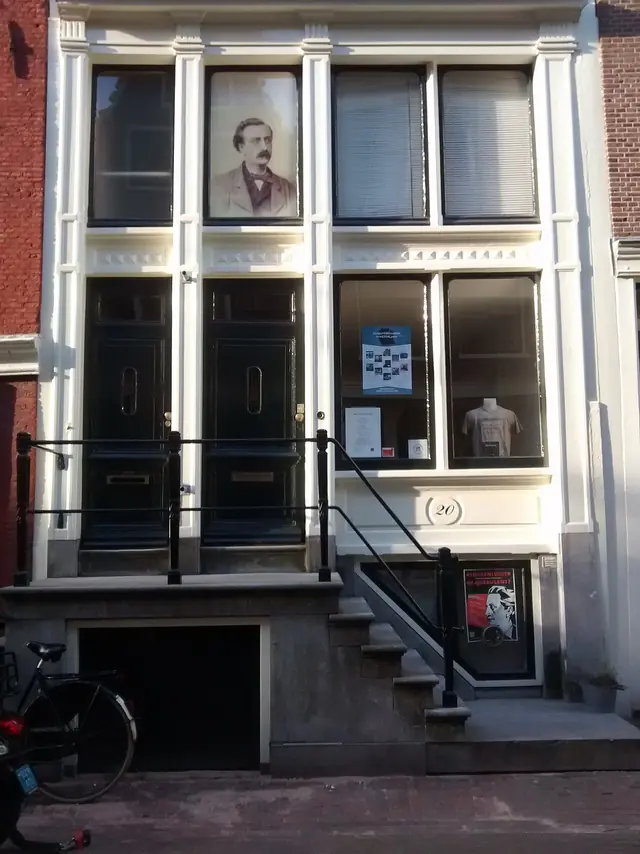
The exhibition follows the Jewish Lyceum in Amsterdam, with its Jewish pupils and teachers, during its brief two-year existence, which Anne and Margot Frank also attended. Every school day poses the same question: who is missing?
About the museum
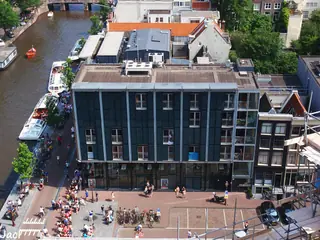
Otto Frank had his company in the building at Prinsengracht 263. On July 6, 1942, he went into hiding with his wife Edith and daughters Margot and Anne in the empty annex at the back; later the van Pels family and Fritz Pfeffer joined them. Behind a revolving bookcase, the eight people lived in hiding for just over two years, supplied by helpers from the business. In August 1944 they were arrested and deported; only Otto Frank survived.
Otto Frank ensured that Anne's diary was published in 1947. When the building was slated for demolition in the 1950s, citizens campaigned for its preservation. In 1957 the Anne Frank Stichting (foundation) was established; it bought the house and opened it as a museum on May 3, 1960. At Otto Frank's request, the Secret Annex was left unfurnished – the emptiness is meant to commemorate those who were murdered.
Today the tour leads through the front house with its former warehouse and office rooms, through the Secret Annex with Anne's room and the pencil marks the parents used to record their daughters' growth, and into a modern extension. There, the original red-checkered diary, Anne's other notebooks, temporary exhibitions and models of the furnished hiding place can be seen.
The foundation does educational work worldwide against antisemitism, racism and discrimination. The house receives more than one million visitors a year and is one of the most visited museums in the Netherlands.
Key themes
The unfurnished Secret Annex with the revolving bookcase at its entrance
Anne's original red-checkered diary and her book of tales
Picture wall in Anne's room with film stars and postcards
Anne's and Margot's growth marks on the wall
Map of Normandy on which Otto Frank followed the Allied advance
Permanent exhibitions
Het Achterhuis – Tour through the front house and the deliberately empty hiding place, with quotes, photos, films and personal traces of the eight people in hiding.
Dagboekkamer – Room with Anne's original diary, her book of quotes, her book of tales and rotating pages of the revised version.
Founded
1960
Operated by
Anne Frank Stichting
Director
Ronald Leopold
Visitors per year
approx. 1,207,501 (2025)
Admission & discounts
Adults
€16.50
Reduced
€7Young people aged 10 to 17 and holders of the European Youth Card
Children & teens
€7Ages 0–9: €1 (booking fee only), ages 10–17: €7. The museum recommends visiting only from age 10.
Seniors
–No senior discount listed.
Students & apprentices
–No discount with a student ID.
Groups
–Groups book an introductory program (30 min.), school classes an educational program (2 hrs 15 min. including the tour, in English, Dutch and German); groups of more than 35 people split up. Program and admission costs paid in advance by credit card or iDEAL.
Introductory program before the visit (30 min.)
€7Surcharge per ticket, in English or Dutch, ages 10 and up
All prices include a €1 booking fee. With the Museumkaart, only the €1 booking fee; likewise with an ICOM card. No discount with the I amsterdam City Card. Tickets only online at annefrank.org with a fixed time slot, no box office; every Tuesday at 10:00, tickets are released for the day six weeks later. No exchanges, no refunds. Audio tour included in the price. Payment by debit or credit card only.
Booking: visits by advance booking only · timed-entry tickets
Because of steep stairs (three steep flights up, a 39 cm high step at the bookcase), the historic front house and Secret Annex cannot be reached by wheelchair or rollator. The modern part with the temporary exhibition, models of the Secret Annex, café and shop is accessible via a step-free entrance and an elevator (staff-operated only). Folding stools at the information desk. Accessible parking space about 40 m from the entrance on Westermarkt, two more at Keizersgracht 220. Written version of the audio tour for deaf visitors, connection for your own induction loop on the audio guide, Sunflower lanyard recognized; twice a year an introductory program for blind and visually impaired people.
Kids & families
Only partly suitable for kidsRecommended for ages 10+
Time needed
approx. 60 min
Activity booklet, scavenger hunt or kids’ audio guide
Stroller-friendly: not available
The museum considers children under 10 too young; parents should judge for themselves whether their child can cope with the subject. Children's audio tour “Anne’s Story” for ages 10 to 15, told from Anne's perspective; preparation videos on the website. Buggies must be left at the cloakroom.
Getting there & parking
By public transit
Dam · 10-min walk
About 20 minutes on foot from Amsterdam Centraal station. From February 2025 to February 2028, no trams run to the Westermarkt stop; trams go to Dam, from there about 10 minutes on foot.
By car
Parking available
The museum refers visitors to nearby Q-Park parking garages.
Museum café overlooking the Prinsengracht and museum shop – both accessible only through the museum, card payment only. Free cloakroom for coats, bags and buggies; only bags up to A4 size inside the museum, no storage for suitcases and large backpacks.
Events & venue rental
The museum hasn’t published any information on this.
Plan your visit
Guided tours
no
Audio guide
yes (NL, EN, FR, DE, HE, IT, JA, PT, ES)
School programs
yes
Photography
Photography and filming not allowed (including with camera or AI glasses).
Good to know
According to the museum, a visit takes about an hour on average; fixed one-way route. No guided tours; instead a free audio tour and a bookable 30-minute introductory program. Cell phone use is not permitted in the museum.