Watersnoodmuseum
Museum in the 1953 concrete caissons near Ouwerkerk about the flood disaster, the reconstruction and today's approach to water and climate change.
Have only individual sections read aloud
About the museum
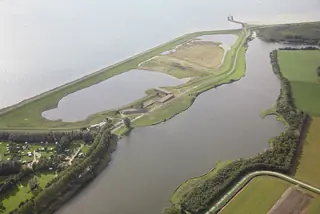
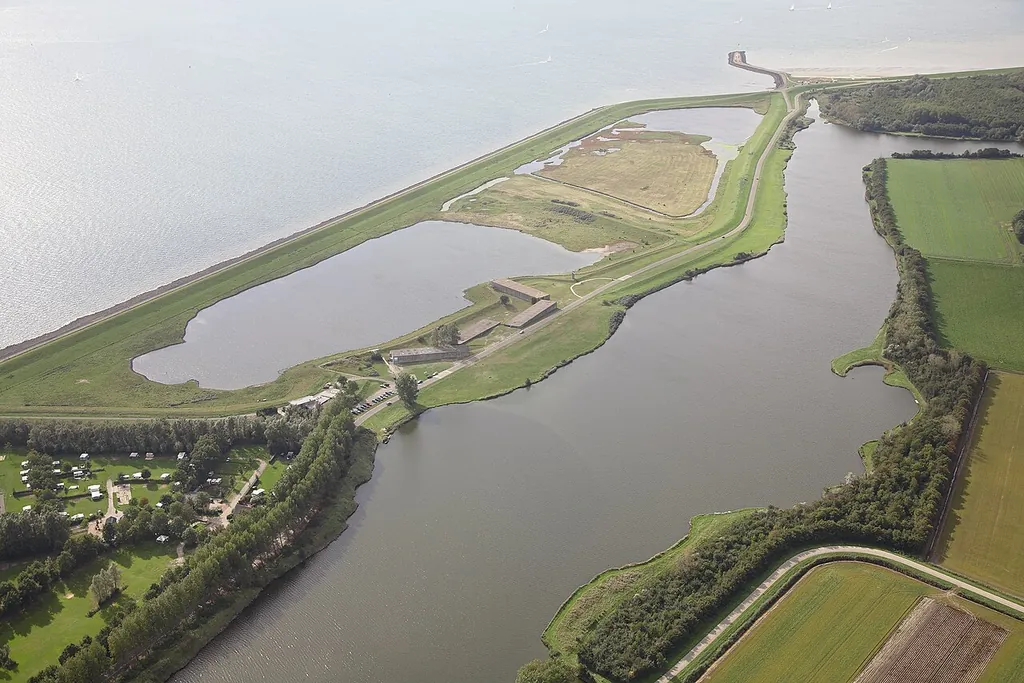
In the night of 1 February 1953 the North Sea broke through the dikes of the Netherlands in many places. Through the largest gaps the water poured in and out day and night. These breaches were closed with caissons, huge concrete floating boxes. The Watersnoodmuseum is located in exactly those caissons with which the last dike gap was closed at Ouwerkerk, and thus at a historically significant site.
The museum was founded in 2001 and is run by the Stichting Nationaal Monument Watersnood 1953, whose aim is to preserve the caissons and keep the memory of the disaster alive. The collection, which is managed by a separate foundation, includes diaries, photos, newspaper articles, videos and objects relating to the flood of 1 February 1953.
Caisson 1 deals with the stormy night itself and how people behaved, Caisson 2 with victims, emotions and help. Caissons 3 and 4 address the reconstruction, the question of whether water is still dangerous today, and Dutch hydraulic engineering. For visitors under 16 there is the Jeugdwatersnoodmuseum with routes through the building. Around the museum you can explore nature and the tidal landscape, and at the former breach sites, posts commemorate the 96 gaps in total. Today the museum also sees itself as a place to talk about water, climate change and sea-level rise.
Highlights
- Museum in the caissons that closed the last dike gap in 1953
- Four caissons on the stormy night, its aftermath, reconstruction and present-day hydraulic engineering
- Jeugdwatersnoodmuseum with routes for children under 16
- Free WATERgezicht app with audio tour and cycling and walking routes
- Museum brasserie Het Vijfde Caisson with terrace
Permanent exhibition
- Die Caissons: Rampnacht, Folgen und Kampf gegen das Wasser – In four caissons the museum tells of the stormy night, the aftermath and emotions, the reconstruction and the role of hydraulic engineering and climate change today.
- Founded
- 2001
- Operated by
- Stichting Nationaal Monument Watersnood 1953
- Visitors per year
- approx. 91,000 (2025)
Admission & discounts
| Adults | €16 |
|---|---|
| Reduced | €8CJP card holders |
| Children & teens | €8.50free up to age 4 · Children aged 5 to 11; free up to and including age 4. |
| Groups (15+ people) | €11.50 per personFrom 15 people: adults and young people aged 12 to 18 €11.50, children aged 5 to 11 €6.75; school pupils in a class group (12–18 years) €7; primary school classes flat rate €56.50. Introductory talk (approx. 30 minutes, excluding group admission) €54.50, guided tour on request €70 (up to 20 people per guide). |
| Dog buggy rental | €2.50For dogs up to 20–25 kg; pets are only allowed in the museum in the buggy |
Free with Museumkaart, Rotterdampas and VriendenLoterij VIP-KAART. Tickets can be bought online and scanned at the entrance.
Accessibility
- Wheelchair accessible
- Elevator
- Accessible restroom
- Accessible parking
- Service dogs welcome
- Tactile models & exhibits: no information
- Sign language tours: no information
- Easy-to-read materials: no information
- Audio description: no information
All areas are accessible by wheelchair; two disabled parking spaces, two accessible toilets, wheelchair lifts that can be used independently, as well as three loan wheelchairs and one loan rollator (ask in advance). Induction loop available, all films have Dutch and English subtitles. The app offers an audio tour that is also available as text. Assistance dogs are admitted free of charge. In some areas it is dark or loud; in autumn there are low-stimulus visiting hours.
Kids & families
Great for kids & families
| Kids’ admission | free up to age 4 |
|---|
- Family tours & workshops
- Activity booklet, scavenger hunt or kids’ audio guide
The Jeugdwatersnoodmuseum offers visitors under 16 their own routes with things to do and discover. Children up to and including age 4 have free admission.
Getting there & parking
By car
Parking available
Large car park directly in front of the museum with charging points for electric cars; a short paved path leads to the entrance.
- Accessible parking
Do not drive through the village of Ouwerkerk; the roads are unsuitable for buses and heavy traffic. From Rotterdam take the A29 and N59 to Bruinisse, then after Bruinisse turn left onto the Rijksstraatweg, right onto the Langeweg and follow the dike to the museum. From Zierikzee or via the Zeelandbrug, follow the signs along the dike.
Get directionsAmenities & dining
- Café
- Restaurant
- Museum shop
Museum brasserie Het Vijfde Caisson (Wednesday to Friday 9:30 a.m.–5:00 p.m., Saturday and Sunday 9:30 a.m.–6:00 p.m.; terrace, free Wi-Fi, charging points for electric cars and e-bikes) and a coffee corner in Caisson 3. Also a museum shop and web shop.
Events & venue rental
- Spaces for rent
- Private parties
- Corporate events
Several halls for receptions, dinners and conferences: Kees Slager Hall (€125–325), Peter Hossfeld Hall (from €325), Johan van Veen Auditorium (€150–350), brasserie and Caisson 1 (price by arrangement), combinable with lunch or dinner.
Inquiries & detailsPlan your visit
| Guided tours | yes |
|---|---|
| Audio guide | yes |
| School programs | yes |
| Good to know | Free WATERgezicht app with an audio tour through the caissons as well as walking and cycling routes. Groups of more than 15 people can book an introduction of about 30 minutes with Zeeland bolus pastry and a drink; tours for 15–20 people and school programmes on request. |