Norsk Folkemuseum
One of Europe's largest open-air museums, on Bygdøy, with 159 buildings, Gol Stave Church and exhibitions on everyday life in Norway from the 16th century to today.
Have only individual sections read aloud
About the museum
Norsk Folkemuseum was founded in 1894 to give a broad picture of everyday life in Norway and to show the interplay between society, culture and nature. The museum cares for large collections of objects, pictures and archive material from across the country, and since its beginning it has asked what it means to be Norwegian.
The museum also includes Kong Oscar IIs samling (King Oscar II's Collection), which is regarded as the world's first open-air museum. It is the oldest part of the open-air museum and includes, among other things, Gol stave church from around 1200. The open-air museum today has 159 buildings from town and countryside, from the Middle Ages to our own time.
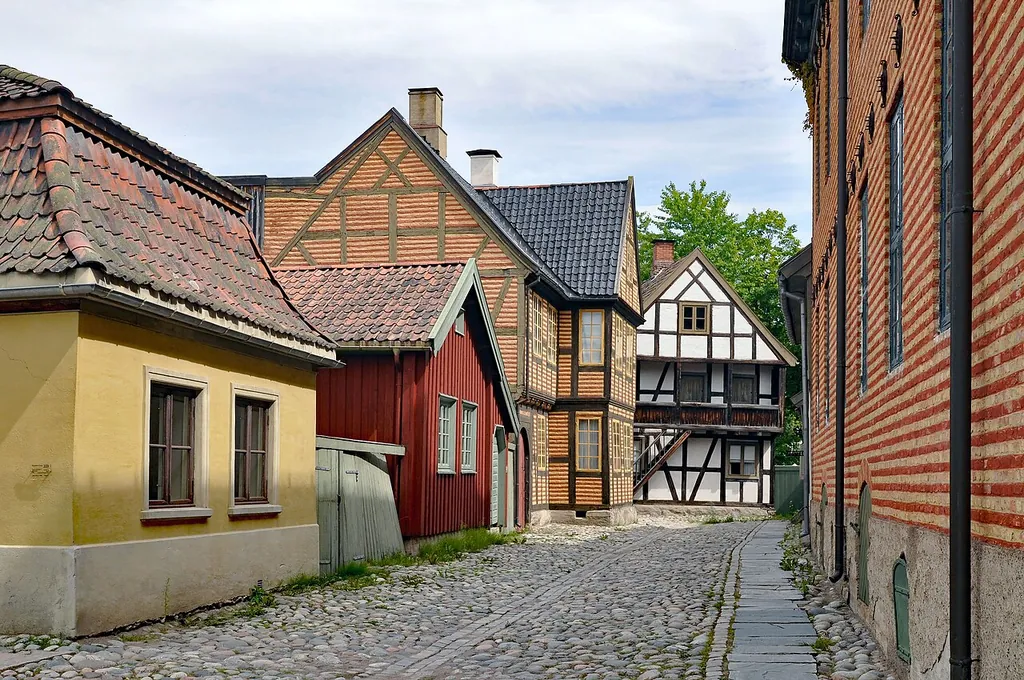
In the countryside the houses are gathered in farmyards from different districts, while the Old Town shows townhouses and suburban houses from Oslo, Brevik and Kragerø. One of the highlights is the townhouse Wessels gate 15, which shows the apartments as they were when the building was inhabited, from 1865 to 2002.
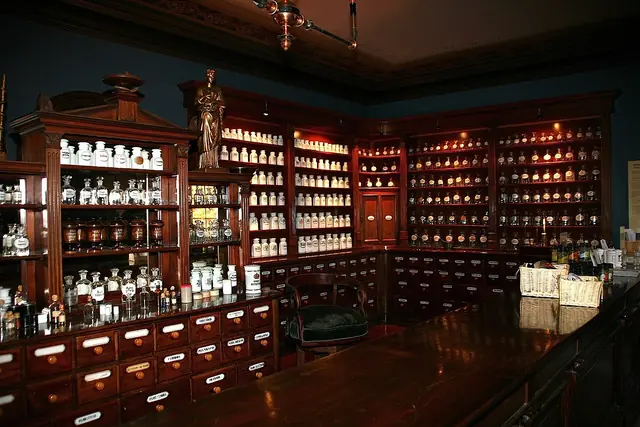
Indoors the museum shows, among other things, folk art, folk costumes, church art and Sámi culture, as well as the exhibition Tidsrom 1600–1914 about the lives of the bourgeoisie and officials. The museum is part of the Stiftelsen Norsk Folkemuseum and has around 350,000 visitors a year.
Highlights
- Gol stave church from around 1200
- The open-air museum with 159 buildings from town and countryside
- The Old Town and the townhouse Wessels gate 15 with apartments from 1865 to 2002
- The exhibition Tidsrom 1600–1914 with six authentic interiors
- Sámi culture, folk art and folk costumes
- Christmas market and Halloween at the open-air museum
Permanent exhibitions
- TIDSROM 1600–1914 – The museum's largest indoor exhibition shows the everyday life and celebrations of the bourgeoisie and officials, with over 1,500 objects and six authentic interiors.
- Folkekunst – A selection of Norwegian folk art from the Middle Ages to around 1900.
- Samisk kultur – The exhibition shows the way of life and everyday life of the Sámi in the past, and Sámi life in more recent times.
- Founded
- 1894
- Operated by
- Stiftelsen Norsk Folkemuseum
- Director
- Nina Refseth
Admission & discounts
| Adults | NOK 200 |
|---|---|
| Reduced | NOK 140Students (honnør rate NOK 160, OBOS members NOK 150) |
| Children & teens | freefree up to age 17 · Children and young people aged 0–17 have free admission. |
| Seniors | NOK 160From 67 years of age or with a valid honnør card. |
| Visitors with disabilities | –companion free · A companion with a companion card has free admission. |
| Students & apprentices | NOK 140 |
| Groups | –Tour operators receive a discount by agreement. School classes and nurseries have free admission. |
| Annual pass (unlimited admission for 12 months) | NOK 700Also gives admission for one guest. |
Free admission with Oslo Pass, ICOM, press card and annual passes from Maihaugen, Skansen, Jamtli, Kulturen in Lund and Den Gamle By. OBOS members receive a 25 per cent discount. Guided tours are arranged and paid for separately. It is not necessary to buy a ticket in advance.
Accessibility
- Partially wheelchair accessible
- Elevator
- Accessible restroom
- Accessible parking
- Service dogs welcome
- Tactile models & exhibits: no information
- Sign language tours: no information
- Easy-to-read materials: no information
- Audio description: no information
The open-air museum has wide gravel paths, but some areas are steep or have surfaces that can be difficult for wheelchair users, and some historic buildings have limited access. Good accessibility is provided at the visitor centre with café, shop and accessible toilets, in the buildings around Torget with an outdoor lift to the entrance, and in Trøndelagstunet with an accessible toilet. Accessible parking is 50 metres from the main entrance.
Kids & families
Great for kids & families
| Time needed | approx. 3 hrs |
|---|---|
| Kids’ admission | free up to age 17 |
- Family tours & workshops
- Hands-on stations
- Stroller-friendly
- Baby changing facilities
- Playground / play area
The open-air museum has a playground, animals and many houses to explore, and there are indoor play areas. At weekends, in the summer half-year and during larger events there are activities for children. Changing rooms are in the visitor centre and at Torget.
Getting there & parking
By public transit
Folkemuseet
Bus 30 Bygdøy from central Oslo to the stop Folkemuseet. Ferry from Rådhusbrygge 3 to Dronningen every 20 minutes, then a ten-minute walk.
By car
Paid parking
Municipal parking outside the main entrance, with charges every day 08:00–20:00. There are also accessible spaces here.
- Accessible parking
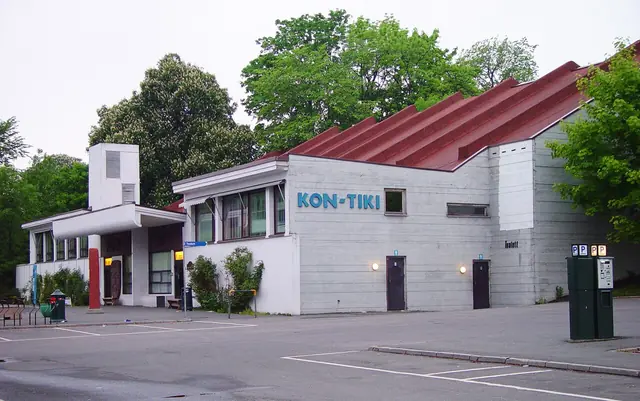
From the E18 or Bygdøy Allé, turn off to Bygdøy and follow the signs to the museum. Bicycle parking is directly outside the museum. The museum is within walking distance of Norsk Maritimt Museum, Frammuseet and Kon-Tiki Museet.
Get directionsAmenities & dining
- Café
- Museum shop
Kafé Arkadia by the main entrance serves pastries, sandwiches and salads. There are tables and benches at Festplassen and the playground for food you bring. The shop and visitor centre sell Norwegian and Nordic crafts and design. Dogs are welcome on leads in the open-air museum, but not inside buildings.
Events & venue rental
- Spaces for rent
- Private parties
- Corporate events
The museum rents out premises and offers folk dance and music for events.
Inquiries & detailsPlan your visit
| Guided tours | yes |
|---|---|
| School programs | yes |
| Good to know | Most people spend 2–4 hours on their visit. Daily guided tours, including of Gol stave church and Hovestua, are given in English from Tuesday to Sunday at 11:00, 13:00 and 15:00. Group tours and school visits are arranged in advance. |