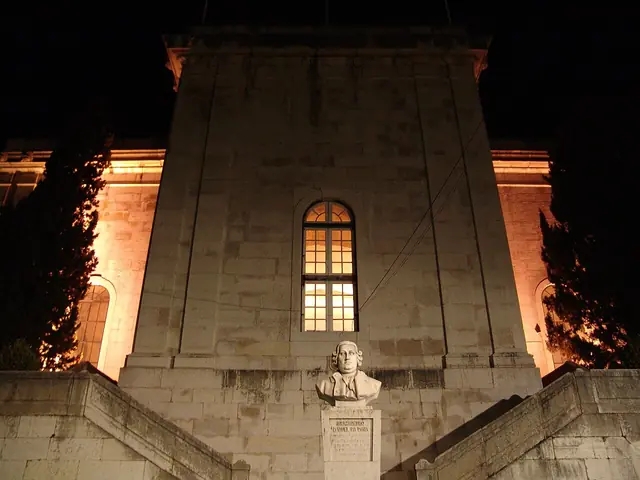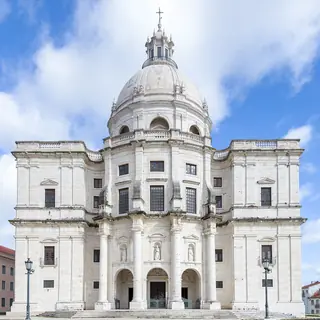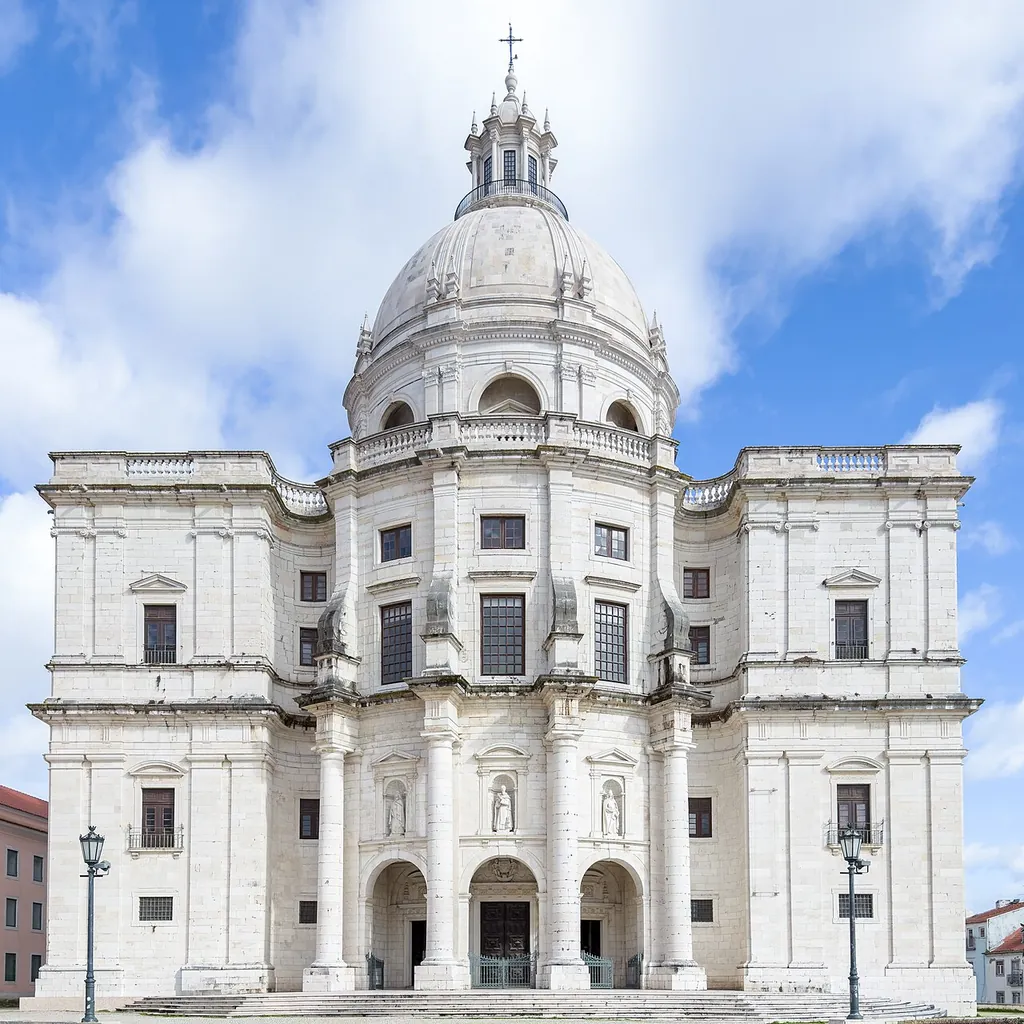
Panteão Nacional
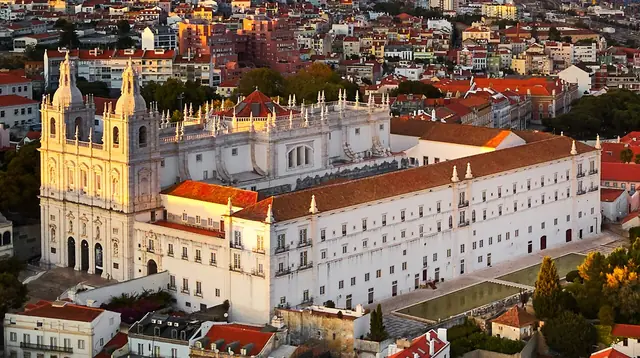
Baroque monument with a dome, the former church of Santa Engrácia, where the tombs and cenotaphs of figures from Portuguese history are located.
Have only individual sections read aloud
About the museum
The Igreja de Santa Engrácia, in Lisbon, stands on the site of an earlier temple, built in 1568 at the behest of the infanta D. Maria to house the reliquary of the martyr Saint Engrácia of Zaragoza. That building was badly damaged by a storm in 1681, and the foundation stone of the present church was laid the following year. The works dragged on for so long that they gave rise to the popular expression “obras de Santa Engrácia”, used for something that never seems to end.
The church was only completed in 1966, 284 years after work began, and has a large dome built in the modern era. Considered the first Baroque monument in the country, its interior is clad in marbles of various colours. During the 19th century and part of the 20th century it served as a weapons store and a shoe factory.
The building was listed as a National Monument in 1910 and, by law of 1916, became the National Pantheon. It opened to the public with this status on 1 December 1966. It is now managed by Museus e Monumentos de Portugal and houses tombs and tributes to personalities of Portuguese history and culture.
Highlights
- Large dome of modern construction
- Central nave and tomb chambers
- Tombs and cenotaphs of figures from Portuguese history
- Interior in coloured marbles
- Considered the first Baroque monument in the country
- Operated by
- Museus e Monumentos de Portugal
Admission & discounts
| Adults | €10 |
|---|---|
| Reduced | €5Visitors aged 65 or over, young people aged 13 to 24 and families (at least one adult and one minor): 50% discount. |
| Children & teens | freefree up to age 11 · Children under 12, accompanied by an adult, do not pay. |
| Seniors | €565 or over; 50% discount. |
| Visitors with disabilities | freecompanion free · Visitors with a disability and one companion enter free. |
| Students & apprentices | €5Young people aged 13 to 24; 50% discount. |
| Families | €5At least one adult and one minor; 50% discount. |
Free admission: Residents of Portugal have free access on 52 days a year of their choice.
Payment methods: cash, Visa and Multibanco. Free admission also for unemployed residents of the European Union, researchers and heritage and museum professionals, members of ICOM, ICOMOS and APOM, teachers and students on study visits, and veterans. Volume discounts for more than 250, 500 and 1,000 tickets.
Accessibility
- Partially wheelchair accessible
- Elevator: no information
- Accessible restroom: no information
- Accessible parking: no information
- Service dogs welcome: no information
- Tactile models & exhibits: no information
- Sign language tours: no information
- Easy-to-read materials: no information
- Audio description: no information
The central nave and the tomb chambers on the ground floor are accessible to people with reduced mobility.
Kids & families
The museum hasn’t published any information on this.
Getting there & parking
By public transit
Panteão Nacional / Campo de Santa Clara
Buses stopping at “Panteão Nacional” or “Campo de Santa Clara”: 704, 712, 728, 734, 735, 745, 759, 781 and 782, and tram 28. Train and metro: Santa Apolónia station (Blue Line), less than 10 minutes' walk away.
By car
Public car parks and parking areas in the vicinity.
GPS coordinates: 38°42′53.15″ N, 9°07′30.50″ W.
Get directionsAmenities & dining
The museum hasn’t published any information on this.
Events & venue rental
Venue hire is handled by Museus e Monumentos de Portugal.
Inquiries & details