Real Observatorio de Madrid
18th-century observatory designed by Juan de Villanueva, visited with a guide, displaying historical astronomical and geophysical instruments.
Have only individual sections read aloud
About the museum
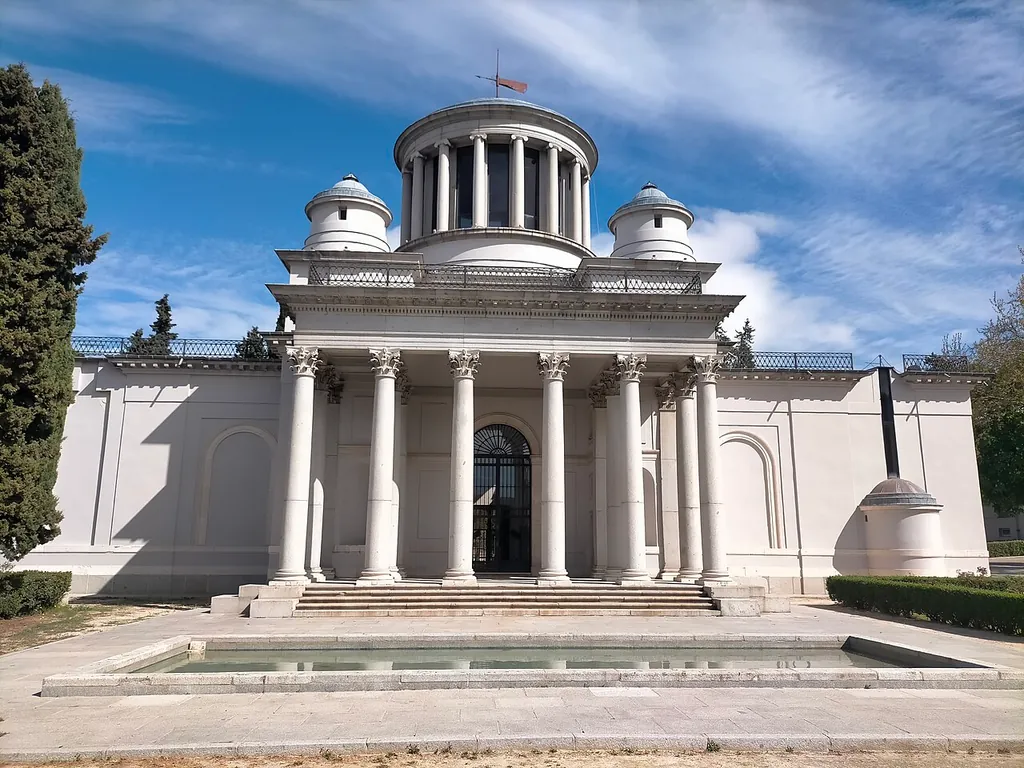
The Real Observatorio de Madrid was founded at the initiative of Charles III, on the suggestion of Jorge Juan, although its founding decree dates from 1790, during the reign of Charles IV. The main building is the work of the architect Juan de Villanueva and stands next to the Retiro park. From the outset it brought together astronomy and the Earth sciences: solar and stellar physics, celestial mechanics, the development of instruments, the official keeping of time, and applications to geodesy and cartography, as well as geomagnetism, seismology and meteorology.
William Herschel's large telescope, 60 cm in diameter with a focal length of 25 feet, was installed between 1796 and 1798 and was destroyed in 1808 during the Napoleonic occupation; a replica is now on display. In 1854 the Repsold meridian circle was added, which is still in the building. In recent decades the observatory has pioneered radio astronomy in Spain and set up the Data Reception Centre of the national volcanic monitoring and alert service.
Today it houses the headquarters of the Observatorio Astronómico Nacional and the Observatorio Geofísico Central of the Instituto Geográfico Nacional. The guided tour goes through the rotunda of Villanueva's building, with the Foucault pendulum and the collection of instruments; the meridian circle room; the library with old books; the replica of the Herschel telescope; and the Sala de las Ciencias de la Tierra y el Universo, with astronomy, geodesy and geophysics instruments of the 19th and 20th centuries.
Highlights
- Juan de Villanueva building with the Foucault pendulum in the central rotunda
- Repsold meridian circle of 1854
- Replica of William Herschel's great telescope of 1796–1798
- Sala de las Ciencias de la Tierra y el Universo with 19th- and 20th-century instruments
- Historic library with old astronomy books
Permanent exhibition
- Visita guiada al Real Observatorio de Madrid – A tour of Villanueva's building with the Foucault pendulum, the Repsold meridian circle, the library, the replica of the Herschel telescope and the collection of astronomy, geodesy and geophysics instruments.
- Founded
- 1790
- Operated by
- Instituto Geográfico Nacional (Centro Nacional de Información Geográfica)
Admission & discounts
| Adults | €7 |
|---|---|
| Reduced | €4People in legal unemployment, people with disabilities and their companion, people over 65, children and young people aged 11 to 18, large families, holders of the Carné Joven, students aged 18 to 25 and pensioners, with accreditation |
| Children & teens | freefree up to age 10 · Free admission for children up to 10; ages 11 to 18, reduced admission. |
| Seniors | €4People over 65. |
| Visitors with disabilities | €4Reduced admission for people with disabilities and their companion. |
| Students & apprentices | €4Students aged 18 to 25 inclusive. |
| Groups | –Official educational centres, from Year 10 (3.º de ESO) onwards, have free admission for groups of up to 25 people, including teachers. |
| Families | €4Reduced admission for members of large families. |
| Private visit (full session, maximum 25 people) | €175At the usual weekend times; only the booked group is admitted. |
Admission is also free with the purchase of the latest Anuario of the Real Observatorio de Madrid (presenting the ticket) and with the ICOM card. Those who buy in advance receive a booking reference, without which entry is not permitted; tickets are not refundable, but the session can be changed by notifying at least the day before. To use the Bono Cultural Joven, contact the museum by email or phone.
Accessibility
- Wheelchair accessible
- Elevator: no information
- Accessible restroom: no information
- Accessible parking: no information
- Service dogs welcome
- Tactile models & exhibits: no information
- Sign language tours: no information
- Easy-to-read materials: no information
- Audio description: no information
The visit is suitable for people with reduced mobility; please mention this when booking. Only guide dogs are admitted. Seven sign-language guides, with video, text and audio, are accessible via QR codes in front of each room.
Kids & families
Only partly suitable for kids
| Kids’ admission | free up to age 10 |
|---|---|
| Family ticket | €4 · Reduced admission for members of large families. |
- Family tours & workshops
The visit is recommended for children over 11. On Sundays at 12:30 there is a special session for families with children aged 7 to 12, with simpler historical and technical content.
Getting there & parking
By public transit
Estación del Arte (metro, línea 1)
Metro: Estación del Arte (line 1). Cercanías Renfe: Atocha. EMT buses: C1, C2, E1, 10, 14, 19, 26, 27, 32, 34, 37 and 45.
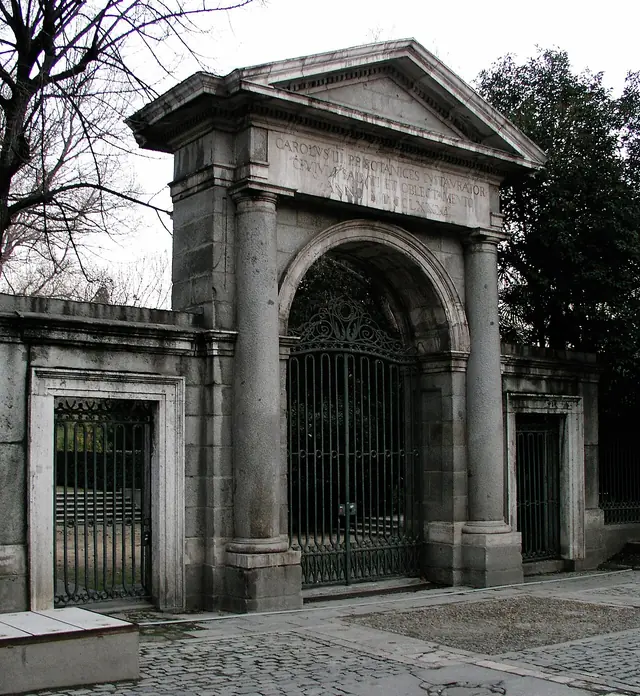
On Saturdays and Sundays the site is closed and staff receive visitors at the pedestrian entrance on calle de Alfonso XII, 3, next to bus stop 19.
Get directionsAmenities & dining
The museum hasn’t published any information on this.
Events & venue rental
A private visit of a full session (up to 25 people) is offered for €175.
Plan your visit
| Guided tours | yes · approx. 1.5 hrs |
|---|---|
| School programs | yes |
| Photography | Photography without flash is permitted inside and outside the facilities. |
| Good to know | The guided visit, in Spanish, has a capacity of 5 to 25 people per session; if a session does not reach the minimum, staff will offer another session or refund the amount. Mobile phones must be switched off and silence observed; smoking, eating and drinking are not permitted on the site. It is recommended for children over 11. On Fridays access is through the garden area to the security control booth; on Saturdays and Sundays, through the pedestrian entrance on calle de Alfonso XII, 3, next to bus stop 19. Official educational centres, from Year 10 (3.º de ESO) onwards, can book free visits. |