Forsbacka bruk
Well-preserved ironworks site from the 1500s with a works museum, a worker's dwelling from the 1920s, crafts, art and a café in Labbis.
Have only individual sections read aloud
About the museum
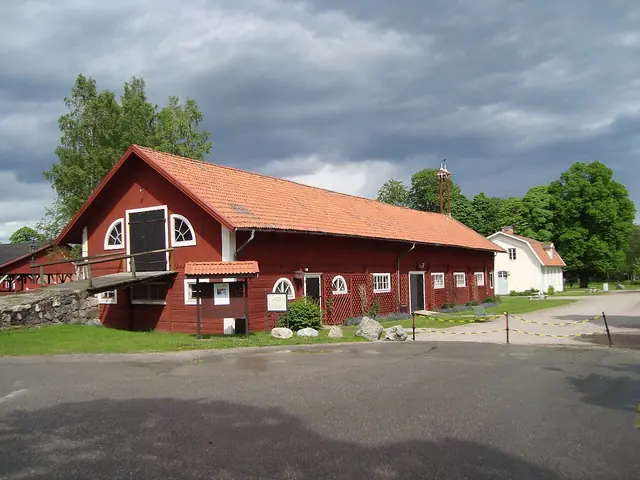
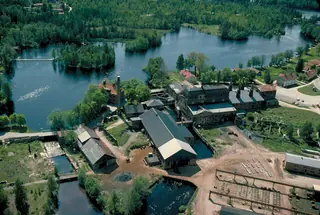
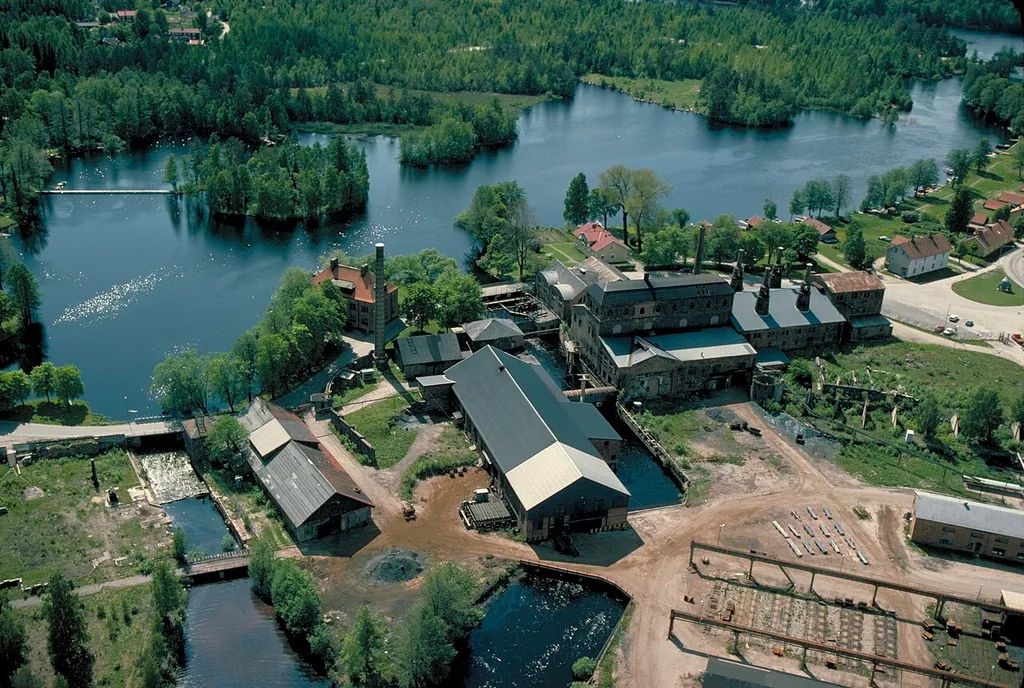
Forsbacka bruk (Forsbacka Ironworks) by the Gavleån river is one of Sweden's best-preserved ironworks. The first written records of iron-working date from the late 1500s, and in 1651 the works received a privilege letter from Queen Christina. In the 1700s it passed through several families, and Johan Magnus Nordin took over the whole works in 1796, expanded it considerably and had the manor house and the park built.
In the 1800s the blast furnace was closed, but bar iron production grew and reached its peak in the 1850s. Forsbacka Jernverks AB (Forsbacka Ironworks Ltd) was formed in 1870, and the works was modernised with Bessemer converters, rolling mills and steam power. Fagersta AB bought the works in 1929, and during the 1940s the works had more than 1,000 employees. Operations were closed in the mid-1980s after a long struggle to keep them.
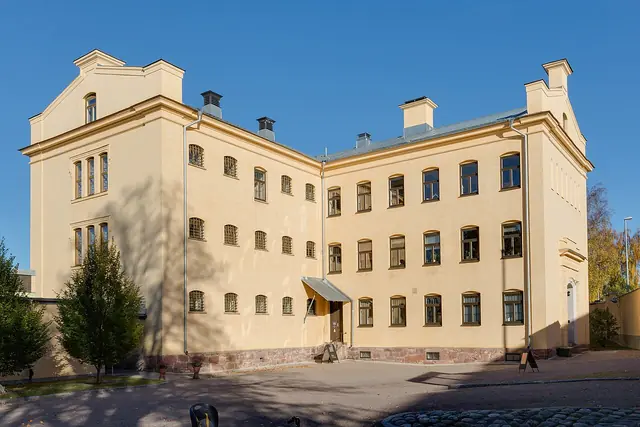
Since the closure, Forsbackagruppen and Stiftelsen Forsbacka bruk (the Forsbacka Works Foundation), formed in 1992, have looked after the buildings. The restoration work was awarded the Europa Nostra Prize in 1998. Today the works area is a cultural environment with preserved furnace buildings, brick walls and industrial settings. There is a works museum with a worker's dwelling from the 1920s, a craft shop, art exhibitions, a café and restaurant in the former laboratory building Labbis, and activities at Lake Storsjön.
Highlights
- Works museum with a worker's dwelling from the 1920s
- Preserved works buildings, including Rostugnshuset (the roasting furnace house)
- Labbis, a laboratory building designed by Otar Hökerberg, with café and restaurant
- The English Park (Engelska parken) and Lake Storsjön
- Art exhibitions and craft shop in the inner courtyard
Permanent exhibitions
- Bruksmuseet och arbetarbostaden från 1920-talet – Museum on the history of the works, with a preserved worker's dwelling from the 1920s.
- Industriutställning – Permanent exhibition on the industrial history of the works area.
- Operated by
- Stiftelsen Forsbacka bruk
Admission & discounts
Admission is free.
Admission to the works museum is voluntary. Guided tours, canoe hire, skittle alley, mini golf and sauna cost extra and are booked by telephone or via the website.
Accessibility
- Wheelchair accessible: no information
- Elevator: no information
- Accessible restroom: no information
- Accessible parking: no information
- Service dogs welcome: no information
- Tactile models & exhibits: no information
- Sign language tours: no information
- Easy-to-read materials: no information
- Audio description: no information
Visitors with reduced mobility can use the facilities according to Visit Gävle; details of wheelchair access to the museum and the buildings are lacking. Guest toilets are inside Labbis.
Kids & families
Great for kids & families
- Playground / play area
Playground in the inner courtyard, and mini golf and canoe paddling on Storsjön in summer.
Getting there & parking
By car
Parking available
From Gävle or Sandviken take the Forsbacka exit from the E16, or turn in from Valbovägen at the sign for the industrial heritage area. There is parking on site, and motorhomes can stand on the pitch behind Rostugnshuset.
Get directionsAmenities & dining
- Café
- Restaurant
- Museum shop
Café, restaurant and bar in Labbis; craft shop in the inner courtyard. Guest toilets are inside Labbis. Lunch is served on weekdays. A sauna by the jetty, canoe hire, a skittle alley and mini golf are on the site.
Events & venue rental
The museum hasn’t published any information on this.
Plan your visit
| Guided tours | yes |
|---|---|
| Good to know | Guided tours through the works buildings and surroundings must be booked at least one week in advance by telephone on +46 70 642 41 10. |