Östasiatiska museet
Museum on Skeppsholmen with collections from China, Korea, Japan, India and Southeast Asia, reopened in September 2026 after just over two years of renovation.
Have only individual sections read aloud
About the museum
The Östasiatiska museet (Museum of Far Eastern Antiquities) was founded in 1929 and is based on the pioneering archaeological finds made in China by Johan Gunnar Andersson. Other important figures in the museum's history are the art historian Osvald Sirén, the sinologist Bernhard Karlgren and King Gustaf VI Adolf, whose major donation is an important part of the collections.
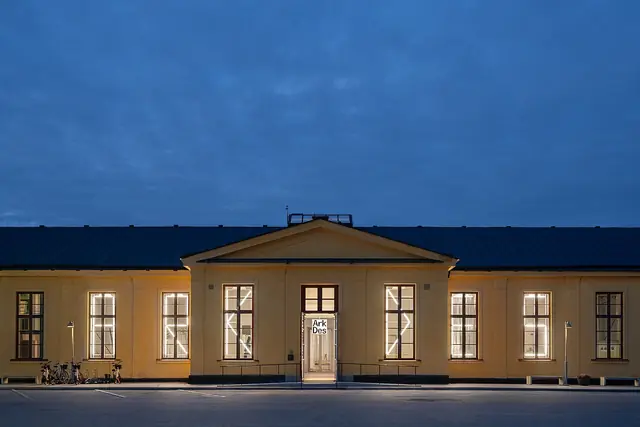
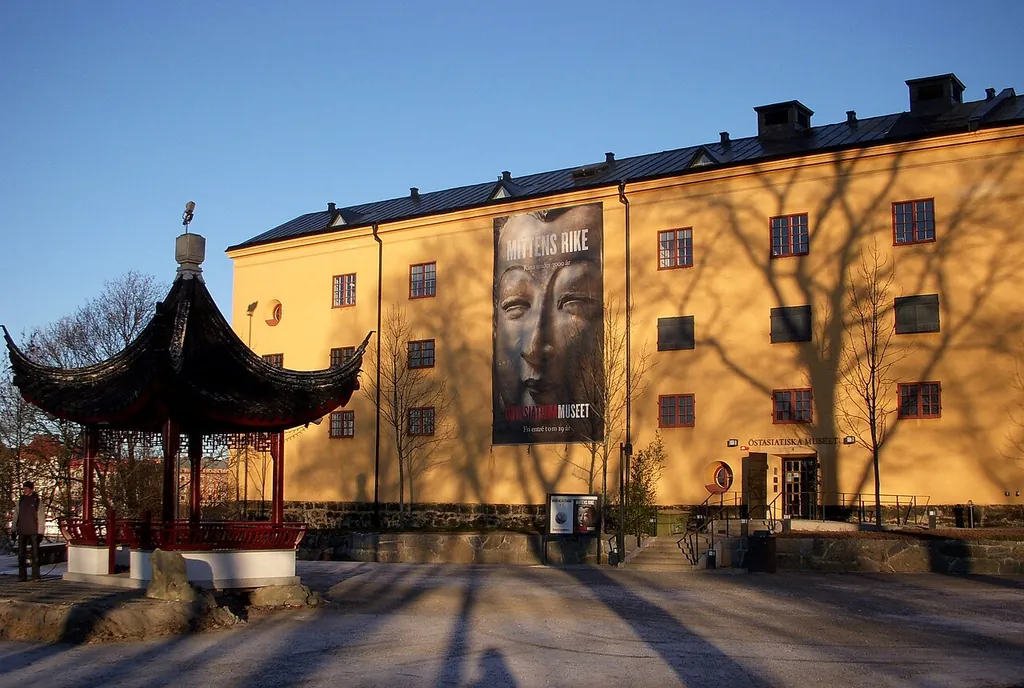
The museum is housed in a building on Skeppsholmen that was built in 1699–1704 as a stable for Karl XII's drabanter (bodyguards) and designed by the palace architect Nicodemus Tessin. The building has also been used as a ropewalk and as a naval arsenal, and the latter name lives on in Tyghusplan.
The collections from China, Korea, Japan, India and Southeast Asia have few equivalents in Europe. In the permanent exhibitions visitors can experience more than 5,000 years of Chinese history, including objects from the Stone Age settlements by the Yellow River that Andersson investigated. The museum is part of the agency Statens museer för världskultur (Swedish National Museums of World Culture).
After a renovation lasting just over two years, the museum reopened on 19 September 2026, with a new exhibition on Asian cultural heritage in Sweden, an expanded Japan exhibition, a renovated Ateljé Ginkgo and the new café Tyghuset.
Highlights
- More than 5,000 years of Chinese history
- Objects from the Stone Age settlements along the Yellow River
- The Japan exhibition with textiles and woodblock prints
- The Korea gallery
- Tessin's building from 1699–1704 on Skeppsholmen
Permanent exhibitions
- I våra liv – asiatiskt kulturarv i rörelse – The exhibition shows how art forms, spiritual practices, philosophies and traditions from Asian cultures have changed and found new expression in Sweden.
- Mittens rike – Chinese history over more than 5,000 years, with finds from the Stone Age settlements along the Yellow River.
- Japan – Föremål och bilder berättar – The Japan exhibition has a new section on boro, textiles and garments that have been patched and mended over generations.
- Founded
- 1929
- Operated by
- Statens museer för världskultur
Admission & discounts
| Adults | SEK 160 |
|---|---|
| Reduced | SEK 140seniors |
| Children & teens | freefree up to age 18 · Free admission for everyone under 19. |
| Seniors | SEK 140 |
| Stockholm annual pass (Östasiatiska museet, Medelhavsmuseet and Etnografiska museet, 365 days) | SEK 200 |
| Världskulturmuseerna annual pass (all four museums, 365 days) | SEK 350 |
Free admission: Go two, pay for one: the last Friday of every month (2 for 1). Free admission for asylum seekers with a valid LMA or UT card, and for members of ICOM and Sveriges museer upon showing a card.
Day tickets are bought at the reception and are valid for entry for one day. Annual passes give discounts on some programme items and children's activities.
Accessibility
- Wheelchair accessible
- Elevator
- Accessible restroom
- Accessible parking
- Service dogs welcome
- Tactile models & exhibits: no information
- Sign language tours: no information
- Easy-to-read materials: no information
- Audio description: no information
The entrance is reached by a ramp, and lifts go to all floors, including a larger lift for powerchairs (ask a museum host). A wheelchair can be borrowed. A toilet with an RWC alarm is in the entrance. The lecture hall has an induction loop. Lighting in some exhibitions is dimmed out of consideration for sensitive objects. Färdtjänst (special transport) usually stops below the steps at the main entrance. Adapted tours can be requested via visning.stockholm@varldskulturmuseerna.se.
Kids & families
Great for kids & families
| Kids’ admission | free up to age 18 |
|---|
- Family tours & workshops
- Hands-on stations
- Stroller-friendly
- Baby changing facilities
Prams may be taken into the exhibitions as space allows, and there is pram parking. A changing table is between the entrance and Ateljé Ginkgo. The studio offers creative activities and an origami area. Free admission for everyone under 19.
Getting there & parking
By public transit
Östasiatiska museet
Bus 65 from Centralen (Vasagatan) to the Östasiatiska museet stop. Alternatively, walk from Kungsträdgården metro station over the bridge to Skeppsholmen.
By car
Parking available
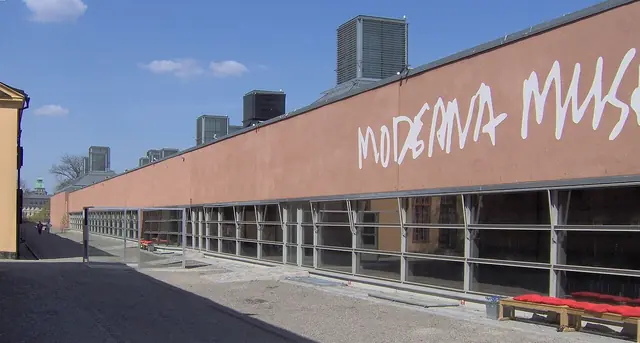
A few parking spaces outside the museum, more behind Moderna museet on Skeppsholmen; one disabled parking space.
- Accessible parking
The museum is on Skeppsholmen in central Stockholm.
Get directionsAmenities & dining
- Café
- Museum shop
- Coat check
- Lockers
- Wi-Fi
Café Tyghuset serves East Asian lunch (including sushi), fika pastries and drinks, and is open until 20:00 on Tuesdays. Free Wi-Fi for visitors. Museum shop with goods mainly from Japan and China. Lockers at the entrance that do not need coins. Food and drink brought from home may not be consumed.
Events & venue rental
- Spaces for rent
- Corporate events
Up to 100 guests.
The Beijing room on the ground floor holds 85 seated or 100 standing; the lecture hall has 100 seats. Bookings via konferens.stockholm@varldskulturmuseerna.se; the restaurant partner is Skeppsholmsgruppen.
Inquiries & detailsPlan your visit
| Guided tours | yes · approx. 30 min |
|---|---|
| School programs | yes |
| Photography | Photography without flash, tripods or selfie sticks is permitted. Commercial photography requires contacting the reception. |
| Good to know | Tours of the museum's highlights are held on some days at 14:30; group tours can be booked. Backpacks, larger bags and umbrellas are left in lockers. Only guide dogs may be brought in. |