Museum in a Appenzell house more than 400 years old on the village square of Urnäsch: Silvesterchlausen, alpine procession, Bloch, cattle show and folk art to try out.
The exhibition shows the diversity of the women's traditional costumes (Frauentrachten) of Appenzell Ausserrhoden, and how everyday clothing became consciously cherished cultural heritage after costume associations revived it from 1925 onwards. The occasion is the 100th anniversary of the Trachtenvereinigung AR.
Interactive exhibition on the wild animals of the Appenzell region and the work of hunters over the course of the year, with animal sounds, furs, antlers, around 40 specimens and films. The occasion is the 125th anniversary of the Patentjägerverein Appenzell Ausserrhoden.
About the museum
The impetus for the museum came in 1972 with the donation of the collection of Ernst Alder-Nef (1881–1971) to the municipality of Urnäsch. The postman and passionate collector had gathered many interesting objects on his rounds. The municipality commissioned the village doctor Walter Irniger and the secondary school teacher Hans Hürlemann to realise a museum, and a museum association was formed. The museum opened in 1976.
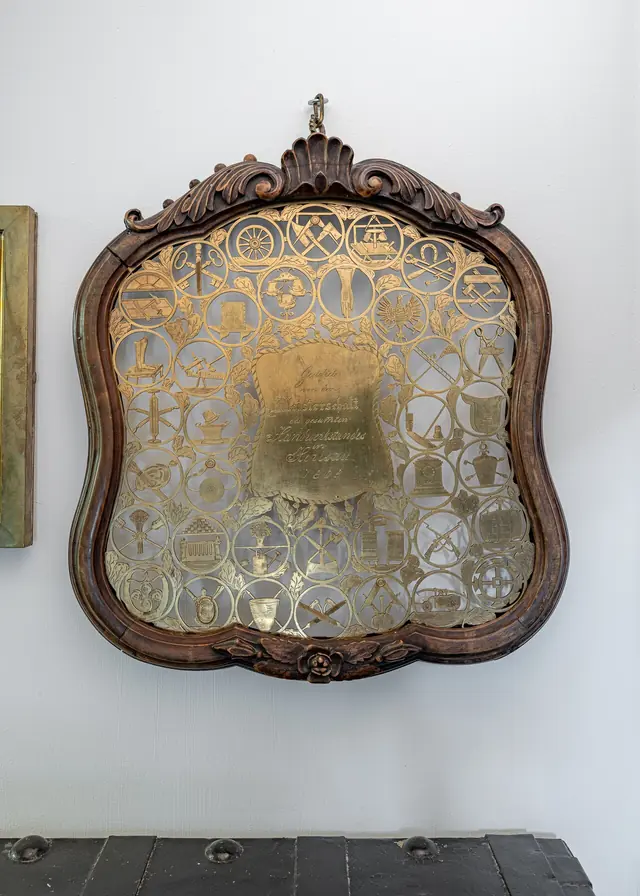
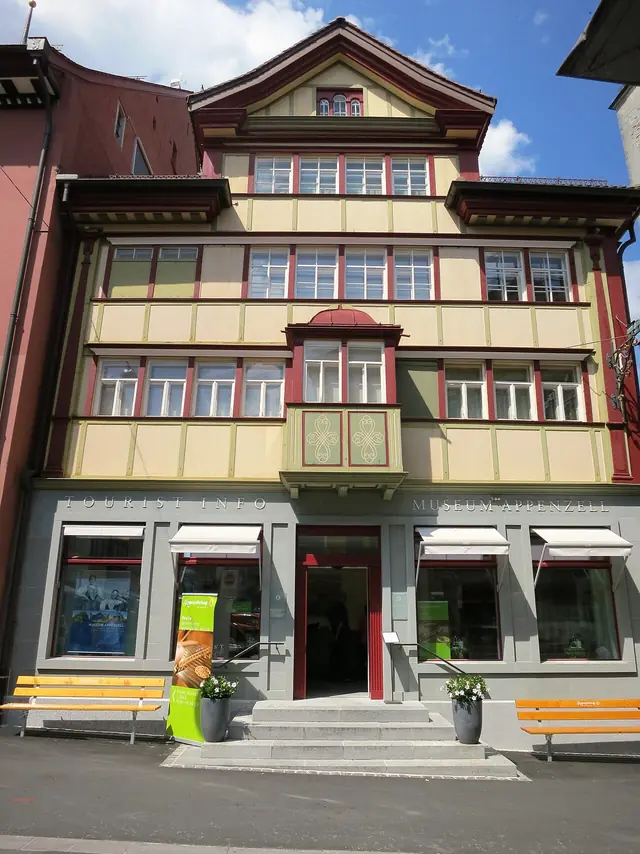
It occupies three connected houses directly on the village square; at the centre is a sun-tanned Appenzell house more than 400 years old. Exhibition rooms, shop, tourist office and administration share the buildings. Thanks to later donations and targeted purchases, the collection today comprises around 8,000 objects, including props of the Silvesterchläuse, objects from alpine dairying and crafts, traditional costumes, paintings, carvings, musical instruments, furniture and photographs.
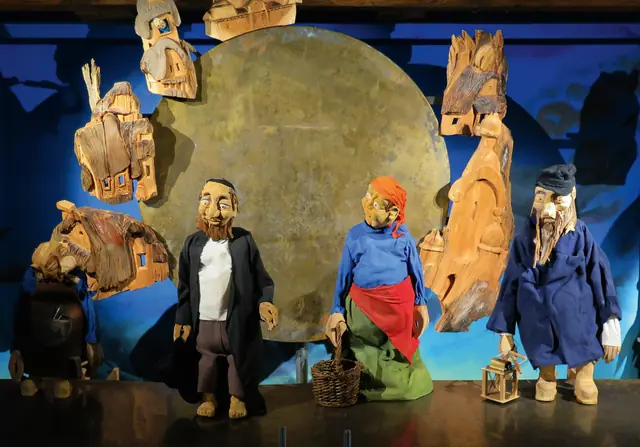
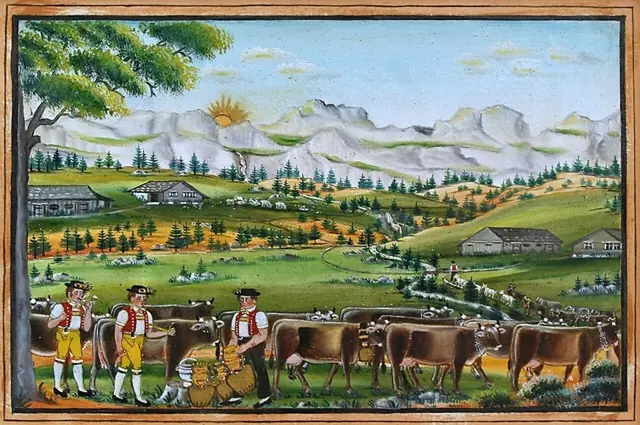
The permanent exhibition focuses on the customs that are still alive in Urnäsch today: Silvesterchlausen, Bloch, the alpine procession and the cattle show, along with insights into the life of the herders, farmhouse living rooms, traditional costumes, workshops and folk art. The oldest piece in the collection is the Urnäsch Rhodsfahne, dated to around 1350, with the Appenzell bear.
Highlights
Silvesterchlausen, Bloch, alpine procession and cattle show as main themes
Around 8,000 objects, including the Rhodsfahne from around 1350
Musical instruments, Talerschwingen and Schellenschötten to try out
Museum detective: a puzzle game for children and adults
Bistro with a small garden restaurant and shop with local products
Permanent exhibition
Dauerausstellung zum Appenzeller Brauchtum – The focus is on Silvesterchlausen, Bloch, the alpine procession and the cattle show; also herders' life, living rooms, traditional costumes, workshops and folk art, with instruments to try out.
Founded
1976
Director
Monika Steingruber
Admission & discounts
Adults
CHF 10
Reduced
CHF 8AHV/IV pensioners and disability pension holders with ID
Children & teens
CHF 4Children and pupils up to age 16 CHF 4; children and school classes from the cantons of AR and SG have free admission.
Seniors
CHF 8AHV with ID
Visitors with disabilities
CHF 8IV with ID
Groups (10+ people)
CHF 8 per personAdults from 10 people, price per person.
Guided tour for adults up to 9 people (flat rate, plus admission)
CHF 80From 10 people CHF 8 per person
Guided tour for children/pupils up to 9 people (flat rate, plus admission)
CHF 30From 10 people CHF 3 per child; classes from AR free
Natural yodelling course with tour (group of up to 25 people)
CHF 300Plus admission, and tour CHF 8 per person (from 10 people)
Workshop for school classes (up to 20 people)
CHF 200Up to 30 people CHF 250; classes from AR free
Free admission for association members, with the Swiss Museum Pass, Raiffeisen card with member marking, for REKA guests, with the Oskar holiday card and Ferienkarte AI, and for journalists. Museum detective free for families and individuals (plus admission), CHF 3 per child for groups.
The museum hasn’t published any information on this.
Kids & families
Great for kids & families
Family tours & workshops
Activity booklet, scavenger hunt or kids’ audio guide
Hands-on stations
Museum detective with puzzles and a treasure chest; instruments and custom-related implements (hammered dulcimer, zither, Talerschwingen, Schellenschötten) may be tried out; children's courses on special dates.
Getting there & parking
The museum hasn’t published any information on this.
Bistro with coffee, drinks, beer and wine and a small garden restaurant; shop with local products in the entrance area (can be visited without a ticket).
Events & venue rental
The museum hasn’t published any information on this.
Plan your visit
Guided tours
yes · approx. 1.5 hrs
School programs
yes
Good to know
Guided tours (about 1.5 hours) begin with the film “Gelebte Traditionen” (Living Traditions) and are also offered in English, French, Italian and Spanish; an aperitif and a natural yodelling course can be added. Workshop for school classes (grades 3 to 6, about 2 hours) on the alpine procession, Silvesterchlausen and Zauren.