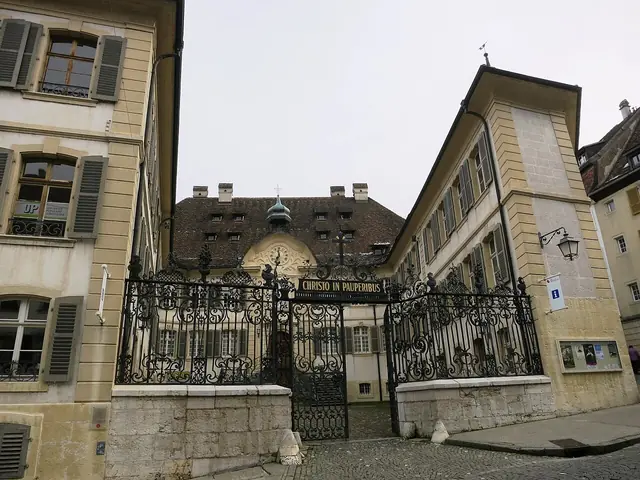
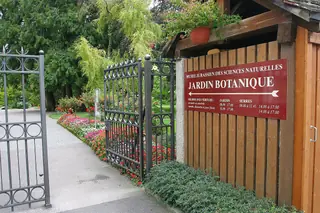
The free Jurassica botanical garden in Porrentruy shows tropical, cactus, orchid and Mediterranean plants in greenhouses and two parks.
Limited operations (expected until 2027). The Jurassica museum building is temporarily closed for renovation; the botanical garden with its greenhouses and parks, as well as the outdoor sites, are open.
Open-air temporary exhibition in the botanical garden: familiar plants from the collection are set against their appearances in fiction, from Harry Potter and Super Mario to Middle-earth and the Smurfs. Shown in small huts in the park and in the greenhouses.
About the museum
The Botanical Garden of Porrentruy dates back to the 19th century: the geologist and botanist Jules Thurmann, a professor at the Collège of Porrentruy, had a proper garden laid out here according to the system of De Candolle. A first attempt at the former Central School had been short-lived because the school was dissolved. Porrentruy is thus one of the oldest scientific plant gardens in Switzerland.
Over time the garden was expanded with greenhouses, private donations and large plant collections. Today it comprises the former Jesuit park, the greenhouses and the museum park. Since the foundation of the Fondation Jules Thurmann in 2012, the Jura Natural History Museum and the Botanical Garden have been united under the name Jurassica.
According to the institution, the collection includes more than 3,000 recorded plant taxa, including over 400 orchids, cacti and succulents, carnivorous plants, ferns and an iris collection with around 180 varieties. A herbarium serves research. The actual Jurassica museum building is temporarily closed until 2027 for renovation; the garden, the greenhouses and the outdoor sites, however, remain accessible.
Highlights
Themed greenhouses from the tropics to the Mediterranean
Orchid and bromeliad house with over 400 orchids
Cactus and succulent house
Carnivorous plants and ferns
Two parks with an iris collection
Free admission
Permanent exhibitions
Gewächshäuser des Botanischen Gartens – Tropical houses, an orchid and bromeliad house, a cactus and succulent house, a house for carnivorous plants and ferns, and a Mediterranean house.
Parks des Botanischen Gartens und des Museums – Two parks with plant collections, including rose and iris cultivation.
Operated by
Fondation Jules Thurmann (Jurassica)
Admission & discounts
Admission is free.
Fouilles du Banné (adults)
CHF 8Students, AHV (old-age pension), IV (disability insurance) and children under 16 CHF 5, children under 6 free
Admission to the botanical garden, the educational trail and the Dinotec is free. Only the Banné excavations are chargeable. Euros are accepted 1:1, change is given in Swiss francs.
In the botanical garden, the park and the Mediterranean house are accessible; the museum building is not wheelchair-accessible. Dogs are not allowed, except assistance dogs.
Kids & families
The museum hasn’t published any information on this.
Getting there & parking
By public transit
JURASSICA Museum
CarPostal, line 75, stop JURASSICA Museum; arrive by train to Porrentruy.
Fouilles du Banné Colline du Banné, 2900 Pruntrut Palaeontological excavation site of Jurassica, April to October on Saturdays and Sundays 2–5 p.m. (also on Wednesdays in April, July, August and October); admission charged.
Dinotec Cité des Microtechniques, 2900 Pruntrut Free access to dinosaur tracks, April to October.
Sentier didactique Chevenez Educational trail with dinosaur tracks, free access April to October; stop on CarPostal line 78 "Chevenez, Paléo Jura".
The map will load once you have made your cookie choice.
The museum hasn’t published any information on this.
Events & venue rental
The museum hasn’t published any information on this.
Plan your visit
Guided tours
yes · approx. 60 min
School programs
yes
Good to know
Guided tours of the garden for groups cost CHF 100 per group and last about one hour; register via the form at least 10 days in advance. Self-guided group visits are free and must be registered 5 days in advance (times 8 a.m.–5 p.m.). For schools there are guided visits and workshops.