Aberystwyth University Ceramics Collection
Free Ceramic Gallery at Aberystwyth Arts Centre showing early studio pottery and changing exhibitions from a university collection of over 2,000 pieces.
Have only individual sections read aloud
About the museum
The Ceramic Collection of Aberystwyth University is one of the major collections of non-industrial ceramics in Britain. Its roots lie in the early donations to the university college founded in 1872, including Japanese Satsuma and Imari ware that came with the bequest of George Ernest Powell of Nanteos in 1882, and a further gift from Lady Williams in 1915.
In the 1920s the university built up an Arts and Crafts Museum, funded by Gwendoline and Margaret Davis of Llandinam, and the foundation of the modern collection of studio pottery was laid in the interwar years. The collection has been housed and displayed at Aberystwyth Arts Centre on the Penglais campus since 1980, and the first stage of the Ceramic Gallery opened in 1986. A bequest from the former student Elvet Lewis in 1981 made a much more ambitious acquisition policy possible.
Today the collection numbers over 2,000 pieces and is especially noted for early twentieth-century studio pottery. The front gallery stages changing exhibitions, usually four a year, while the back gallery has a long-term display of pioneer studio pottery by makers such as Bernard Leach, Shoji Hamada, Michael Cardew and Katharine Pleydell-Bouverie. An active Ceramic Archive, based at the School of Art, is open to all researchers by appointment.
Highlights
- Long-term display of early studio pottery by Bernard Leach, Shoji Hamada and Michael Cardew
- Over 2,000 pieces in one of the major British collections of non-industrial ceramics
- Changing exhibitions in the front gallery, usually four a year
- Free entry to the gallery
- Ceramic Archive and online collection search
Permanent exhibition
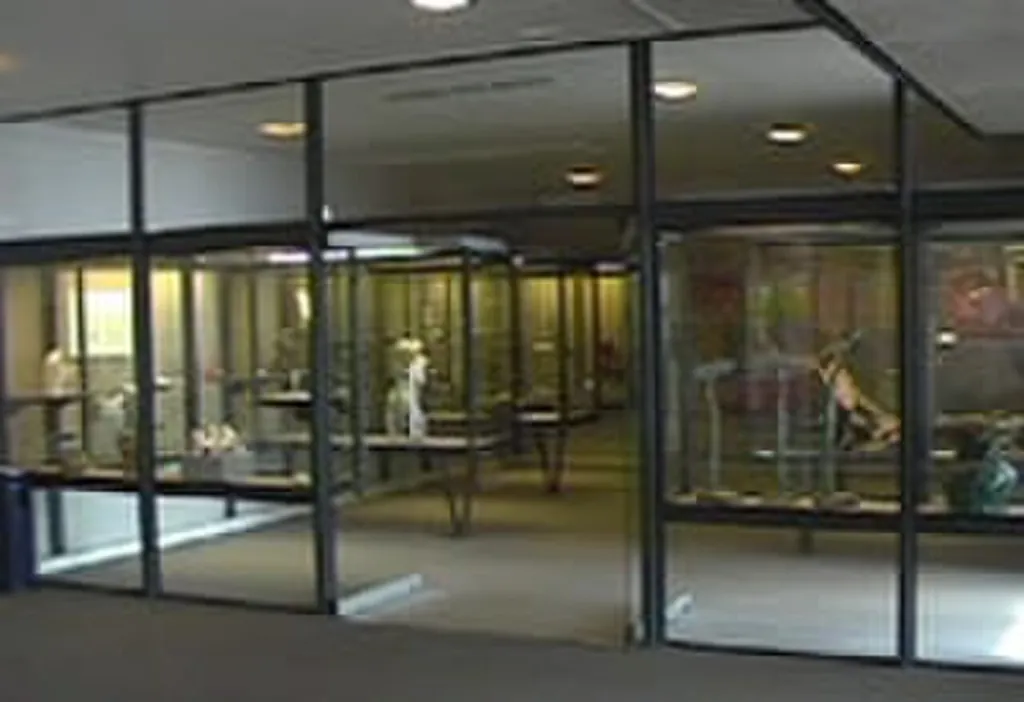
- Early studio pottery (back gallery) – A long-term display of early pioneer studio pottery by Bernard Leach, Shoji Hamada, Reginald Wells, the Martin Brothers, Katharine Pleydell-Bouverie, Michael Cardew and others, shown in glass cabinets with information boards.
- Founded
- 1920
- Operated by
- Aberystwyth University
Admission & discounts
Admission is free.
Entrance to the gallery and exhibitions is free.
Accessibility
- Wheelchair accessible: no information
- Elevator
- Accessible restroom
- Accessible parking
- Service dogs welcome
- Tactile models & exhibits: no information
- Sign language tours: no information
- Easy-to-read materials: no information
- Audio description: no information
The Ceramic Gallery is downstairs at the Arts Centre. The Arts Centre has ground-level access to the main foyer and box office, a lift up to the theatre foyer and a stair lift down to the lower level, and wheelchair access to all auditoria and workshop spaces. Accessible toilets are on all levels except the lower foyer. Parking reserved for drivers with limited mobility is next to the main entrance approach, with two more spaces at the rear of the theatre. Guide dogs and assistance dogs are welcome. For access questions call the Arts Centre on 01970 622882. The School of Art, which holds the archive, has parking and toilets for wheelchair users.
Kids & families
Great for kids & families
- Family tours & workshops
- Activity booklet, scavenger hunt or kids’ audio guide
Saturday family sessions are not offered in the winter months for the time being because of staffing. The website offers downloadable play and learn activities for children aged 3 to 7, including an I-spy game and a story about clay.
Getting there & parking
By car
- Accessible parking
The gallery is in Aberystwyth Arts Centre on the Penglais campus of Aberystwyth University.
Get directionsAmenities & dining
The museum hasn’t published any information on this.
Events & venue rental
The museum hasn’t published any information on this.
Plan your visit
| School programs | yes |
|---|---|
| Good to know | Schools and groups can book a making session in the pottery combined with a visit to the gallery. The collection can be searched online. Information boards and an audio-visual display accompany the long-term display. |