Bury Art Museum
Free Edwardian art gallery and local history museum in Bury, with the Wrigley collection of Victorian paintings including Turner's Calais Sands.
Have only individual sections read aloud
About the museum
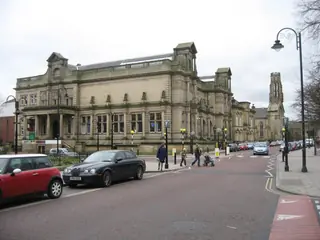
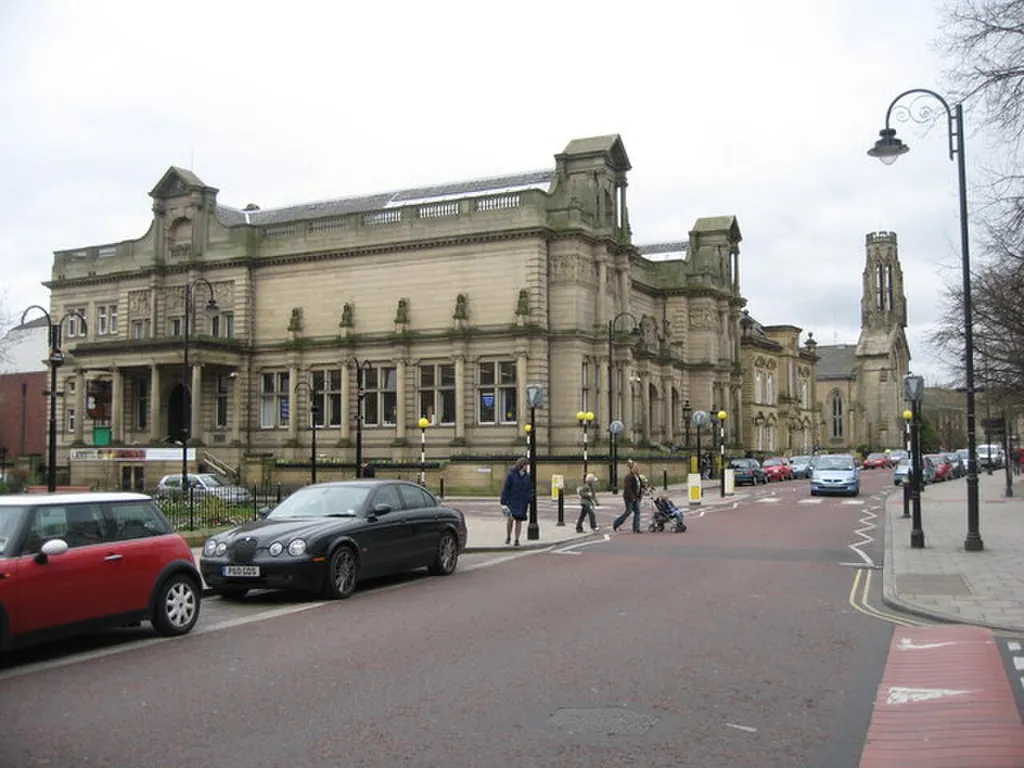
Bury Art Museum began with a gift. To mark Queen Victoria's Diamond Jubilee in 1897, the family of the local mill owner Thomas Wrigley offered the town the collection of paintings, watercolours, sculpture and decorative pieces he had put together, on condition that a building was provided to house it. The town council accepted, took steps to fund a combined library and art gallery, and the building was constructed between 1897 and 1901. It was opened by Lord Derby in October 1901.
A museum of local history was opened in the basement soon afterwards. Its early collections included natural history, geology and objects from around the world given by local collectors. From the 1960s the museum began to collect mainly local and social history, and after the creation of the Metropolitan Borough of Bury in 1974 it widened its scope to the whole borough, and took in the surviving collections of the former Radcliffe Museum.
Today the Grade II listed building houses the art museum, a sculpture centre linked to the Irwell Sculpture Trail, the museum, the local archives and Bury Library. The permanent collection is led by the Wrigley paintings, above all J. M. W. Turner's Calais Sands at Low Water, and the museum also cares for a Pilkington's pottery collection and a text art archive. Entry is free.
Highlights
- J. M. W. Turner's Calais Sands at Low Water
- Wrigley collection of Victorian paintings
- Museum of Bury local and social history in the basement
- Sculpture Centre linked to the Irwell Sculpture Trail
- Pilkington's pottery and text art collections
Permanent exhibitions
- Wrigley collection of paintings – Victorian paintings given to the town by the Wrigley family, including J. M. W. Turner's Calais Sands at Low Water and works by Landseer. Some pieces are in store during the roof works.
- Museum of Bury – Local and social history displays in the basement, including toys, archaeology and everyday life in the borough.
- Founded
- 1901
- Operated by
- Bury Council
Admission & discounts
Admission is free.
| Adults | free |
|---|
Entry to the museum and its exhibitions is free.
Accessibility
- Wheelchair accessible
- Elevator
- Accessible restroom
- Accessible parking: no information
- Service dogs welcome
- Tactile models & exhibits: no information
- Sign language tours: no information
- Easy-to-read materials: no information
- Audio description: no information
The museum says the building is fully wheelchair accessible, with a ramp beside the Moss Street entrance and a lift to all floors. Chairs are available in the galleries, large print exhibition information is on request, and an assisted toilet and baby changing area are provided. An autism-friendly welcome guide is in preparation.
Kids & families
Great for kids & families
- Family tours & workshops
- Hands-on stations: not available
- Stroller-friendly
- Baby changing facilities
Families are welcome and all floors can be reached by lift. Family workshops and holiday activities are announced on the What's On page. The exhibitions are not usually interactive. Baby changing is in the basement.
Getting there & parking
By public transit
Bury Metrolink and bus interchange
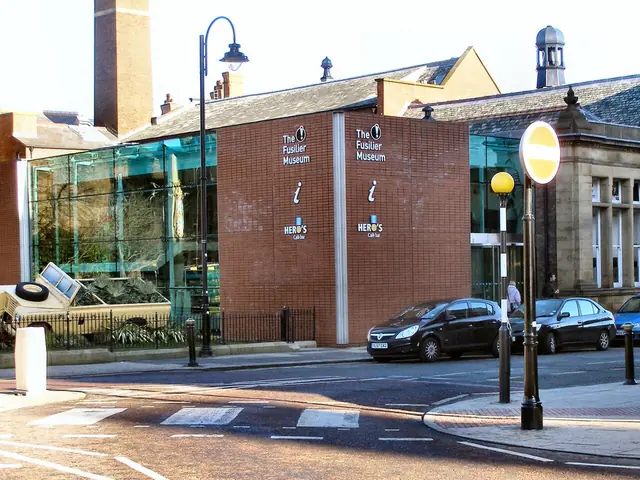
The museum is a short walk from Bury Metrolink and bus interchange, opposite the Fusilier Museum and the Tourist Information Centre on Moss Street.
By car
No on-site parking at the museum.
The museum has no car park. There is limited metered short-stay street parking around the building and larger pay and display car parks within a ten-minute walk; pay and display bays are outside the Moss Street and Silver Street entrances.
Amenities & dining
- Museum shop
- Lockers: not available
Bury Art Shop sells art, crafts, prints, jewellery and books, and a comic shop is in the foyer. The museum has no locker facilities.
Events & venue rental
- Spaces for rent
- Corporate events
Up to 200 guests.
Hire of the Sculpture Centre (up to 200 guests), Gallery B (up to 75) and Gallery D (up to 150). Events are for guests aged 18 and over; technical support is available.
Inquiries & detailsPlan your visit
| School programs | yes |
|---|---|
| Good to know | Museum History for Children is an exhibition for primary school pupils. A call before visiting is advised during the roof works. |