Durham University Oriental Museum
Free university museum of art and archaeology from North Africa to East Asia, with strong Chinese, Egyptian and Japanese collections.
Have only individual sections read aloud
About the museum
The Oriental Museum grew out of Durham University’s teaching of oriental languages, which goes back to the university’s founding in 1832. After the Second World War Durham was chosen as one of five British universities to develop centres for teaching these languages, and it set up a School of Oriental Studies in 1951. Its first director, Professor William Thacker, believed that students should study objects as well as texts and began to build a teaching collection.
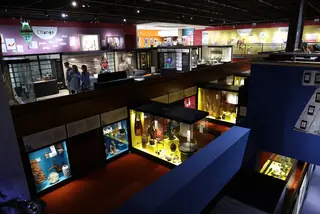
Key early acquisitions were the Northumberland Collection of antiquities from Egypt and the ancient Near East, Chinese ceramics from Malcolm MacDonald, and jades and hardstones from Sir Charles Hardinge. As the collections grew, a dedicated museum was needed. The Gulbenkian Museum of Oriental Art and Archaeology opened in May 1960 and was renamed the Oriental Museum in the 1980s. A planned extension was never built, but a mezzanine floor opened in 2000 with National Lottery Heritage Fund support, and the galleries have since been updated for wider audiences.
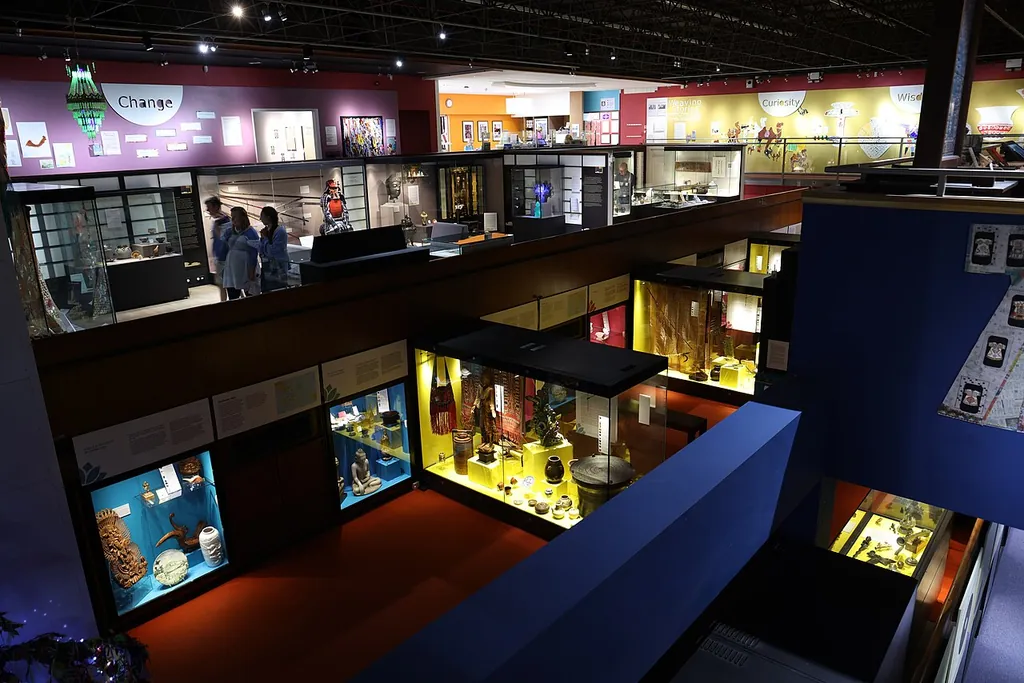
Today the museum covers cultures from Northern Africa to Southeast Asia. Its Chinese collection is internationally important, especially for ceramics and jade, there are more than 7,000 objects from Egypt and Sudan, and the Japanese collection is the fastest-growing. The museum also supports teaching and research and welcomes thousands of local schoolchildren every year.
Highlights
- Internationally important Chinese ceramics and jade
- More than 7,000 objects from Egypt and Sudan
- Growing Japanese collection of ceramics and woodblock prints
- Collections from the Himalayas, Korea, South Asia and West Asia
- Free family crafts every Saturday afternoon
Permanent exhibition
- Permanent galleries – Galleries on the art and archaeology of China, Egypt and Sudan, Japan, the Himalayas, Korea, South Asia, Southeast Asia and West Asia.
- Founded
- 1960
- Operated by
- Durham University
Admission & discounts
Admission is free.
Entry is free.
Accessibility
- Wheelchair accessible
- Elevator
- Accessible restroom
- Accessible parking
- Service dogs welcome
- Tactile models & exhibits
- Sign language tours: no information
- Easy-to-read materials: no information
- Audio description
The museum describes itself as a small specialist museum on four levels that is accessible to all. Two disabled parking bays are next to the entrance, and a wheelchair can be borrowed. Stools for resting are placed in the galleries, a portable hearing loop is at reception, and large print maps and guides can be downloaded. A free audio descriptive guide is available at the Visitor Services desk. There are tactile Braille gallery maps, magnifying glasses, sensory bags and sensory maps. Assistance dogs are welcome. Gallery videos have no British Sign Language interpretation but mostly have English subtitles and transcripts.
Kids & families
Great for kids & families
- Family tours & workshops
- Activity booklet, scavenger hunt or kids’ audio guide
- Stroller-friendly
- Baby changing facilities
Free drop-in family crafts and activities take place every Saturday from 13:00 to 15:00, plus extra sessions in school holidays. Books and activity sheets are available in the café, where a highchair can be requested, and café seating suits pushchairs. Breastfeeding and bottle-feeding are welcome anywhere in the museum.
Getting there & parking
By public transit
Botanic Garden · 5-min walk
Take bus 6 or 6a from Durham Bus Station towards Bishop Auckland and get off at the Botanic Garden stop; the museum is a walk of about 5 minutes (0.2 miles) along Elvet Hill Road and Mill Hill Lane. Durham railway station is a 25 to 30 minute hilly walk away, or take a bus from North Road.
By car
Parking available
A small car park has two designated disabled parking bays. Limited payable roadside parking is available on Elvet Hill Road and Potters Bank. At weekends visitors can use the University’s Elvet Hill car park.
- Accessible parking
Sat nav postcode DH1 3TH. The Park and Ride runs Monday to Saturday from 07:00 to 19:00.
Get directionsAmenities & dining
- Café
- Restaurant: not available
- Museum shop
- Lockers
The café serves coffee, tea, cold drinks and snacks, with free tap water on request. The gift shop is open to everyone and sells gifts, postcards, books and cards. Free lockers are available. The toilets by reception include an accessible unisex toilet with baby changing.
Events & venue rental
The museum hasn’t published any information on this.
Plan your visit
| Guided tours | yes |
|---|---|
| School programs | yes |
| Good to know | Groups of 20 to 30 people are recommended per tour, and group visits must be pre-booked. Handling sessions require notice. Some displays in the Tibetan and Ancient Egyptian galleries include human remains, which the museum treats with dignity and respect. |