Young people from a local community organisation examined archival papers on the Church of England, colonialism and transatlantic slavery. The results are shown as a film, poetry and creative responses around the themes of power, freedom and voice.
About the museum
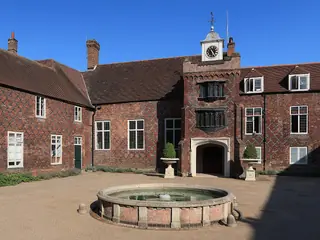
Fulham Palace stands on a riverside site that the Bishops of London held from the early 8th century, when Bishop Waldhere acquired the manor. The estate later grew into a large moated site, and the oldest parts of the present house date from the 13th century onwards. The Great Hall and the Tudor courtyard were added in the late 15th century, and in the 16th century Bishop Grindal laid out a walled garden. Bishop Henry Compton, who served from 1675 to 1713, filled the grounds with plants from many countries.
In the early 1800s the east courtyard was remodelled in a classical style, and in 1866 to 1867 the Gothic Revival chapel was built. During the First World War the grounds were used for allotments and part of the palace served as a military hospital. The chapel was restored after bomb damage in the Second World War.
The Church of England left the palace in 1973. Hammersmith Council took a long lease in 1975, a trust was set up in 1990 to run the site, and the Museum of Fulham Palace opened in 1992. A phased restoration between the 2000s and 2019 repaired the Tudor courtyard and east wing, reopened the walled garden and moat area, and created a new museum. Today visitors can see the museum, the historic rooms, the botanic garden and the walled garden.
Permanent exhibition
Museum of Fulham Palace – Free displays in the museum and historic rooms trace the site from prehistoric finds through its centuries as the country home of the Bishops of London.
Founded
1992
Visitors per year
approx. 262,552 (2025)
Admission & discounts
Admission is free.
Palace history tour (adult, ages 14+)
£12Thursdays, Saturdays and Sundays at 11:30; about 1 hour 15 minutes.
Garden history tour (adult, ages 14+)
£12Second and last Sunday of each month at 11:30; about 1 hour 15 minutes.
Entry to the museum and historic rooms is free; visitors can book a free timeslot or simply turn up. Both public tours include 10% off in the café afterwards, and Friends of Fulham Palace receive a complimentary tour.
Booking: not required – tickets at the desk · Free time slot can be booked, or just turn up
Accessibility
Wheelchair accessible
Elevator: no information
Accessible restroom
Accessible parking
Service dogs welcome
Tactile models & exhibits: no information
Sign language tours: no information
Easy-to-read materials: no information
Audio description: no information
The house, café and museum are described as fully wheelchair accessible; a ramp is always available for the two steps in the museum corridor and for the chapel. Accessible toilets are in the east courtyard, the chapel corridor, the museum and the education centre. Garden paths are level with a mostly solid surface, but some paths are uneven or gravelly. Museum films are subtitled, and large print exhibition text, leaflets and café menus are available on request. Benches are placed around the site and portable stools can be borrowed from staff. Blue Badge holders must register their vehicle in advance by phone (press 4 for the museum). Guide and assistance dogs are welcome.
Kids & families
Great for kids & families
Family tours & workshops
Activity booklet, scavenger hunt or kids’ audio guide
Baby changing facilities
Playground / play area
Six free trails are available at the museum front desk: Mouse trail (ages 2 to 6), Beasts and bishops (ages 3 to 7) and four trails for ages 8 to 12. Little green fingers is a hands-on gardening workshop for children aged 3 and over, and workshops run in school holidays. There is a play area near the main lawn, baby changing in the east courtyard and chapel corridor, and a children's menu in the café.
Getting there & parking
By public transit
Putney Bridge station · 15-min walk
District line to Putney Bridge, then about 15 minutes' walk through Bishop's Park. Putney National Rail station is about 25 minutes' walk. Buses 74, 220 and 430 stop on Fulham Palace Road at Bishop's Park Road (5 minutes' walk); many more routes stop at Putney Bridge.
By car
No on-site parking at the museum.
No public parking on site. One Blue Badge bay in the gated car park (register in advance by phone); metered parking on Bishop's Avenue (Controlled Parking Zone Y) with extra restrictions on Fulham FC home match days.
Accessible parking
Sat nav postcode SW6 6EA. Cycle parking is available but bikes must be walked on site. Coaches should contact the Palace in advance. A signed footpath diversion near Putney Bridge station is in place until 2027.
Personal photography is welcome; commercial photography and filming must be booked in advance, and drones are not allowed.
Good to know
Guided palace and garden history tours are bookable on selected days (see prices). Group visits and private tours are arranged through the group visits page. Dogs are not allowed apart from registered assistance dogs; Bishop's Park next door is open to dog walkers.