Imperial War Museum London
A free national museum on the impact of war from the First World War to today, with galleries on both world wars and the Holocaust.
Have only individual sections read aloud
About the museum
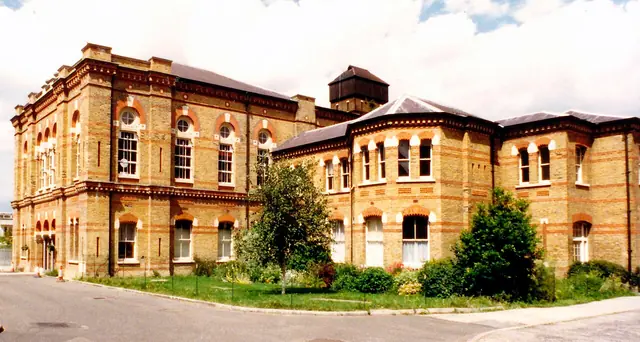
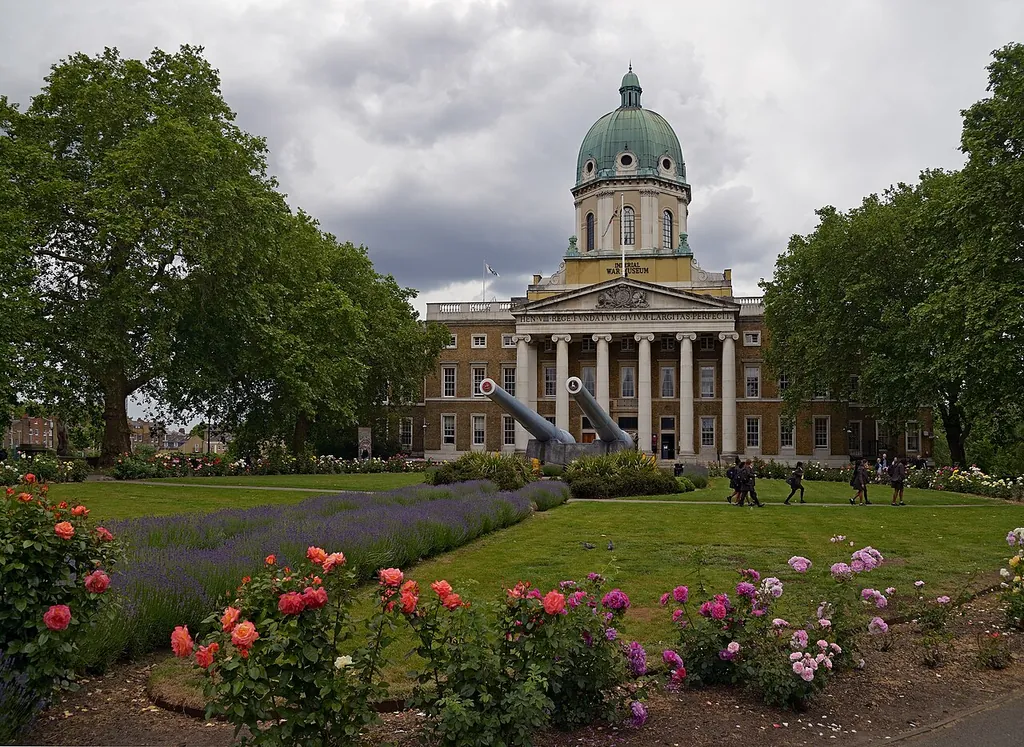
The Imperial War Museum was founded in 1917, while the First World War was still being fought, to collect and display material about the war and the experiences of ordinary people as well as soldiers. It first opened to the public in 1920 and, after temporary homes, moved in the 1930s into its present building in Lambeth, a former hospital with a large central dome.
Over the decades the museum widened its scope beyond the First World War to cover the Second World War and later conflicts, and it grew into a group of five sites across England, including HMS Belfast, the Churchill War Rooms and IWM Duxford. The London branch remains the group's flagship museum.
Its displays use film, art, diaries, uniforms, weapons and large objects to explore why wars happen, how they are fought and what they mean for the people caught up in them. Permanent galleries cover the First and Second World Wars and the Holocaust, and the Blavatnik Art, Film and Photography Galleries show how artists and filmmakers have responded to conflict. Entry is free.
Highlights
- First World War Galleries with a trench experience
- Second World War Galleries with an Anderson shelter
- The Holocaust Galleries
- Blavatnik Art, Film and Photography Galleries
- Large objects in the atrium (Witnesses to War)
Permanent exhibitions
- First World War Galleries – Galleries on the causes, course and consequences of the First World War, with weapons, uniforms, diaries and film.
- Second World War Galleries – Galleries on the Second World War, including how families protected themselves in Anderson shelters during air raids.
- The Holocaust Galleries – Galleries on the Holocaust, with BSL information points and tactile objects.
- Founded
- 1917
- Operated by
- Imperial War Museums
- Director
- Diane Lees
- Visitors per year
- approx. 320,542
Admission & discounts
Admission is free.
Entry is free and does not need to be booked. Paid exhibitions and events are ticketed separately; some special exhibitions are free.
Accessibility
- Wheelchair accessible
- Elevator
- Accessible restroom
- Accessible parking
- Service dogs welcome
- Tactile models & exhibits
- Sign language tours
- Easy-to-read materials: no information
- Audio description: no information
The North Entrance has steps, so step-free visitors should use the West Entrance, which starts the visit on level 0; inside, the museum is fully accessible by lifts and ramps. Wheelchairs can be borrowed free of charge from the West Entrance (pre-booking by phone is advised). A Changing Places toilet (RADAR key from the Information Desk) and six gender-neutral accessible toilets are available. Two Blue Badge bays behind the museum on Brook Drive must be reserved by phone. BSL information points, BSL-interpreted videos, induction loops, English subtitles, braille and tactile maps, large print guides and a Quiet Room are provided, and sensory backpacks and ear defenders can be borrowed at the Information Desk. Trained assistance dogs are welcome.
Kids & families
Great for kids & families
| Time needed | approx. 3 hrs |
|---|
- Family tours & workshops
- Activity booklet, scavenger hunt or kids’ audio guide
- Stroller-friendly
- Baby changing facilities
Free self-guided adventure trails and weekend and holiday activities are suitable for children aged 5 to 12, and a children's guidebook is sold. The West Entrance is step-free for pushchairs and baby changing is available on all floors. Free sensory backpacks can be borrowed. Some special exhibitions are designed for families.
Getting there & parking
By public transit
Lambeth North station · 7-min walk
Nearest stations are Lambeth North (7-minute walk), Elephant and Castle (10 minutes) and Waterloo (14 minutes). Buses 344 and 360 stop on Lambeth Road, and routes 3, 59 and 159 stop on Kennington Road. Cycleway 6 runs past the museum from Elephant and Castle.
By car
No on-site parking at the museum.
There is no general car parking. A limited number of Blue Badge spaces off Brook Drive, behind the museum, can be reserved by phone on +44 20 7416 5000.
- Accessible parking
The museum stands in Geraldine Mary Harmsworth Park. Santander Cycle docking stations are on Geraldine Street and Kennington Road.
Get directionsAmenities & dining
- Café
- Museum shop
- Coat check: not available
- Lockers
Café off the main atrium serving hot and cold seasonal dishes, cakes and drinks. A lunchroom for packed lunches is open to all visitors at weekends. Lockers by the North and West Entrances need a refundable £1 coin; large luggage cannot be stored.
Events & venue rental
- Spaces for rent
Venue hire is offered through IWM's commercial team.
Inquiries & detailsPlan your visit
| Guided tours | yes |
|---|---|
| School programs | yes |
| Photography | Personal, non-commercial photography and filming are welcome, without flash or tripods; do not film people without their permission, and follow signs where it is not allowed. |
| Good to know | At least three hours are recommended. Tours can be booked at the Information Desk on level 0. Bags may be searched on entry, and wheeled cases, sports equipment and large luggage are not allowed. |