Museum of Bath at Work
Independent museum in a Georgian Real Tennis court showing two thousand years of working life in Bath, from a Victorian soft drinks factory to a stone mine.
Have only individual sections read aloud
About the museum
The Museum of Bath at Work opened in 1978. Its collection grew from the contents of J. B. Bowler's engineering and mineral water works in Avon Street, which closed in 1969. A group of local people, led by Russell Frears and Dr Marianna Clark, rescued the workshops, machinery and stock and looked for a permanent home. Bath City Council granted a long lease on a Grade II listed building in Julian Road, and a charity, the Bath Industrial Heritage Trust, was set up to run the museum.
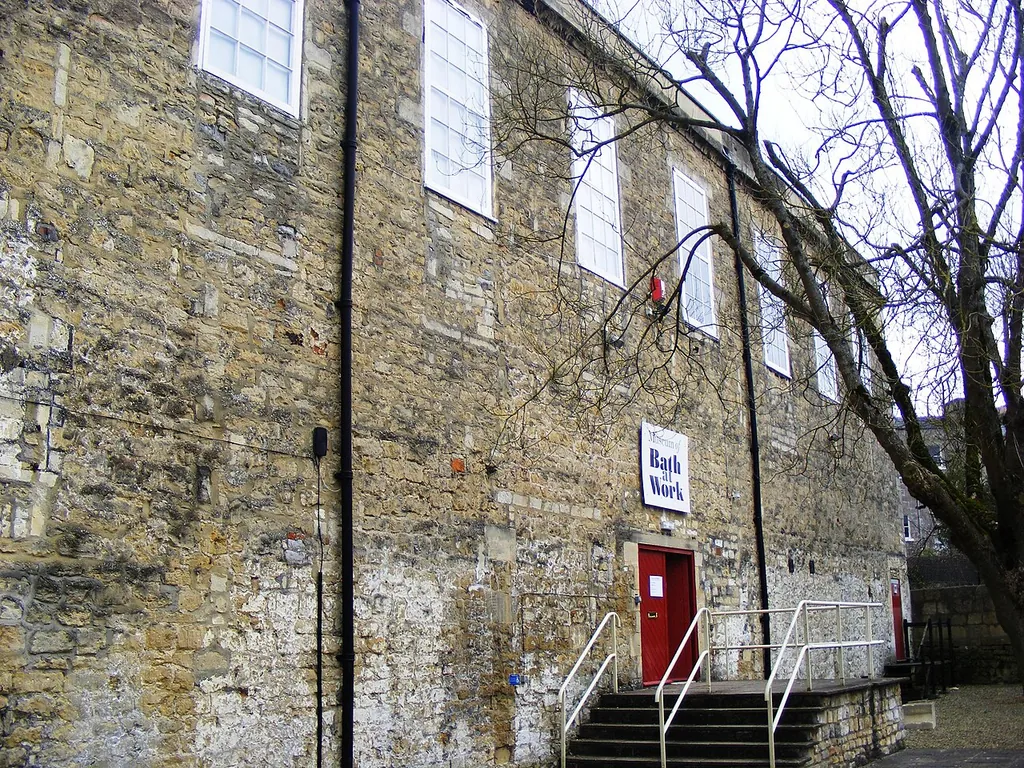
The building was put up in 1777 as a Real Tennis court and was converted into a brewery around 1830. Its tall single space was later divided by an upper floor. Inside, Bowler's workshops and offices were photographed, moved and rebuilt as they had been in Avon Street, so that visitors can follow how soft drinks were made and bottled and how small engineering and plumbing parts were produced. Much of the machinery is still in working order and is demonstrated regularly.
Other displays cover the wider story of work in Bath: a reconstructed Bath Stone mine, the cabinet makers Keevil and Sons, and the trades, shops and industries that shaped the city. Highlights of the collection include a Bath Chair of the kind shown at the Great Exhibition of 1851, an invalid carriage used by visitors taking the waters, a self-winding clock made in Bath in 1866 and a Horstmann car from 1914. The Hudson Gallery hosts temporary exhibitions developed with local people, and the museum also keeps an archive and research library. Today it is run by volunteer trustees and one paid director.
Highlights
- J. B. Bowler's Victorian engineering and soft drinks factory, rebuilt inside the museum
- Reconstructed Bath Stone mine
- Working machinery with regular demonstrations
- Bath Chair shown at the 1851 Great Exhibition and a 1914 Horstmann car
- Free guided tour and audio guide
Permanent exhibitions
- Bowler's Victorian factory – A rebuilt engineering and soft drinks works with its original workshops, offices and shop, filling a whole floor.
- Bath Stone mine and cabinet makers – A reconstructed stone mine and the workshop of the cabinet makers Keevil and Sons on the ground floor.
- Working life in Bath – Upper-floor displays on the industries, trades and businesses of Bath over two thousand years.
- Founded
- 1978
- Operated by
- Bath Industrial Heritage Trust (registered charity no. 800297)
- Director
- Stuart Burroughs
Admission & discounts
| Adults | £10 |
|---|---|
| Reduced | £7.50Visitors with disabilities, students and unemployed visitors |
| Children & teens | £5 |
| Visitors with disabilities | £7.50 |
| Students & apprentices | £7.50 |
| Families | £20 |
| Bath and North East Somerset resident with Discovery Card | £7.50 |
Adding a Gift Aid donation to the admission price gives free entry for one year. Teachers and accompanying adults on school visits are free.
Accessibility
- Partially wheelchair accessible
- Elevator
- Accessible restroom
- Accessible parking
- Service dogs welcome
- Tactile models & exhibits: no information
- Sign language tours: no information
- Easy-to-read materials: no information
- Audio description: no information
There is level access at the rear door; visitors needing it are asked to phone on arrival. The two main display galleries are fully accessible, with a wheelchair lift to the top-floor gallery, and an accessible toilet is next to the level-access door. The ground floor, with the Hudson Gallery, the stone mine, the cabinet-making display and the library, is not accessible by wheelchair. Seating is provided in the galleries and entrance area. Assistance dogs are welcome. Blue Badge holders can reserve a space in the staff car park by phoning the day before.
Kids & families
Great for kids & families
| Family ticket | £20 |
|---|
- Family tours & workshops
The museum runs children's activities, film screenings and working machinery demonstrations during the year. There is a child price and a family ticket.
Getting there & parking
By public transit
Julian Road - Morford Street bus stop
Buses stop at Julian Road - Morford Street (routes 700 and 20) and at Lansdown Road - Alfred Street (routes 31, 6 and 7). The Lansdown Park and Ride also stops nearby. The museum is a 10 to 15 minute walk from the city centre, near the Royal Crescent and Victoria Park.
By car
No on-site parking at the museum.
The museum has no car park for visitors; the nearest public option is Charlotte Street car park. Blue Badge holders can reserve a space in the staff car park by phoning ahead.
- Accessible parking
Secure cycle stands are at the main entrance, and coaches can drop off on Julian Road. The what3words address is dome.gets.dare.
Get directionsAmenities & dining
- Museum shop
Small gift shop in the entrance. Refreshments for groups can be arranged.
Events & venue rental
- Spaces for rent
- Private parties
- Corporate events
Up to 70 guests.
The Mezzanine Gallery seats 50 to 70 and has a sink, tables and a hearing loop; smaller rooms are the Hudson Gallery and the library. Suitable for meetings, lectures, drinks receptions and book launches.
Inquiries & detailsPlan your visit
| Guided tours | yes |
|---|---|
| Audio guide | yes |
| School programs | yes |
| Good to know | A free audio guide is available on your own mobile phone, and a free guided tour is offered every day at 11.00am. Machinery demonstrations take place regularly. School and college visits are linked to the curriculum, and teachers can make a free planning visit. |