The Old Haa
Museum in a 17th-century merchant's house on Yell, Shetland, with local history, natural history, a tearoom, a gallery and a walled garden.
Have only individual sections read aloud
About the museum
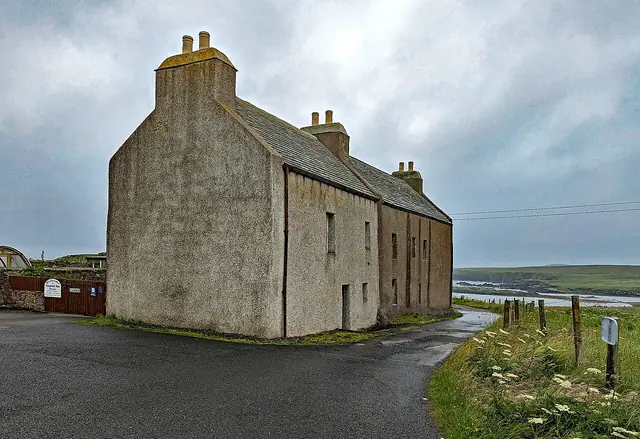
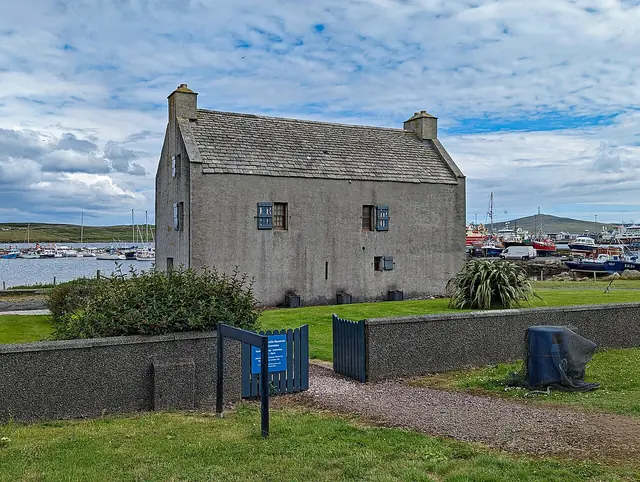
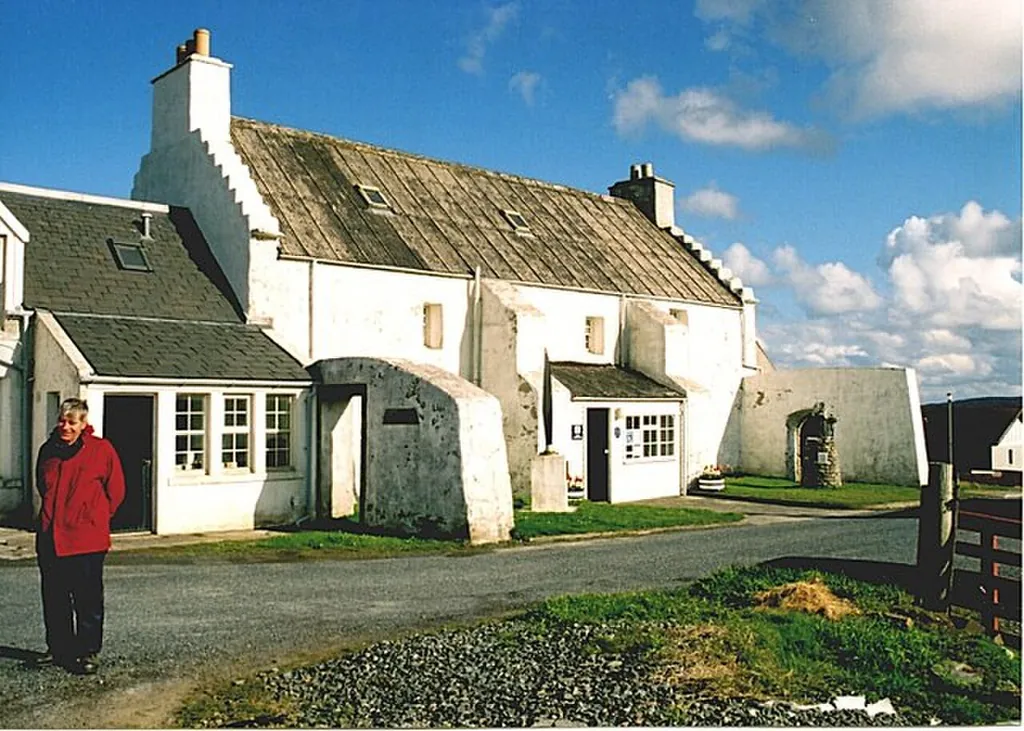
The Old Haa of Brough was built by a local merchant, Robert Tyrie, and completed in 1672. It later served as a home for various merchants and Hanseatic traders. The building was listed in 1971 as a building of local significance in Shetland, and its arches curve towards the road in front of the museum.
The Old Haa Trust was formed in 1984 and took over the building from the Shetland Amenity Trust, promising to look after it on behalf of the people of Yell. After extensive repairs the house opened as a museum. The trust later bought the neighbouring smithy, which now holds the gift shop and gallery, and it became a Scottish charitable organisation in 2026.
The museum shows the culture and history of Yell in the Lower and Upper History Rooms and the natural history of the island in its own room. It keeps a sound archive, more than 16,000 photographs and a reading room with books and family history sources. The Bobby Tulloch archive of wildlife photographs is also kept here. Visitors can have tea and home baking in the tearoom and relax in the walled garden.
Highlights
- 17th-century merchant's house with arched front
- Upper History Room with yearly changing displays on Yell
- Natural History Room with a sperm whale jaw
- Bobby Tulloch archive of wildlife photographs
- Walled garden with Inuksuit stone figures
Permanent exhibitions
- Upper History Room – Displays on aspects of Yell's culture and history, changed every year.
- Natural History Room – Items on the natural history of Yell, including a sperm whale jaw, preserved otters, local stones and the Bobby Tulloch photographic archive.
- Operated by
- Old Haa Museum SCIO (Old Haa Trust)
Admission & discounts
Admission is free.
Admission is free; donations are welcome. Groups of 10 or more pay £4 per person and must book at least 24 hours ahead.
Accessibility
- Partially wheelchair accessible
- Elevator: not available
- Accessible restroom: not available
- Accessible parking: no information
- Service dogs welcome
- Tactile models & exhibits: no information
- Sign language tours: no information
- Easy-to-read materials: no information
- Audio description: no information
The museum is a 17th-century house with many steps and narrow doorways. The toilets are on the entrance level, reached through a back door, but are not suitable for wheelchairs. The upper rooms are reached by a very steep staircase with handrails on both sides. The garden can be reached from the side of the museum and is open all year. Visitors with specific needs should contact the museum assistant before a visit (+44 1957 722339).
Kids & families
There is no age limit for visitors, but children must be supervised and exhibits must not be touched. Pushchairs are difficult to use inside because of narrow doors and steps. The garden has areas where children can play.
Getting there & parking
By public transit
Yell is reached by car ferry from Toft on the Shetland mainland; booking is advisable on +44 1595 745804.
By car
Parking available
Car park for up to six cars across the road from the museum.
The road to Burravoe is well signposted from the ferry. The roads around Burravoe are single track with passing places. Burravoe marina is within walking distance.
Get directionsAmenities & dining
- Café
- Restaurant: not available
- Museum shop
- Coat check: not available
- Wi-Fi
Free Wi-Fi. The tearoom serves tea, coffee, juice and home baking; picnic tables stand in the garden. The gift shop is in the former smithy. There is no cloakroom or luggage storage.
Events & venue rental
- Spaces for rent
- Private parties
- Weddings / ceremonies
Weddings can be held indoors or in the garden outside opening hours. Public performances, workshops and occasional music events are possible by arrangement.
Plan your visit
| Photography | Photography is allowed in the exhibitions, but flash is not. |
|---|---|
| Good to know | The museum suggests allowing about 1½ to 2 hours. Bus tours are welcome with advance notice. The archive and collections can be consulted by arrangement with the trustees. |