Museu de Granollers
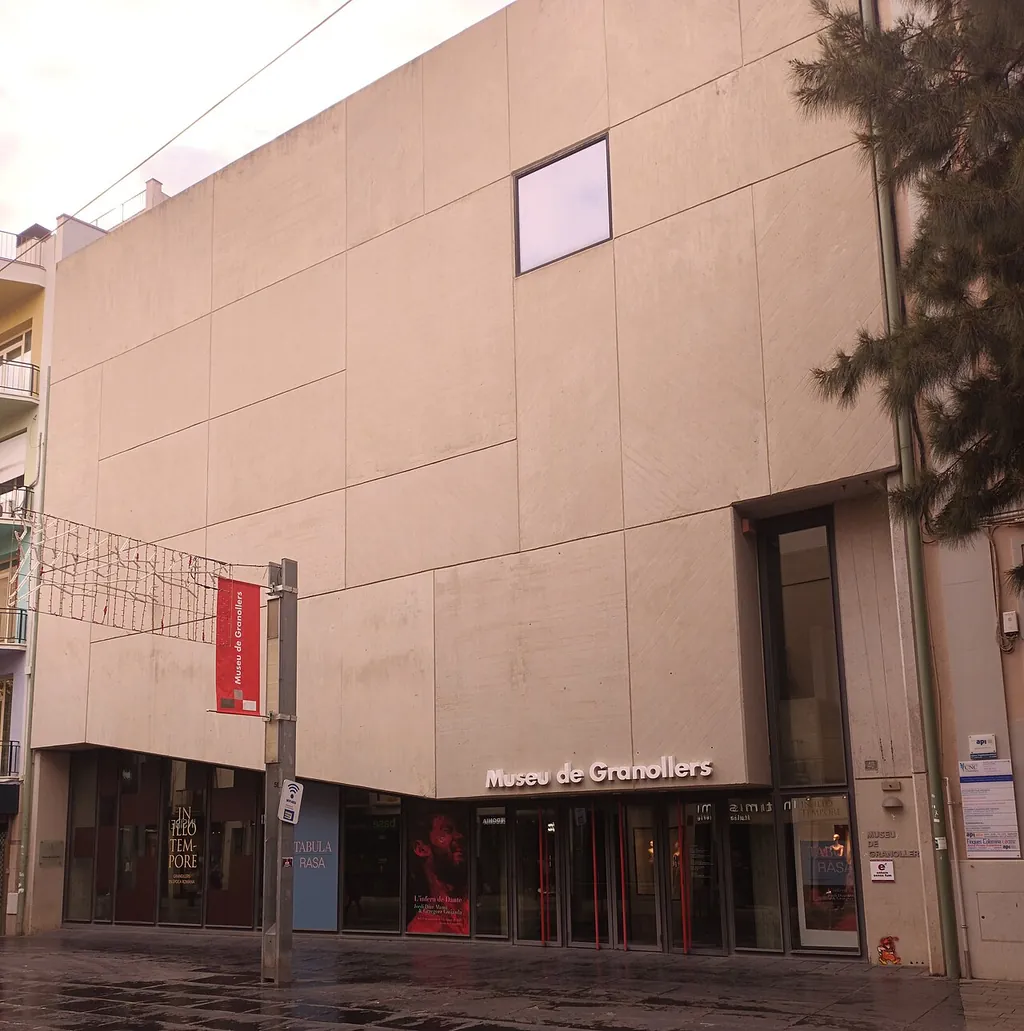
Municipal museum of Granollers with collections of art, archaeology, numismatics and ethnography, in a brutalist building from 1976.
Alleen afzonderlijke secties laten voorlezen
Over het museum
The Museu de Granollers was founded in 1932, when a group of local artists persuaded the town council of the need for an art collection. That same year the Museu de Granollers i del Vallès Oriental was founded with about thirty works donated by the artists themselves. During the Civil War the Junta de Salvaguarda del Patrimonio deposited pieces from private and church collections of the region in it, and those that nobody claimed became part of the holdings.
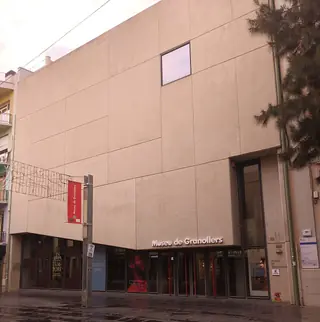
The first home was the former town prison; in 1937 the museum moved to the Casa Molina, where it stayed for almost thirty years. It closed in 1965 because the building threatened to collapse and, eleven years later, in 1976, the present building was opened, designed by the architects Bosch, Botey and Cuspinera and built on the site of the former Unió Liberal. It is a landmark of Catalan brutalist and rationalist architecture.
The collection is organised into four holdings. The art collection spans from the 13th–14th century to the present, with religious art and works by artists such as Eliseu Meifrén, Manolo Hugué and Hernández Pijoan, as well as pieces from the Premio Granollers de Pintura (1959–1964). The archaeological holdings come from excavations carried out in the city since the 1940s, including two large Roman mosaics. The numismatic and ethnographic holdings complete the collection. The museum also manages L'Adoberia, a site with an interpretation centre on medieval Granollers.
Hoogtepunten
- Building from 1976 by the architects Bosch, Botey and Cuspinera, a landmark of Catalan brutalism
- Art collection from the 13th century to today, with altarpieces and 20th-century painting
- Roman archaeological finds from Granollers, including two large mosaics
- Numismatic and ethnographic collections
- Free admission
- Opgericht
- 1932
- Beheerder
- Ajuntament de Granollers
Toegangsprijzen & kortingen
De toegang is gratis.
Free admission.
Toegankelijkheid
- Rolstoeltoegankelijk
- Lift
- Aangepast toilet
- Gehandicaptenparkeerplaats: geen informatie
- Hulphonden welkom
- Tastmodellen / voelbare objecten
- Rondleidingen in gebarentaal
- Informatie in eenvoudige taal: geen informatie
- Audiodescriptie: geen informatie
A lift serves all floors except the SET room, which has a raised platform. Some activities and events have interpretation in Catalan Sign Language, and several exhibitions include the “Mirada Tàctil” project of the Diputació de Barcelona for people with visual impairments. Only assistance animals are admitted.
Kinderen & gezin
School workshops for pre-school, primary and secondary pupils on local history and heritage are available. Children under 14 must be accompanied by an adult.
Bereikbaarheid & parkeren
Met het openbaar vervoer
Estación de autobuses de Granollers · 100 m
Renfe stations Granollers-Centre (line Sant Vicenç de Calders – Maçanet-Massanes) and Granollers-Canovelles (line L'Hospitalet de Llobregat – Vic); urban buses and Sagalés and Sarfa buses.
Granollers offers several parking options, detailed on the town council's website. By car, via the A-7 motorway, exit 13 (Granollers-Vic), or via the C-60 and C-17.
Route plannenService & horeca
- Museumwinkel
- Garderobe
- Kluisjes
- Wifi
The shop sells catalogues, books, audiovisual material, postcards, posters and gifts. There are coin-operated lockers (€1 coin) for items larger than 35 × 35 × 25 cm and for sharp objects. Free public Wi-Fi.
Evenementen & zaalverhuur
- Ruimtes te huur
Tot 130 personen.
The assembly hall, with capacity for 130 people, sound system, video projection and laptop, is available for hire; availability must be requested from the museum (+34 938 426 841).
Aanvragen & detailsJe bezoek plannen
| Rondleidingen | ja |
|---|---|
| Aanbod voor scholen | ja |
| Fotograferen | Photography without flash and home-format video recording are allowed in the rooms; tripods and selfie sticks are not. Professional use requires authorisation at the information desk. |
| Goed om te weten | Groups, associations and schools can book a guided visit by phone. Routes around the city are also organised (for example to the medieval city walls). For drawing in the rooms only notebook and pencil are allowed. Animals (except assistance animals), food and drink are not admitted; children under 14 must be accompanied. The museum also manages L'Adoberia, which has its own visit. |