Museum of Archaeology and Anthropology
The University of Cambridge's free museum of world archaeology and anthropology, with local Cambridge finds, Pacific collections and objects from Captain Cook's voyages.
Alleen afzonderlijke secties laten voorlezen
Over het museum
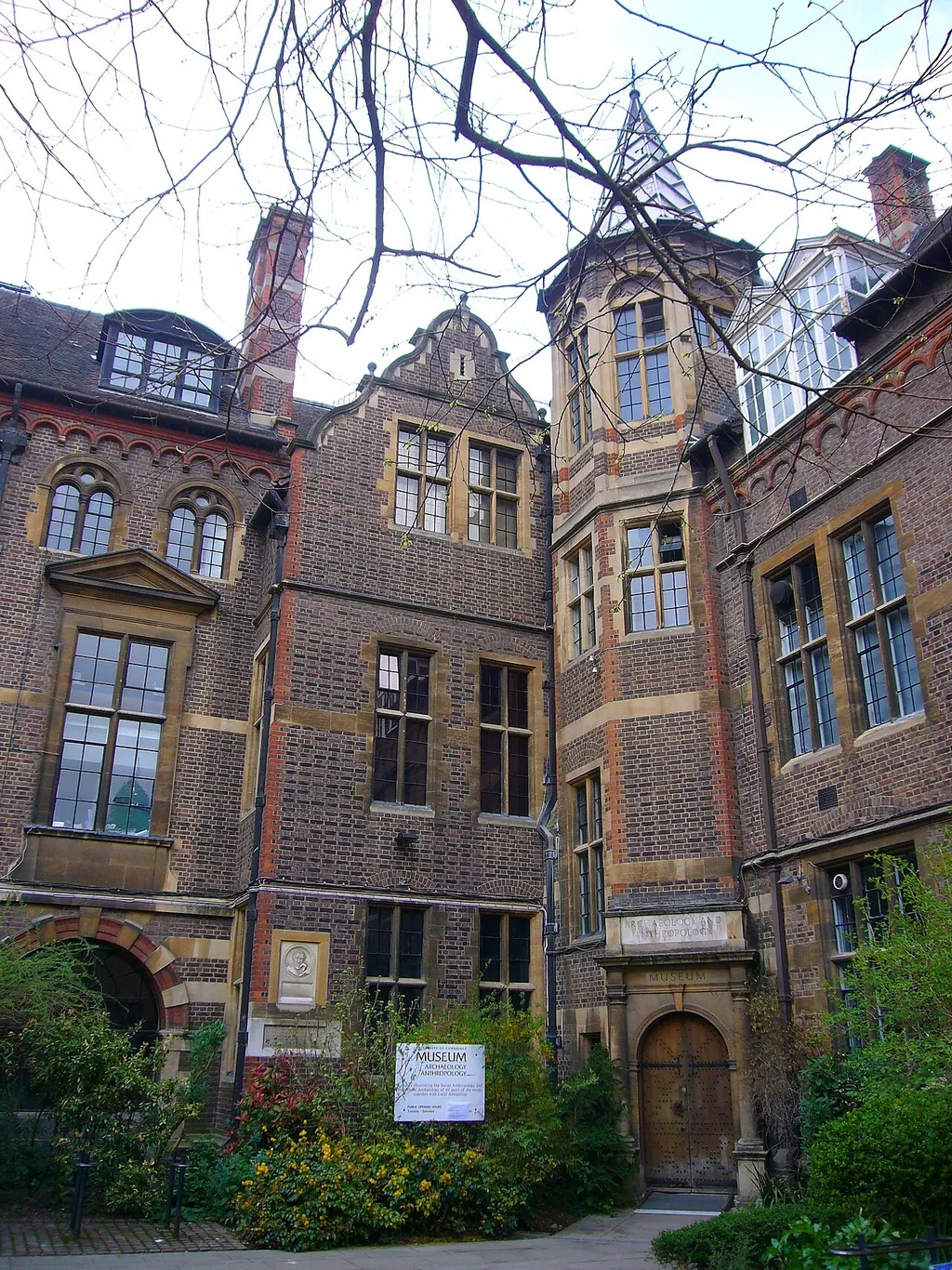
The Museum of Archaeology and Anthropology grew out of the collecting of the Cambridge Antiquarian Society, which had gathered archaeological finds from 1839 and lobbied the University for a museum. The first collections came from Sir Arthur Hamilton Gordon, a former Governor of Fiji, from the society, and from Alfred Maudslay, a pioneer of Central American archaeology. Baron Anatole von Hügel was appointed Curator, raised funds for a purpose-built building, which opened in 1913, and expanded the collections.
The 1898 Cambridge Expedition to the Torres Strait, led by Alfred Haddon, brought back thousands of documented artefacts, photographs, sound recordings and drawings by Indigenous people and was one of the most important early field projects. Trinity College placed major collections on deposit in the museum, including 102 objects from the first voyage of Captain Cook and Roman inscribed stones from northern Britain. Through the twentieth century, leading Cambridge archaeologists and anthropologists added material collected in the field.
From the 1990s the museum became known for working with local and Indigenous communities and for hosting researchers, students and artists from the Pacific, Africa, the Americas and Asia. A redevelopment in 2010 to 2012 created a gallery of Cambridge archaeology on the ground floor and a public entrance from Downing Street. Today the museum is part of the University of Cambridge Museums consortium and works closely with schools and communities in the city and region. Admission is free.
Hoogtepunten
- Cambridge Archaeology Wall and the Arbury Coffin in the local archaeology gallery
- Carved Maori flagpole 8 metres high, restored in 2008
- Objects from the voyages of Captain Cook
- Torres Strait Islands art and craft collection
- Asian sculpture and Moche pottery
- Free admission, with Top 9 trails in six languages
Vaste collectie
- Clarke Hall: Archaeology of Cambridge – Around 1,200 objects tell the story of Cambridge and its region from prehistory to the twentieth century, including the Cambridge Archaeology Wall and the Arbury Coffin.
- Maudslay Hall: World Cultures – The main anthropology gallery shows art and objects from around the world, including Asian sculpture, a carved Maori flagpole, Torres Strait material and objects from Cook's voyages.
- Andrews Gallery: World Archaeology – Changing displays on world archaeology, with material from predynastic Egypt, casts of Maya stelae, ancient China and the Middle East, and Moche pottery.
- Opgericht
- 1884
- Beheerder
- University of Cambridge
Toegangsprijzen & kortingen
De toegang is gratis.
| Groepen (vanaf 10 pers.) | –Self-directed group visits during opening hours are free; groups of 10 or more must book in advance, and the maximum group size in the museum at one time is 40. |
|---|
Admission is free; donations are welcome.
Toegankelijkheid
- Rolstoeltoegankelijk
- Lift
- Aangepast toilet
- Gehandicaptenparkeerplaats
- Hulphonden welkom
- Tastmodellen / voelbare objecten: geen informatie
- Rondleidingen in gebarentaal: geen informatie
- Informatie in eenvoudige taal: geen informatie
- Audiodescriptie: geen informatie
The main entrance on Downing Street has automatic doors and level access, and all ground-floor displays are on one level. A lift serves the first and second floors, but in October 2026 the website reported it as out of order, with access to the upper galleries and toilets by stairs only. Gender-neutral accessible toilets are on the first and second floors, and the nearest Changing Places toilet is in the Grand Arcade car park. There is no visitor parking at the museum, but limited Blue Badge parking is in the Grand Arcade car park and on Trumpington Street. Large-print guides are available in each gallery, a visual story is provided for visitors with autism, and a quieter second entrance is in the Downing courtyard. Guide dogs, hearing dogs and other assistance dogs are welcome.
Kinderen & gezin
- Verschoonruimte
Baby changing facilities are available in the toilets on the first and second floors, and breastfeeding and bottle feeding are welcome in all spaces. The museum offers a visual story for children with autism and taught sessions for school groups.
Bereikbaarheid & parkeren
Met het openbaar vervoer
Cambridge railway station · 20 min. lopen
The railway station is a 20-minute walk away. National coaches and buses stop at Parker's Piece, 5 to 10 minutes' walk, and most local buses stop on Emmanuel Street, a few minutes' walk. Park & Ride buses serve the city centre from five sites on the edge of Cambridge, with stops within about 5 minutes' walk of the museum.
Met de auto
Geen eigen parkeerplaats bij het museum.
There is no visitor parking at the museum. The Grand Arcade car park on Downing Street is a short walk away, with other options at Queen Anne Terrace (Gonville Place) and Park Street, and limited metered on-street parking on Regent Street and Trumpington Road.
- Gehandicaptenparkeerplaats
The museum is about 5 minutes' walk from the main bus station and Market Square. Bicycle racks are near the museum.
Route plannenService & horeca
- Café: niet aanwezig
- Restaurant: niet aanwezig
- Museumwinkel
- Garderobe: niet aanwezig
There is no café, and eating and drinking are not allowed in the galleries; the Whale Café in the nearby Museum of Zoology is open to the public. The shop sells fair-trade and ethically sourced gifts, toys and stationery and can be visited without entering the galleries. There is an outdoor courtyard with benches.
Evenementen & zaalverhuur
- Ruimtes te huur
- Privéfeesten
- Zakelijke evenementen
Tot 300 personen.
The galleries on three floors can host drinks receptions, live music, meetings and other private events for up to 300 guests; the Clarke Hall holds 50, the Maudslay Hall 150 and the Andrews Gallery 100.
Aanvragen & detailsJe bezoek plannen
| Aanbod voor scholen | ja |
|---|---|
| Goed om te weten | The museum describes an average visit as 60 to 90 minutes. 'Top 9' trails of the museum are available in English, Spanish, traditional and simplified Chinese, Italian and Portuguese. Large items such as suitcases, scooters and folding bicycles may not be brought into the galleries. Schools can book taught sessions with object handling and sensory trails. |