March 28, 2026 – December 20, 2026
Moving Objects: stories from behind the scenes at the museum
Objects from the museum's care are presented through the stories of the people who have worked with them over the years, giving a look behind the scenes.

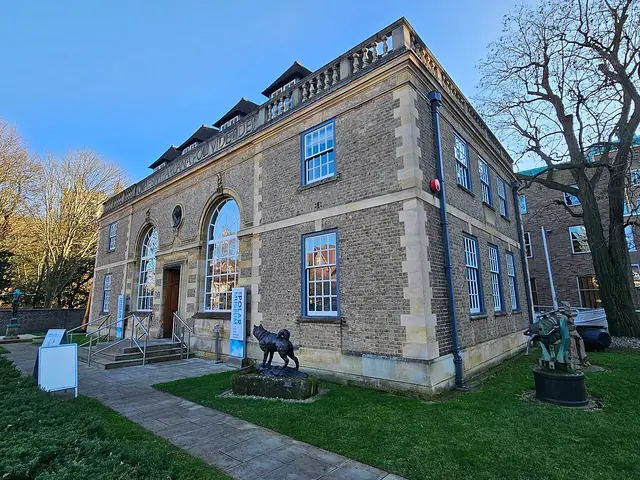
The University of Cambridge's free museum of world archaeology and anthropology, with local Cambridge finds, Pacific collections and objects from Captain Cook's voyages.
March 28, 2026 – December 20, 2026
Objects from the museum's care are presented through the stories of the people who have worked with them over the years, giving a look behind the scenes.
The Museum of Archaeology and Anthropology grew out of the collecting of the Cambridge Antiquarian Society, which had gathered archaeological finds from 1839 and lobbied the University for a museum. The first collections came from Sir Arthur Hamilton Gordon, a former Governor of Fiji, from the society, and from Alfred Maudslay, a pioneer of Central American archaeology. Baron Anatole von Hügel was appointed Curator, raised funds for a purpose-built building, which opened in 1913, and expanded the collections.
The 1898 Cambridge Expedition to the Torres Strait, led by Alfred Haddon, brought back thousands of documented artefacts, photographs, sound recordings and drawings by Indigenous people and was one of the most important early field projects. Trinity College placed major collections on deposit in the museum, including 102 objects from the first voyage of Captain Cook and Roman inscribed stones from northern Britain. Through the twentieth century, leading Cambridge archaeologists and anthropologists added material collected in the field.
From the 1990s the museum became known for working with local and Indigenous communities and for hosting researchers, students and artists from the Pacific, Africa, the Americas and Asia. A redevelopment in 2010 to 2012 created a gallery of Cambridge archaeology on the ground floor and a public entrance from Downing Street. Today the museum is part of the University of Cambridge Museums consortium and works closely with schools and communities in the city and region. Admission is free.
Admission is free.
| Groups (10+ people) | –Self-directed group visits during opening hours are free; groups of 10 or more must book in advance, and the maximum group size in the museum at one time is 40. |
|---|
Admission is free; donations are welcome.
Booking: not required – tickets at the desk
The main entrance on Downing Street has automatic doors and level access, and all ground-floor displays are on one level. A lift serves the first and second floors, but in October 2026 the website reported it as out of order, with access to the upper galleries and toilets by stairs only. Gender-neutral accessible toilets are on the first and second floors, and the nearest Changing Places toilet is in the Grand Arcade car park. There is no visitor parking at the museum, but limited Blue Badge parking is in the Grand Arcade car park and on Trumpington Street. Large-print guides are available in each gallery, a visual story is provided for visitors with autism, and a quieter second entrance is in the Downing courtyard. Guide dogs, hearing dogs and other assistance dogs are welcome.
Baby changing facilities are available in the toilets on the first and second floors, and breastfeeding and bottle feeding are welcome in all spaces. The museum offers a visual story for children with autism and taught sessions for school groups.
Cambridge railway station · 20-min walk
The railway station is a 20-minute walk away. National coaches and buses stop at Parker's Piece, 5 to 10 minutes' walk, and most local buses stop on Emmanuel Street, a few minutes' walk. Park & Ride buses serve the city centre from five sites on the edge of Cambridge, with stops within about 5 minutes' walk of the museum.
No on-site parking at the museum.
There is no visitor parking at the museum. The Grand Arcade car park on Downing Street is a short walk away, with other options at Queen Anne Terrace (Gonville Place) and Park Street, and limited metered on-street parking on Regent Street and Trumpington Road.
The museum is about 5 minutes' walk from the main bus station and Market Square. Bicycle racks are near the museum.
Get directionsThere is no café, and eating and drinking are not allowed in the galleries; the Whale Café in the nearby Museum of Zoology is open to the public. The shop sells fair-trade and ethically sourced gifts, toys and stationery and can be visited without entering the galleries. There is an outdoor courtyard with benches.
Up to 300 guests.
The galleries on three floors can host drinks receptions, live music, meetings and other private events for up to 300 guests; the Clarke Hall holds 50, the Maudslay Hall 150 and the Andrews Gallery 100.
Inquiries & details| School programs | yes |
|---|---|
| Good to know | The museum describes an average visit as 60 to 90 minutes. 'Top 9' trails of the museum are available in English, Spanish, traditional and simplified Chinese, Italian and Portuguese. Large items such as suitcases, scooters and folding bicycles may not be brought into the galleries. Schools can book taught sessions with object handling and sensory trails. |
Loading experiences …