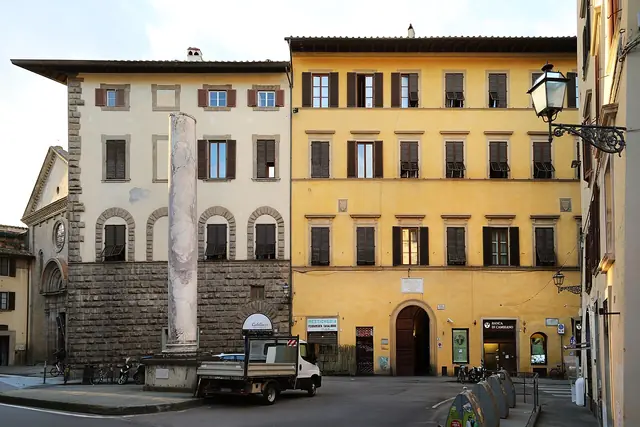
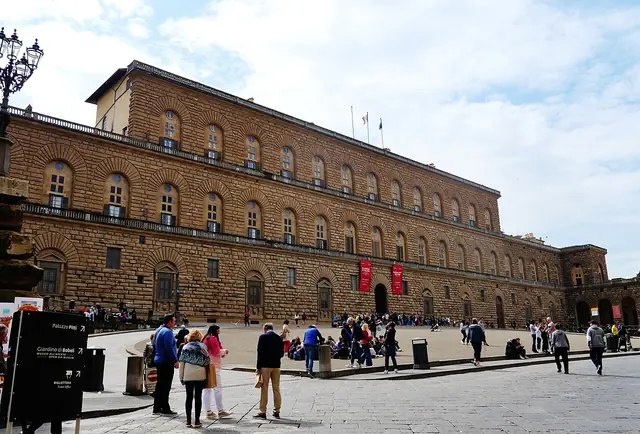
Natural history museum of 1775 in Palazzo Torrigiani, with zoological collections, minerals, 18th-century anatomical wax models, the Tribuna di Galileo and the Salone degli Scheletri.
Show individual sections
Highlights
Zoology in 23 rooms with specimens from all over the world
Mineralogy with meteorites, Medici hard stones and minerals from the island of Elba
Collection of 18th-century anatomical wax models (guided tour only)
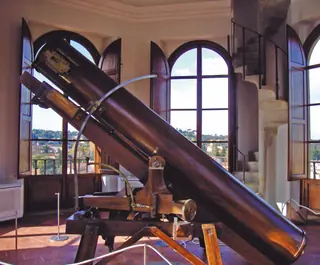
Tribuna di Galileo, a secular temple dedicated to the memory of Galileo Galilei, and the late-18th-century Torrino astronomico (astronomical tower) (guided tour only)
Salone degli Scheletri with about 3,000 osteological finds (guided tour only)
Engravings by Patrizio Di Sciullo devoted to insects, shells and interwoven branches, observed with an almost naturalistic and poetic eye; two videos by Antonio Trimani complete the route.
Photographic exhibition by Carlotta Valente bringing meteorites, crystals and crystallographic models into dialogue with the eighteenth-century boiseries of the museum, interweaving art, science and the slow time of geology.
About the museum
On 21 February 1775 Grand Duke Peter Leopold of Lorraine established the Imperial and Royal Museum of Physics and Natural History, the first natural history museum open to the public and the first to present nature in its entirety, from mineralogy to astronomy, through anthropology, botany and zoology. The idea of gathering in one place the “natural productions” kept at the Uffizi dates back to 1763. In 1771 the Palazzo Torrigiani in Via Romana was purchased; it was restructured over four years by the architect Gasparo Maria Paoletti and called the “Palazzo della Scienza” (Palace of Science). In 1771 the Officina di Ceroplastica (wax modelling workshop) was also set up, and for about a century it produced the famous anatomical wax models.
At the end of the 18th century the Napoleonic events and the founding of the Liceo di Scienze Fisiche e Naturali in 1807 transformed the museum from a unified place of knowledge into support for the individual chairs; in the 20th century the collections were dispersed among different sites. Today the Museo di Storia Naturale of the University of Florence, part of the Sistema Museale di Ateneo, holds more than eight million specimens, four million of them in La Specola alone.
The historic route presents zoological specimens from all over the world in 23 rooms. The collection of anatomical waxes numbers about 1,400 works in 562 cases and is still displayed with an 18th-century layout. The Salone degli Scheletri (Hall of Skeletons) houses about 3,000 osteological finds, while the Tribuna di Galileo, inaugurated in 1841, is a secular temple dedicated to the scientist. The new mineralogy sections return to their original seat, after more than a century, the minerals of the Medici collections and those of Niels Stensen.
Permanent exhibitions
Mineralogia – Six rooms with objects of extraordinary value – not only scientific, like the meteorites, but also historical, like the minerals collected by the Medici between the 15th and 18th centuries, including some objects in hard stones (lapis lazuli, jade, jasper, agate), and the collection of the great scientist and father of modern mineralogy Niels Stensen (Nicolas Steno), and aesthetic, like the huge topaz crystals, the aquamarines, the tourmalines from the island of Elba and Brazil, and the haematite and pyrite specimens from southern Tuscany.
Arte e Scienza: modelli didattici – A route illustrating the origins and educational value of natural history and anatomical models from the 17th century onwards: from a room devoted to the allegorical Baroque miniature theatres of Gaetano Giulio Zumbo, through 18th-century wax modelling with outstanding works such as the dismountable “Venus”, the collection of Florentine botanical waxes with plants and fruits of exceptional realism and great beauty, and the still lifes of Bartolomeo Bimbi, to natural history and anatomical models made in materials other than wax in the 19th and 20th centuries.
Zoologia – Twenty-three rooms with zoological specimens from all over the world, in a display that continues the tradition of the museum's 18th-century project. There are also several extinct and endangered species, as well as a great many specimens of considerable scientific and historical interest that provide important information on natural history and the evolution of organisms and of the planet.
Founded
1775
Operated by
Università degli Studi di Firenze – Sistema Museale di Ateneo
Visitors per year
approx. 50,000
Admission & discounts
Adults
€10
Reduced
€5aged 6 to 19, over 65, residents of the Metropolitan City of Florence, students visiting with schools of the European Union up to upper secondary level, graduates of the University of Florence with an AlumnUnifi card
Children & teens
€5free up to age 5 · Free admission under 6; under-12s must be accompanied by an adult.
Seniors
€5Over 65.
Visitors with disabilities
freecompanion free · Free admission for people with disabilities and any companion.
Students & apprentices
–Free for students enrolled at public universities in Tuscany, Erasmus students at Tuscan universities and students of the Accademia di Belle Arti di Firenze.
Groups
–For groups of more than 9 people, please contact the Servizi educativi first.
Combined ticket valid for 3 months (Orto botanico, Geologia e Paleontologia, Antropologia e Etnologia, La Specola)
€24Reduced €12; family €40.
Supplement for a guided tour of the anatomical waxes
€3From Tuesday to Sunday at 11:00, 12:00 and 15:00, maximum 15 people; sold only at the ticket office.
Supplement for a guided tour of the Torrino astronomico and the Tribuna di Galileo
€3Sunday at 10:00, maximum 10 people; sold only at the ticket office.
Activities for families with children aged 6–11 (per child, in addition to the ticket)
€6Saturday at 15:00, booking required.
Prices valid from 1 September 2026. Tickets on Vivaticket (online purchase recommended) or at the ticket office, subject to availability. Free admission also for employees of the University of Florence, members of ICOM and ANMS, licensed tour guides and registered journalists, holders of an Edumuseicard, and up to three accompanying teachers of school groups.
The exhibition rooms permanently open to the public (Mineralogy, Zoology and “Arte e Scienza: modelli didattici”) are on the first and second floors, are free of architectural barriers and can be reached by a wheelchair-accessible lift. The museum has accessible toilets on the ground and first floors. The historic route of the anatomical waxes is not wheelchair accessible. Only the lowest part of the Torrino (astronomical tower) can be reached by lift; the upper floors are accessible only by stairs. The Salone degli Scheletri is free of architectural barriers but can be visited only on a private guided tour booked in advance. Guided tours in sign language. Guide dogs are admitted.
Kids & families
Great for kids & families
Kids’ admission
free up to age 5
Family tours & workshops
Activities for families with children aged 6–11 on one Saturday a month at 15:00 (for example “Animali in gioco”, “Scopriamo i minerali”, “Caccia agli scheletri”), lasting 1.5 hours, €6 per child in addition to the ticket; seasonal camps for children are also held.
Getting there & parking
By public transit
Bus: timetables and routes on Autolinee Toscane. From Peretola airport take the T2 tram to the Unità stop, then about 20 minutes on foot.
By car
No on-site parking at the museum.
The museum is in the ZTL (limited traffic zone): a permit or a car park outside the zone is needed; the nearest paid car parks are at Piazzale di Porta Romana and along Viale Francesco Petrarca. Bicycle parking near the entrance.
On foot about 20 minutes from the Duomo and Santa Maria Novella station, and about 8 minutes from Piazzale di Porta Romana; by bicycle about 6 minutes from the station. People with disabilities who do not live in Florence can register for access to the ZTL.
Lockers with key and a sales point; drinking water dispensers.
Events & venue rental
The museum hasn’t published any information on this.
Plan your visit
Guided tours
yes
School programs
yes
Photography
Photographs without flash and amateur video recording are allowed; professional filming requires written authorisation.
Good to know
The anatomical waxes and the Torrino with the Tribuna di Galileo can be visited only with a guided tour (in Italian and English) with a supplement; private guided tours can be booked by writing to edu@sma.unifi.it or calling +39 055 275 6444 (Monday to Friday 9:00–13:00). Children under 12 must be accompanied by an adult.