Museo de Arte Abstracto Español
Museum of the Fundación Juan March in the Casas Colgadas of Cuenca, with Spanish abstract art from the 1950s to the 1980s and free admission.
Få kun enkelte afsnit læst op
Om museet
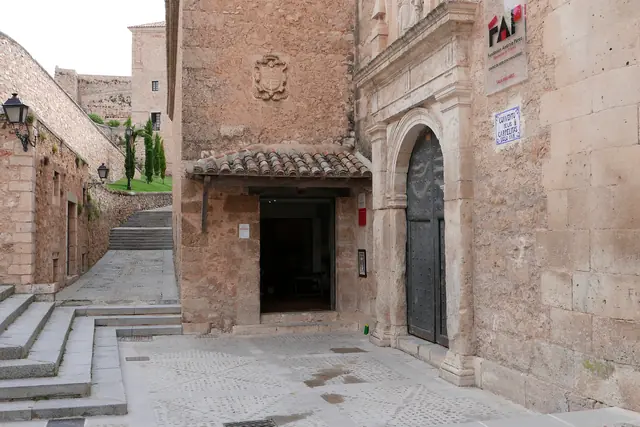
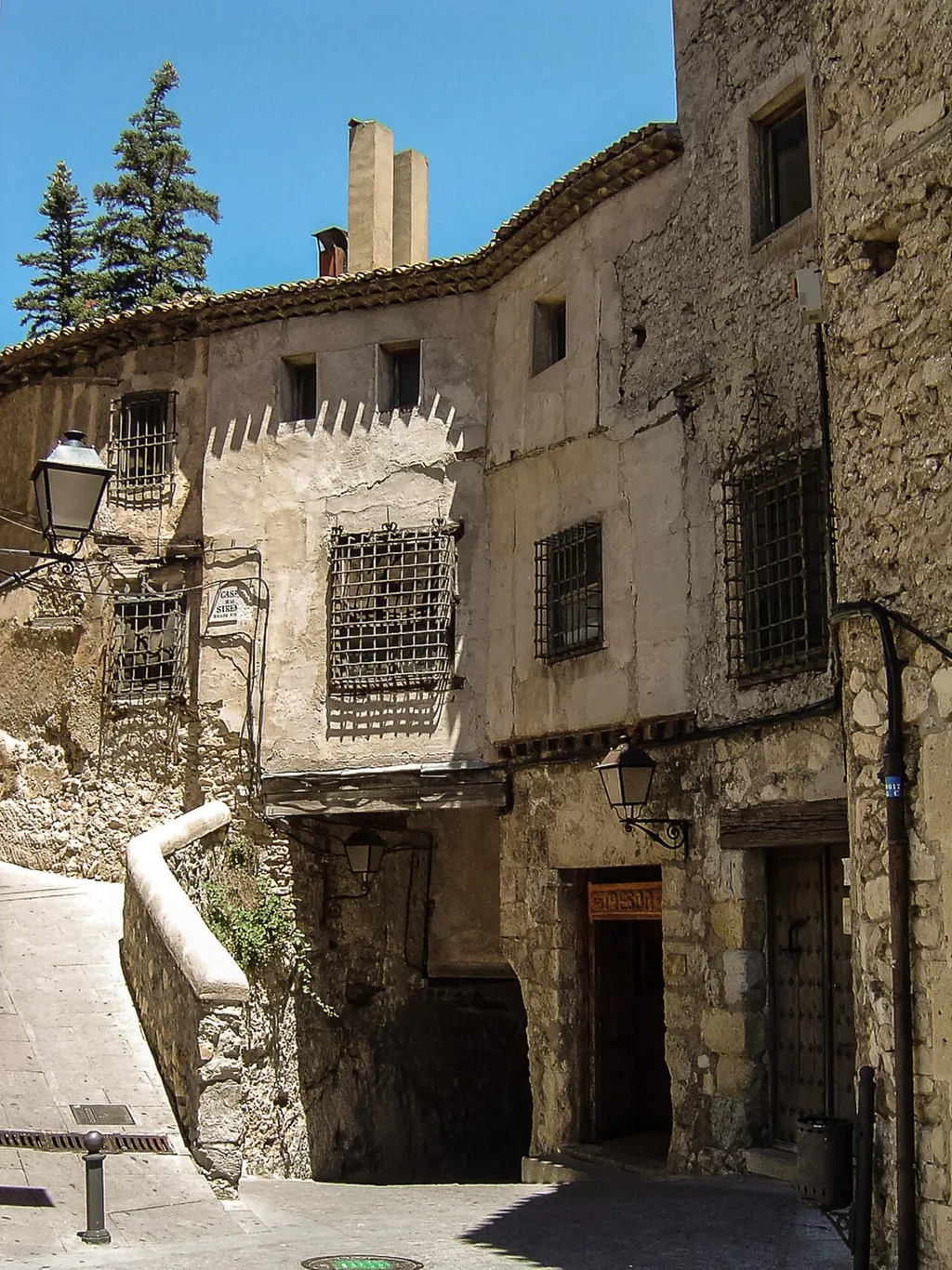
The museum arose from the initiative of the painter Fernando Zóbel, who in 1963 offered the Cuenca town council to install his collection of contemporary Spanish art in the Casas Colgadas, a group of 15th-century houses suspended over the gorge of the Huécar river. Zóbel rented part of the building, which had just been restored, and the museum officially opened on 30 June 1966 with 266 works by 87 artists of the abstract generation of the 1950s. It was a project conceived and sustained by artists, outside the official cultural policy of the time, which soon achieved national and international reach.
In 1978 a first extension was opened that tripled the space, opened the library to the public and incorporated works of the generation of the 1970s. In 1980 Zóbel donated to the Fundación Juan March his collection of painting, sculpture, drawing and prints, his personal library, his diaries and more than one hundred and thirty sketchbooks; since then the foundation has owned the museum and has enriched its holdings with new acquisitions. In 1994 a refurbishment converted the former archive and storage spaces into a temporary exhibition room.
The collection brings together paintings and sculptures from the 1950s to the 1980s by artists such as Antoni Tàpies, Antonio Saura, Eduardo Chillida, Jorge Oteiza, Manuel Millares, Eusebio Sempere, Gustavo Torner and Zóbel himself. Following the idea of its founder, the works rotate slowly to make room for temporary exhibitions. The museum also keeps Zóbel's personal library and archive.
Højdepunkter
- Casas Colgadas, a medieval building suspended over the gorge of the Huécar
- Spanish abstract art from the 1950s to the 1980s
- Works by Tàpies, Saura, Chillida, Oteiza, Millares, Sempere and Zóbel
- Personal library and archive of Fernando Zóbel
- Free admission to the collection and temporary exhibitions
Permanent udstilling
- Colección del Museo de Arte Abstracto Español – Paintings and sculptures of the abstract generation of the 1950s and 1960s and of later decades, which are periodically rearranged to make room for temporary exhibitions.
- Grundlagt
- 1966
- Ejer
- Fundación Juan March
Entrépriser & rabatter
Der er gratis entré.
| Børn og unge | gratis |
|---|
Free admission to the collection and temporary exhibitions. Educational activities are free of charge.
Tilgængelighed
- Delvis kørestolsvenlig
- Elevator: ingen oplysninger
- Handicaptoilet: ingen oplysninger
- Handicapparkering: ingen oplysninger
- Servicehunde tilladt: ingen oplysninger
- Taktile tilbud: ingen oplysninger
- Rundvisninger på tegnsprog: ingen oplysninger
- Letlæste tilbud: ingen oplysninger
- Synstolkning: ingen oplysninger
Due to the features of the medieval building, movement through the museum's spaces is limited for people with reduced mobility; the museum recommends calling 969 212 983 for information.
Børn og familie
Museet har ikke offentliggjort oplysninger om dette.
Transport & parkering
Museet har ikke offentliggjort oplysninger om dette.
Service & spisesteder
- Museumsbutik
- Opbevaringsskabe
- Wi-fi
Free Wi-Fi throughout the building. Individual lockers with keys, accessed through the shop. Small shop with exhibition catalogues, postcards, posters and prints.
Arrangementer & udlejning
Museet har ikke offentliggjort oplysninger om dette.
Planlæg dit besøg
| Rundvisninger | ja |
|---|---|
| Tilbud til skoler | ja |
| Fotografering | Photography with flash, video recording and selfies are not permitted. |
| Godt at vide | Guided tours for groups of 8 to 25 people with prior booking (museocuenca@march.es or 969 212 983), Tuesday to Friday during opening hours. Eating, drinking and smoking are not permitted in the galleries, and mobile phones must be kept on silent. The free educational programme includes teaching suitcases, visits to the collection and workshop-visits (peducativo@march.es). The library is open to researchers. |