23. april 2026 – 25. oktober 2026
Erwerbung der Zeichnung „Ernte“ (1911) von August Macke
The provenance research study room presents the reacquired drawing that was confiscated as “degenerate art” from the Walter Kaesbach foundation in 1937.
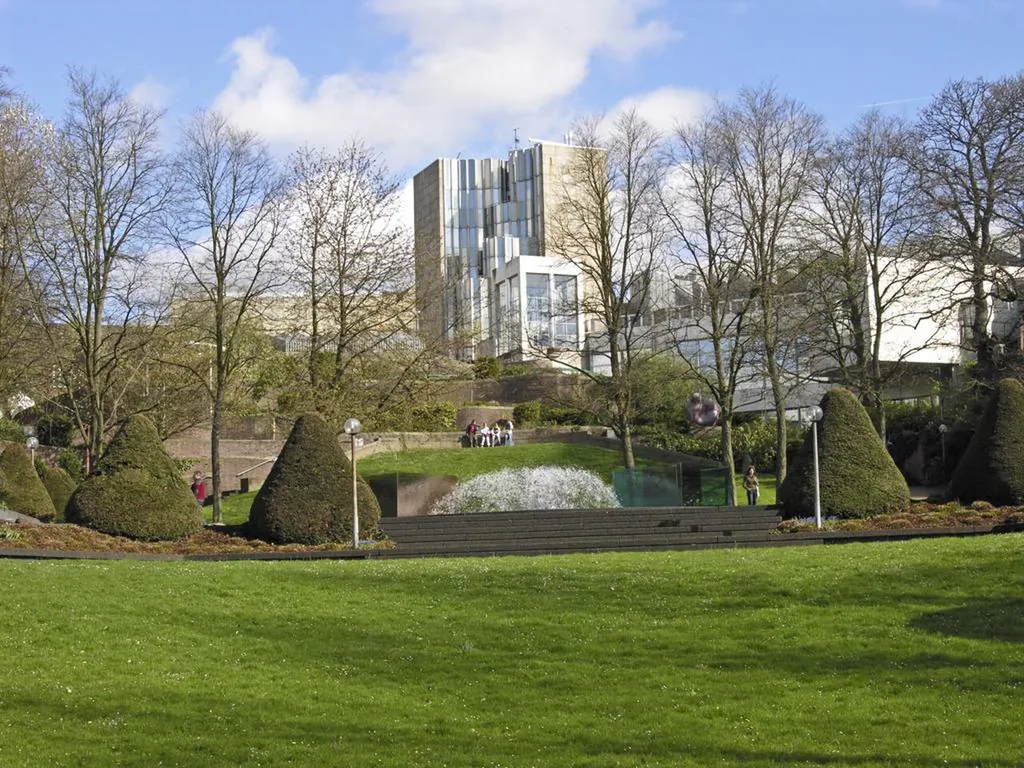
Municipal museum of art from 1960 onward in Hans Hollein's 1982 postmodern building – with works by Beuys, Polke and Richter and a sculpture garden.
23. april 2026 – 25. oktober 2026
The provenance research study room presents the reacquired drawing that was confiscated as “degenerate art” from the Walter Kaesbach foundation in 1937.
18. september 2026 – 29. november 2026
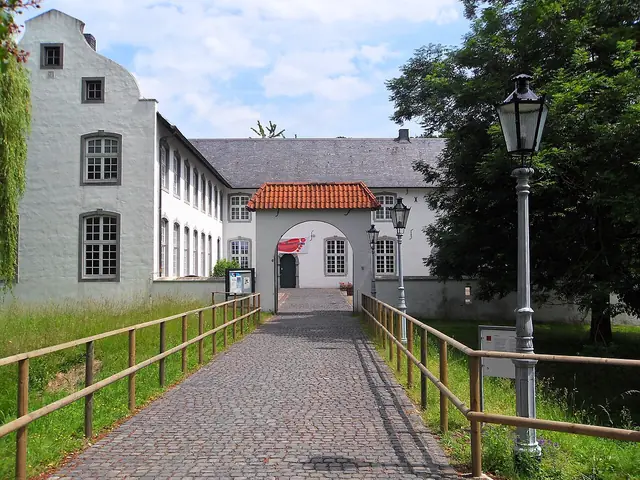
Project by the 2025/26 studio fellow: a photographic work coated with scratch-card paint travels in a shipping crate to schools and care facilities, while a second copy is on view in the museum's classroom.
20. november 2025 – 22. november 2026
The final installment of the series on the Fluxus holdings of the Andersch Collection, with chess sets by Takako Saito, multiples and prints; visitors can contribute ideas for a future visible storage display.
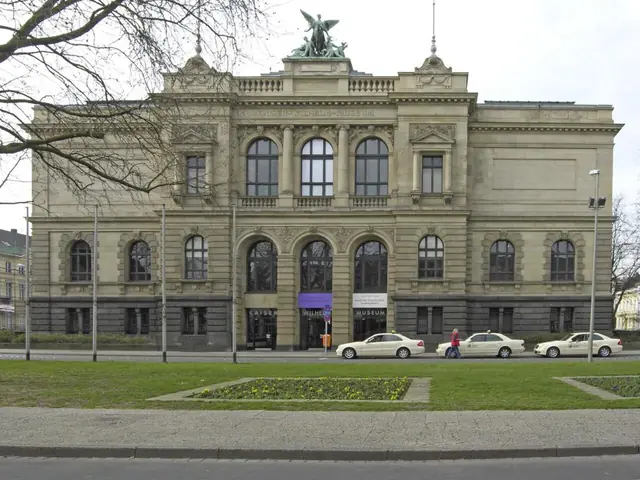
The museum's beginnings date back to around 1900: following early municipal collecting initiatives, 1904 is considered the official founding year of the Städtisches Museum, which at the time moved into a former elementary school on the Fliescherberg. In 1922 Walter Kaesbach, a native of Mönchengladbach, donated a collection of Expressionist art to his hometown; it passed to the city in 1928 and laid the foundation for a museum of contemporary art. In 1937 the Nazis confiscated most of it as “degenerate art”.
From 1967 onward, director Johannes Cladders turned the museum on Bismarckstraße into an internationally recognized place for experimentation. He organized the first major museum exhibition of Joseph Beuys and showed artists such as Marcel Broodthaers, Gerhard Richter, Daniel Buren and Hanne Darboven early on. In 1972 he chose the Viennese architect Hans Hollein to design a new building.
The Museum Abteiberg opened on June 23, 1982, on the slope below the Münster church. Hollein composed a tower, temple-like structures and galleries with sawtooth roofs into a small city within the city, regarded as a key work of postmodernism; in 1985 he received the Pritzker Prize.
The collection focuses on art since 1960, from Pop, Minimal and Concept Art to Zero and Nouveau Réalisme, with artist rooms devoted to Beuys, Polke, Richter and Mike Kelley, among others. It also includes the Etzold Collection of early computer graphics and, since 2017, the Fluxus holdings of the SAMMLUNG/ARCHIV ANDERSCH. The municipal museum is directed by Susanne Titz.
| Voksne | 9 € |
|---|---|
| Nedsat pris | 7 €School students, university students and apprentices up to age 25, people in military or voluntary service, members of families eligible for assistance, and people with severe disabilities (proof required) |
| Børn og unge | –No separate children's category listed; school students pay the reduced price, school classes without a guided tour get free admission. |
| Pensionister | –No senior discount listed. |
| Personer med handicap | 5 €ledsager gratis · According to the accessibility page, single ticket €5 with a severe disability ID (Schwerbehindertenausweis), companion free; the price list includes people with severe disabilities in the reduced rate (€7). |
| Studerende og elever | 7 €Up to age 25; students of art, art history, architecture and cultural education get free admission. |
| Grupper (fra 10 pers.) | 7 € pr. personFor 10 or more people, €7 per person, reduced €6. Private guided tours (max. 20 people) €70 for 1 hour or €90 for 1.5 hours plus admission, in English €80/€100; educational program for school classes €2.50 per child. |
| Familier | –No family ticket listed. |
Gratis entré: every first Sunday of the month (“Erster Sonntag” with guided tours and an open painting class)
Combination ticket with Museum Schloss Rheydt and TextilTechnikum €12, reduced €10 (valid on the day of purchase and the following day). Public guided tours and art talks are included in admission. Free admission for, among others, members of the Museumsverein (museum association), ICOM and Deutscher Museumsbund, holders of the City of Mönchengladbach's social or volunteer ID, and teachers preparing lessons.
Main entrance on Abteistraße at ground level (doorbell at wheelchair height; ticket desk staff open the glass doors). The exhibition levels are connected by ramps and an elevator (80 × 160 cm); wheelchair-accessible restroom on the lower level, accessible museum café, folding stools at the cloakroom. One accessible parking space about 20 m in front of the entrance. The entrance from the upper plaza level is not accessible; according to the city portal, the pyramid room also cannot be reached by wheelchair. The sculpture garden is step-free but lies on a slope.
Velegnet til børn og familier
On the first Sunday of the month, a family day with free admission, short guided tours and an open painting class for children and teens; plus children's tours, courses and multi-day holiday workshops (e.g. for ages 6 to 11 or 12 and up). Children's birthday parties with a guided tour, hands-on activities and games in the painting class room. In the museum café, children can play and draw on the gallery.
Museum Abteiberg
From Mönchengladbach Hauptbahnhof, bus lines 003, 008, 009, 013 or 023 toward Alter Markt to the Museum Abteiberg stop; on foot about 15 minutes via Hindenburgstraße.
Parkering muligt
The Q-Park parking garage at Krichelstraße 26 is recommended (entry Mon–Sat 7:00–20:30, Sun 9:00–20:30, exit at any time).
Due to changes in traffic routing, access via Steinmetzstraße or Alter Markt is no longer possible; enter Berliner Platz 15 as your navigation destination.
Planlæg ruteMuseum café in the original Hollein interior, overlooking the sculpture garden – self-service vending machines for hot drinks and snacks; on the Erster Sonntag (first Sunday), hosted by the Museumsverein. Museum shop with catalogs, editions and postcards (orders also by email). Bags and backpacks go in lockers.
Op til 100 personer.
Green lecture hall (100 seats, stage and technical equipment), round classroom (24 seats) and museum café with terrace (receptions up to 60, simple conference catering for up to 100 people); exclusive opening of the whole museum on Mondays or in the evening from 18:00. Civil wedding ceremonies on four dates per year; catering by three Mönchengladbach restaurants.
Forespørgsel & detaljer| Rundvisninger | ja |
|---|---|
| Audioguide | ja (DE, EN) |
| Tilbud til skoler | ja |
Cookies hjælper dig med at bruge websitet. Kort og statistik indlæser vi kun med dit samtykke.