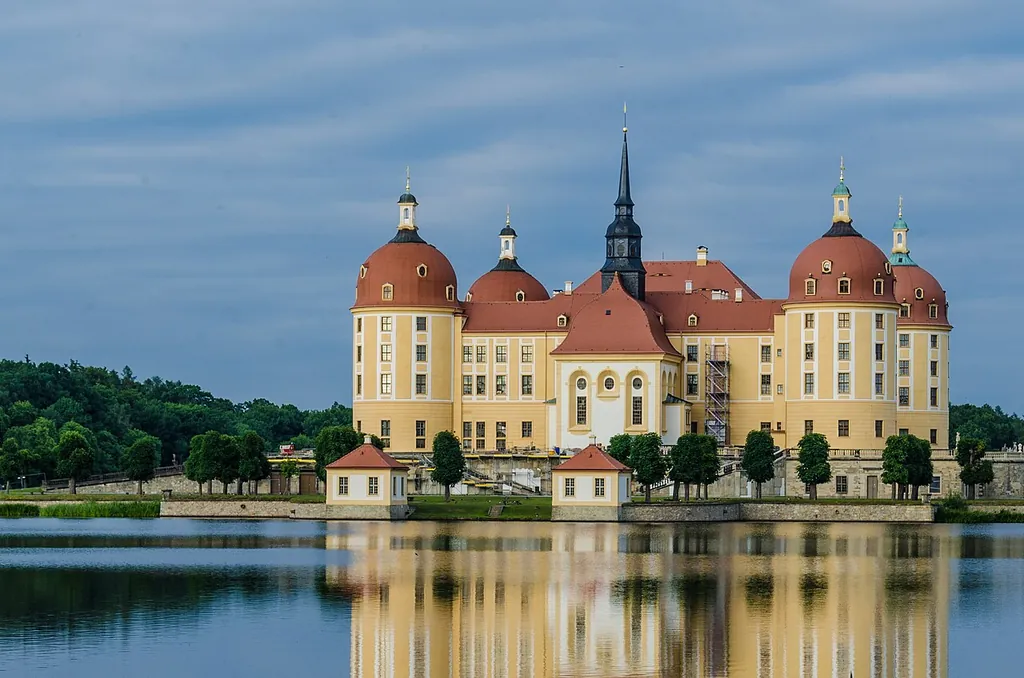
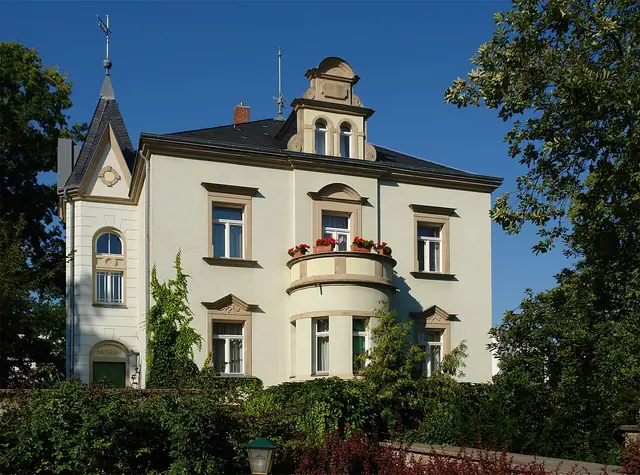
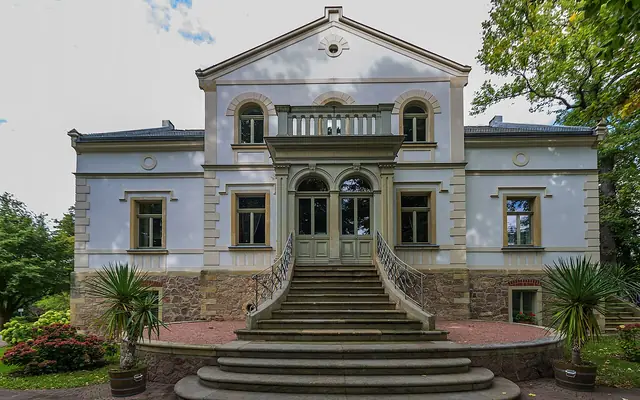
Augustus the Strong's Baroque hunting and pleasure palace rising from its lake near Dresden – with the Feather Room, hunting trophies and a winter exhibition on "Three Hazelnuts for Cinderella".
ÅbningstiderEntré fra 12 € Delvis tilgængelig Restaurant
The show commemorates two young Labrador Inuit who toured Europe with a human zoo (Völkerschau) in the 1820s and appeared in Moritzburg in 1825. Ethnographic objects, drawings and interviews trace a line to present-day life in Labrador.
The annual winter exhibition at the original filming location shows costumes, props such as the original riding saddle and re-created film scenes from the 1973 fairy-tale classic; texts in German and Czech. Tickets online only, advance sales from October 12, 2026.
Om museet
Starting in 1542, Duke Moritz of Saxony had a Renaissance-style hunting lodge built on a granite knoll in the game-rich Friedewald forest north of Dresden; it later took his name and soon became the center of courtly hunting parties. The palace chapel was added in 1661 under Elector Johann Georg II; in connection with Augustus the Strong's coronation as King of Poland, it was consecrated as a Catholic chapel and is still used for services today.
From 1723, Augustus the Strong had Matthäus Daniel Pöppelmann transform the hunting lodge into a Baroque hunting and pleasure palace, which rises from the palace lake with its four round towers. New ponds, avenues and animal enclosures were laid out all around, while inside, Saxon artists and craftsmen furnished banquet halls and some 200 rooms with leather wall hangings and hunting trophies. When the king died, the expansion was left unfinished. Around 1800, a great-grandson integrated the surroundings more fully into the design: the Fasanenschlösschen (Little Pheasant Castle), a small harbor and a lighthouse were built.
From 1933 until the Wettin family was expropriated in 1945, Prince Ernst Heinrich of Saxony lived in the palace. Most of the family's art treasures buried in the park fell into the hands of Soviet troops, though amateur archaeologists did not discover some of the crates until 1996. From 1946, a Baroque museum was set up in the palace. Today, the Staatliche Schlösser, Burgen und Gärten Sachsen gGmbH runs the site with its Baroque exhibition, the porcelain quarters and the Feather Room, back on display since 2003 after years of restoration. Since the filming of "Three Hazelnuts for Cinderella" in 1972, Moritzburg has also been known as a film palace, and a dedicated exhibition is devoted to the film every winter.
Højdepunkter
Feather Room with wall hangings made from more than one million colorful bird feathers
One of Europe's most important collections of hunting trophies in the Steinsaal (Stone Hall)
Precious gilded leather wall hangings, for example in the Monströsensaal
Historic porcelain quarters in the Jägerturm with animal and hunting motifs
Original filming location of "Three Hazelnuts for Cinderella" with a winter exhibition
Fasanenschlösschen with feather wallpaper, a miniature harbor and a lighthouse
Permanente udstillinger
Barockausstellung mit Federzimmer und Porzellanquartier – Banquet halls with leather wall hangings, hunting trophies in the Steinsaal, the porcelain quarters in the Jägerturm and the Feather Room convey court life under Augustus the Strong; since 2026, newly acquired paintings and a tapestry have complemented the Monströsensaal. On view during the summer season, accompanied by the HistoPad with augmented reality.
Fasanenschlösschen – Saxony's smallest palace, with cabinets full of 18th-century wall coverings made of feathers, straw and beads as well as chinoiserie embroidery; accessible only on guided tours in small groups from late April to early November.
Grundlagt
1946
Ejer
Staatliche Schlösser, Burgen und Gärten Sachsen gGmbH (Schlösserland Sachsen)
Ledelse
Dr. Dominique Fliegler
Besøgende pr. år
ca. 306.000 (2025)
Entrépriser & rabatter
Voksne
12 €
Nedsat pris
10 €School students aged 17 and over, apprentices, university students, people doing voluntary service or voluntary military service, people with severe disabilities, recipients of unemployment benefits, social assistance or asylum seeker benefits, holders of a social pass or the Sächsische Ehrenamtskarte (Saxon volunteer card), members of the Bundesverband deutscher Gästeführer (German tour guides' association) and the Deutscher Verband für Kunstgeschichte (German art history association) (proof required in each case)
Børn og unge
4,50 €gratis til og med 5 år · Children aged 6 to 16 and school classes €4.50 per person; children up to age 5 free.
Pensionister
–No senior discount listed.
Personer med handicap
10 €ledsager gratis · Reduced for people with severe disabilities with proof; companion free with the "B" marker. Because of high visitor numbers, wheelchair users can only visit the exhibition with a companion.
Studerende og elever
10 €School students aged 17 and over, apprentices and university students.
Grupper (fra 15 pers.)
10 € pr. person15 or more people; tour leader, bus driver and one companion per 10 school or kindergarten children free. Booked guided tour (1 hr., March–November): minimum fee €60, for 15 or more people €4 per person plus admission; tours in foreign languages can also be booked.
Familier
–No family ticket; holders of the Landesfamilienpass (Saxon family pass) are admitted free.
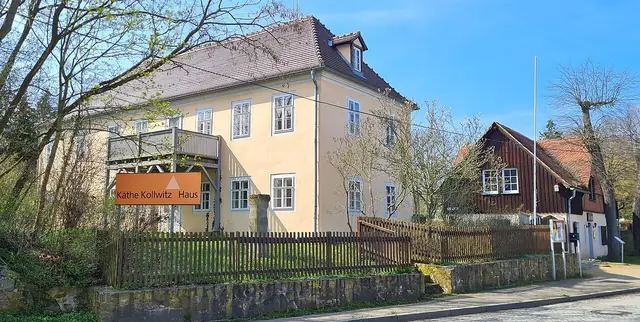
Admission includes the HistoPad. Free admission also for people celebrating their birthday, holders of the schlösserlandKARTE and companions with the "B" marker (HistoPad optional, €4) as well as for journalists and members of ICOM, ICOMOS and the Deutscher Museumsbund (HistoPad included); exceptions apply for events, special exhibitions and guided tours. Public guided tour €4 plus admission. Combination tickets: Baroque palace & Fasanenschlösschen €15 (reduced €12, children €7), Baroque palace & Käthe Kollwitz Haus €16 (reduced €13, children €6); Fasanenschlösschen only (guided tour only) €8, reduced €7, children €4.50. A full-price ticket gets you reduced admission (€10) to the Albrechtsburg Meissen within three days. Winter exhibition at the same prices, tickets online only (advance sales from October 12, 2026).
Tilgængelighed
Delvis kørestolsvenlig
Elevator
Handicaptoilet
Handicapparkering: ingen oplysninger
Servicehunde tilladt
Taktile tilbud: ingen oplysninger
Rundvisninger på tegnsprog: ingen oplysninger
Letlæste tilbud: ingen oplysninger
Synstolkning: ingen oplysninger
The path from the parking lot is about 300 m with a historic surface; the ramp up to the entrance is 50 m long with a 12% gradient; access to the Baroque palace via a ramp into the ground level, passenger elevator to all exhibition floors (report to the ticket desk). Baroque and winter exhibitions are accessible (thresholds up to 4 cm), the special exhibition rooms are not. Accessible restroom on the first floor; palace restaurant (ramp) and palace park are accessible. The Fasanenschlösschen cannot be reached by wheelchair users; the visitor center with garden café, shop and accessible restroom on the first floor is accessible with a companion. Guided tours for blind and visually impaired people as well as people with learning and intellectual disabilities on request; information folders on the Fasanenschlösschen for people with hearing impairments. The HistoPad is also suitable for people with visual impairments. Dogs only on a leash in the park; only assistance dogs in the museum.
Børn og familie
Velegnet til børn og familier
Besøgets varighed
ca. 1,5 t.
Entré for børn
gratis til og med 5 år
Familieomvisninger & workshops
Opgavehæfte, skattejagt eller audioguide for børn
Barnevognsvenlig: findes ikke
Puslerum
Børnefødselsdage
HistoPad with a treasure hunt included in admission. Family and children's tours, some in historic costumes (e.g. for ages 6 to 9 or 6 to 16), holiday programs, a children's program for the winter exhibition and children's birthday parties (ages 6–12, max. 10 people). Strollers, buggies and large baby carrier backpacks are not allowed in the exhibition rooms; stroller parking and baby changing facilities are available.
Transport & parkering
Med offentlig transport
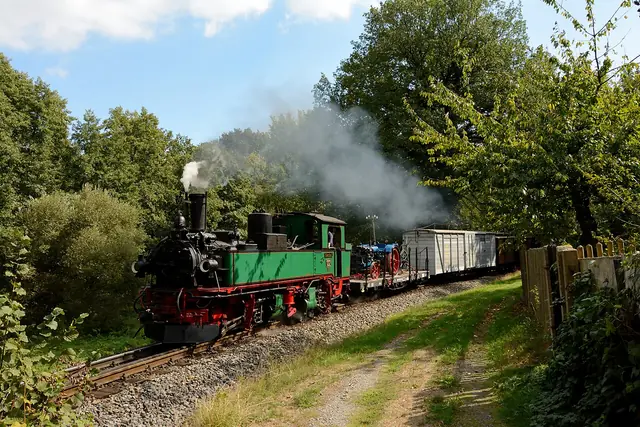
Take the train to Dresden-Neustadt, then bus line 477 toward Radeburg to Moritzburg. Alternatively, take the S-Bahn Dresden–Meißen to Radebeul Ost and from there the historic narrow-gauge railway "Lößnitzdackel" to Moritzburg.
I bil
Betalingsparkering
Paid parking lot at Schlossallee 2 for cars and buses (open 24 hours, with restroom); further paid parking lots on Radeburger Straße and at the Schwanenteich, a parking lot on Kalkreuther Straße (west side) and a free hikers' parking lot at the Waldschänke/Fasanengarten.
About 15 km from Dresden: A 4, exit Dresden-Wilder Mann, or A 13, exit Radeburg.
Palace restaurant serving game and carp dishes; garden café at the Fasanenschlösschen (May–October). Museum shop at the end of the tour, pottery workshop in one of the pond houses. Vacation apartments in former guard and gondola houses on the palace island.
Arrangementer & udlejning
Lokaler til leje
Private fester
Firmaarrangementer
Bryllupper / vielser
Op til 500 personer.
For parties and conferences: "Königliche Schlossküche" (Royal Palace Kitchen) banquet hall (100 banquet/120 theater-style seats), the palace terrace and palace park (up to 500 banquet seats). Weddings in the Small Banquet Hall of the Fasanenschlösschen (20 theater-style seats) and on the open grounds at the Fasanenschlösschen (50 seats) – civil, religious or non-denominational ceremonies; wedding dates at the Schlösschen every 1st Friday and 1st Saturday of the month from May to September (with exceptions).
Allowed in the Baroque and winter exhibitions without flash or tripod; not permitted in the Fasanenschlösschen. Commercial photography and filming only with written permission; drones are prohibited over the palace and park.