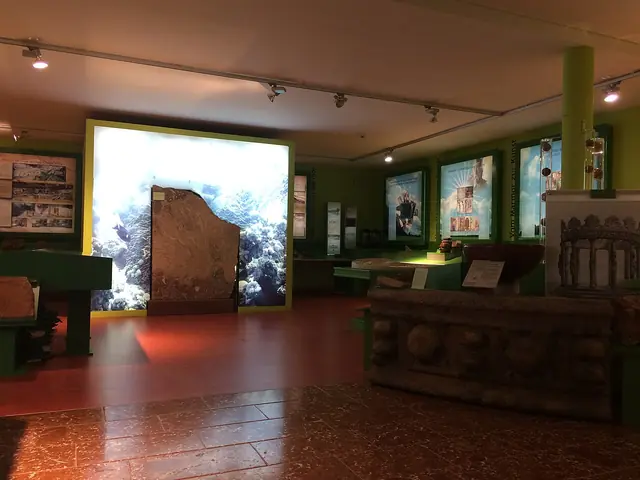
The first special exhibition in the new Kurt Zeller Forum introduces the researchers who discovered and studied the Celts of the Dürrnberg. Hands-on stations let visitors work as archaeologists do.
About the museum
The Keltenmuseum goes back to the Hallein city museum founded in 1882, which changed location several times and was last housed in the Griestor. Since the 19th century, ever more Iron Age finds came to light during recoveries and excavations on the Dürrnberg; from 1949 the local museum curator Ernst Penninger supervised the excavations. In 1970 the museum moved into the former administrative building of the saltworks on the Pflegerplatz and received its present name.
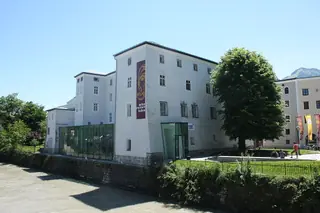
The building was erected in 1654 by Prince-Archbishop Guidobald von Thun for the saltworks administration. In the Princes' Rooms on the top floor hangs a cycle of paintings made in 1757/58 by Benedikt Werkstötter, which depicts in over 70 scenes the work involved in salt production. With the Salzburg state exhibition “The Celts in Central Europe”, the house became internationally known in 1980. Conversions by Heinz Tesar (1994) and the firm Halle 1 (2004) gave it its present form.
The museum sees itself as an archaeology and city museum: it holds most of the Iron Age finds from the Dürrnberg and tells of the mining, settlements and burial customs of the Celts. A separate department shows the prehistory of the state of Salzburg, another the history of Hallein from archiepiscopal salt mining to the present. Since 2012 Salzburg Museum GmbH has run the house as part of a cooperation. The Keltenmuseum also includes the Stille Nacht Museum Hallein in the former residence of Franz Xaver Gruber.
Since 2025 the “Kurt Zeller Forum” has been under construction in the attic as a new space for special exhibitions and events; the museum continues to operate in the meantime.
Highlights
Celtic finds from the Dürrnberg with jewellery of gold, amber and coral
Walk-in mine galleries and glimpses into burial chambers
Princes' Rooms with the 1757/58 picture cycle on salt-making
Bronze Age helmet from the Pass Lueg in the prehistory exhibition
Interactive children's exhibition “Celts for Kids” and bone lab
Permanent exhibitions
Die Kelten – 2.600 Jahre Siedlungsgeschichte auf dem Dürrnberg – Finds from the mine, settlements and graves of the Dürrnberg show the work, daily life and prosperity of the Celts, whose trade routes reached as far as amber and coral.
Zeitsprünge – Ursprünge – A family-friendly journey through the prehistory of the state of Salzburg from the Mesolithic to the late Iron Age, featuring, for example, the helmet from the Pass Lueg.
Halleiner Stadtgeschichte – The salt town from archiepiscopal mining to the present, with the Princes' Rooms and their large picture cycle on salt production in the 18th century.
Founded
1970
Operated by
Stadt Hallein; Betriebsführung Salzburg Museum GmbH
Director
Florian Knopp
Admission & discounts
Adults
€9.50
Reduced
€7.50
Children & teens
€4.50free up to age 6 · Children and young adults aged 7 to 26 €4.50; under 7 free.
Visitors with disabilities
freecompanion free · Free admission for people with disabilities including one companion.
Students & apprentices
€4.50Up to age 26.
Groups
–School classes €4 per person.
Families
€192 adults and up to 3 children; Family+ (3 adults and up to 3 children) €24.50.
With a Salzwelten Salzburg ticket, 20% discount on admission. Combination ticket with the Stille Nacht Museum Hallein available. Members of the museum association Celtic Heritage and the Salzburg museum association have free admission. Tickets also online.
The museum is accessible for people with reduced mobility; a lift serves all floors. The museum education rooms are barrier-free.
Kids & families
Great for kids & families
Kids’ admission
free up to age 6
Family ticket
€19 · 2 adults and up to 3 children; Family+ (3 adults and up to 3 children) €24.50.
Family tours & workshops
Activity booklet, scavenger hunt or kids’ audio guide
Hands-on stations
The interactive exhibition “Celts for Kids” is aimed at two- to fourteen-year-olds: uncover a dig site, sort finds, weave and take part in a race. In the bone lab, families use models to explore what skeletons reveal about the life of the Celts. The character kURt, the prehistory worm, accompanies visitors through the prehistory exhibition. Regular family programmes (“Familienzeit”).
Getting there & parking
By public transit
Hallein Stadtbrücke
Bus to Hallein Stadtbrücke or Hallein Hafner; S-Bahn to Hallein Hauptbahnhof, from there about a 10-minute walk.
Stille Nacht Museum Hallein Gruberplatz 1, 5400 Hallein Museum about Franz Xaver Gruber in his former residence; its own opening hours (Friday–Tuesday 10 am–5 pm, closed Wednesday and Thursday) and its own admission (€6.50), combination ticket with the Keltenmuseum available.
The map will load once you have made your cookie choice.
Museum shop with replicas of Celtic finds and souvenirs, also accessible without a museum visit. Museum garden for relaxing.
Events & venue rental
The museum hasn’t published any information on this.
Plan your visit
Guided tours
yes · approx. 1.5 hrs
School programs
yes
Good to know
Guided tours (90 minutes, max. 20 people) for €90 plus admission upon registration at besucherservice@keltenmuseum.at or +43 6245 80783; cancellation up to 24 hours in advance, otherwise a cancellation fee is charged. The free Keltenmuseum Hallein app explains the pictures in the Princes' Rooms and offers a bone quiz. Educational programmes for school classes; school packages together with Salzwelten Salzburg.