Městské muzeum Bystřice nad Pernštejnem
Local history museum in the former town hall on the square in Bystřice nad Pernštejnem, with sixteen exhibitions ranging from live fish to uranium mining.
Have only individual sections read aloud
About the museum
The beginnings of museum work in Bystřice nad Pernštejnem go back to 1913, when the first meeting of the museum department took place. The department began collecting local history materials, but the First World War soon interrupted its activity. During the First Republic the museum was housed in a small museum room and devoted itself mainly to collecting ethnographic objects. The collection was greatly expanded by the director of the agricultural school, Dr Vladimír Kříž. During the occupation the holdings were locked away, and after the little museum room was broken into, the more valuable pieces were moved to the farming school.
At the beginning of 1955 the council of the District Local History Museum was formed. After the administrative reform of 1960 the building of the old town hall, where the district court had been seated since 1848, was vacated, and the museum moved into it. The first newly installed exhibitions opened on 1 September 1962 and included departments of natural science, flax working, medieval pottery, agricultural tools and craft products.
Today the museum offers sixteen permanent exhibitions. In the cellar rooms you will find live fish of the Vysočina, a mineralogical collection and an exhibition on uranium mining; in other parts of the building, for example, burgher housing, a heraldry room, the brewer's flat, the Štěpánov cast iron or the exhibition Okresní soud (The District Court). The museum also includes the Park horníků (Miners' Park) and the Bystřický park miniatur (Bystřice Miniature Park).
Highlights
- Unique exhibition of live fish of the Vysočina in large aquariums
- The exhibition Uran na Vysočině (Uranium in the Vysočina) on the discovery and mining of uranium
- Mineral collection of RNDr. Ludvík Ducháček from all over the world
- Burgher housing, the Horácká světnička (Horácko Room) and the brewer's flat
- Štěpánov cast iron and the history of the Bystřice region
- Miners' Park and the Bystřice Miniature Park
Permanent exhibitions
- Živé ryby Vysočiny – The exhibition in the cellar rooms shows, in three large aquariums, a pond shallows, a fast-flowing river and a reservoir with predatory fish; smaller tanks hold protected species, eels and burbot. Old reels, rods and period advertising complete it.
- Uran na Vysočině – The exhibition describes the discovery of uranium and the history of uranium ore mining in the Czech lands, focusing on the deposits of the Vysočina, especially around Dolní Rožínka.
- Mineralogie – The mineral collection of RNDr. Ludvík Ducháček illustrates the variety of minerals in the Vysočina and also contains stones from all over the world. The largest exhibit on show is marble.
- Founded
- 1955
- Operated by
- Město Bystřice nad Pernštejnem
- Director
- PhDr. Vladimír Cisár
Admission & discounts
| Adults | 80 Kč |
|---|---|
| Reduced | 40 Kč |
Half-price admission costs CZK 40.
Accessibility
- Partially wheelchair accessible
- Elevator: no information
- Accessible restroom: no information
- Accessible parking: no information
- Service dogs welcome: no information
- Tactile models & exhibits: no information
- Sign language tours: no information
- Easy-to-read materials: no information
- Audio description: no information
Step-free access leads to the ground floor, the first floor and the Attic Gallery. The cellar exhibitions Mineralogy, Live Fish of the Vysočina and Uranium in the Vysočina are not step-free.
Kids & families
The museum hasn’t published any information on this.
Getting there & parking
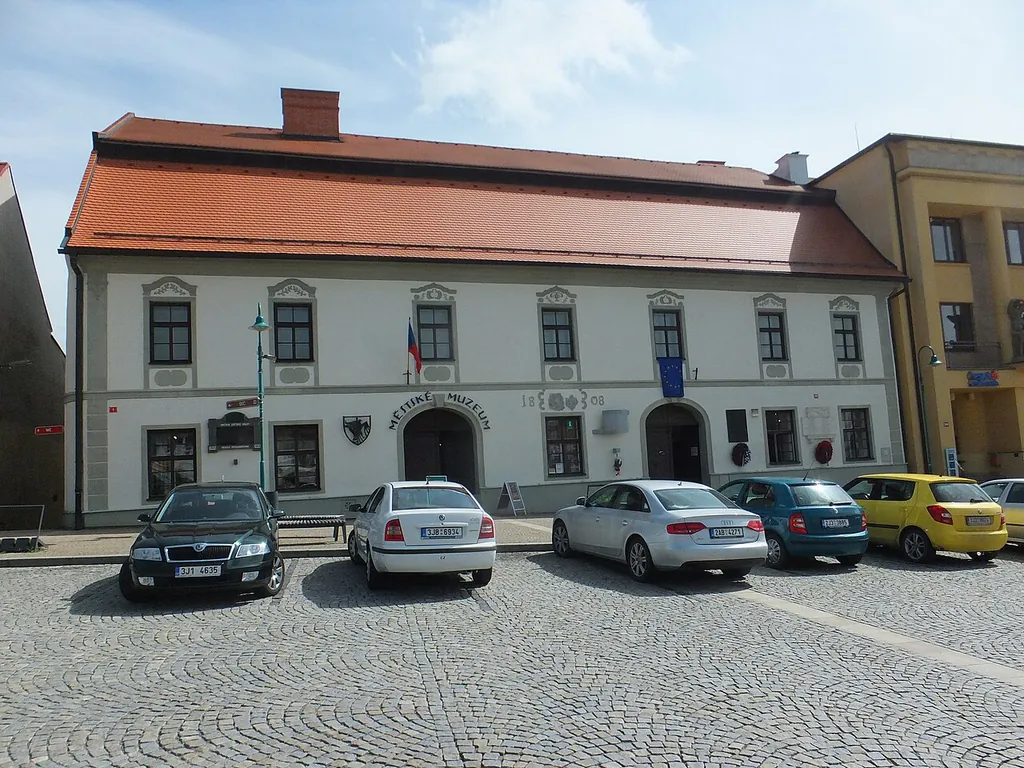
The museum is located on the square in the town centre, in the building of the former town hall.
Get directionsAmenities & dining
The museum hasn’t published any information on this.
Events & venue rental
The museum hasn’t published any information on this.
Plan your visit
| School programs | yes |
|---|---|
| Good to know | For nursery, primary and secondary schools the museum prepares guided tours, project days and lectures directly in school classrooms. The programmes are arranged with teachers and follow school curricula. |