A selection of 19th- and 20th-century beaded handbags from the collections of the Železný Brod and Jablonec museums, both domestic and foreign production, with an overview of the history of this fashion accessory.
About the museum
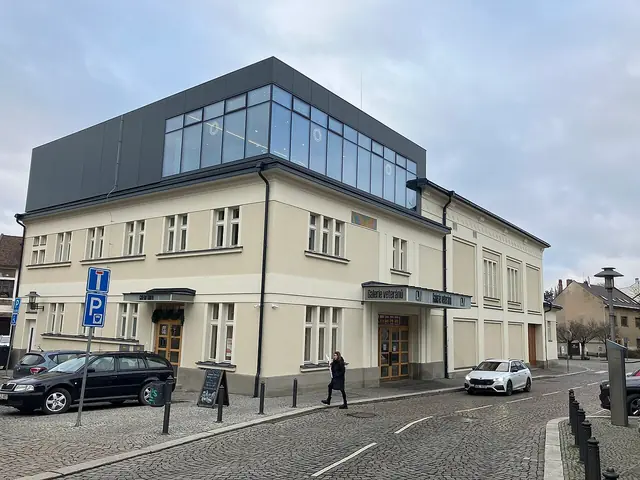
The history of the municipal museum in Železný Brod goes back to the end of the 19th century, when a collection fund began to be built from various sources; a significant part arose during preparations for the Czechoslav Ethnographic Exhibition in Prague in 1895. Guild relics predominated in the collections, so the museum was initially called a trade museum. The collections were kept in the town hall building and later moved several times; from 1926 the museum was located in the new building of the glass school.
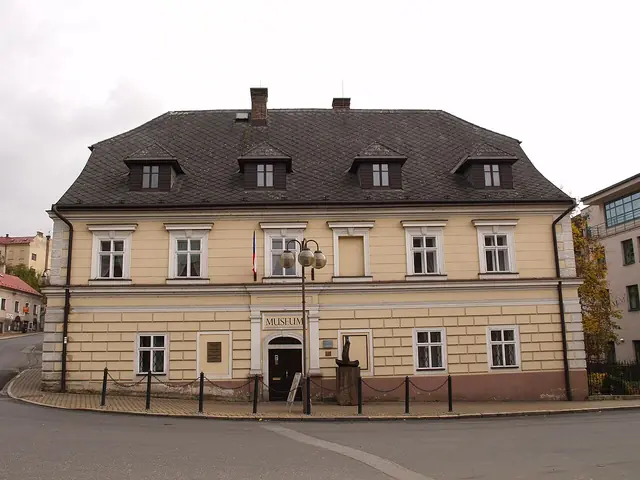
In 1934 the Museum Society was founded, which took over the management of the collections and replaced the previous haphazard collecting with a clear concept. In 1936 the museum moved to the new building of the municipal savings bank, where it is still located today. After 1957 it was incorporated into the town administration; after the reinstallation of the exhibitions in 1967 it was called the Ethnographic Museum of the Upper Jizera Region.
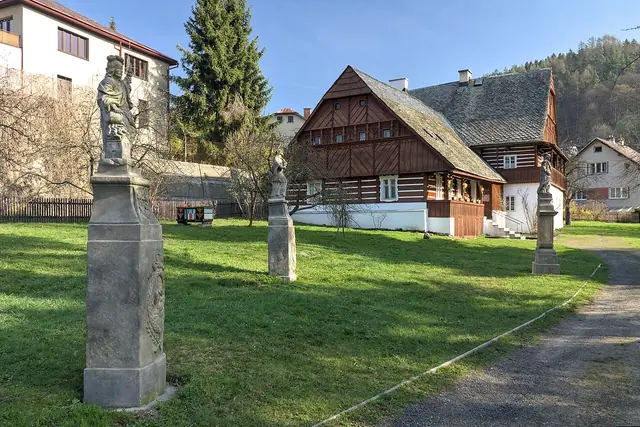
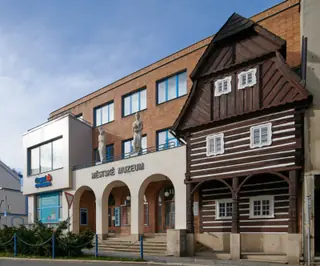
In the second half of the 1990s work began on reconstructing the log building at Běliště for the ethnographic collections, and the main building's premises were freed up for the previously neglected glass collections. Today the glass exhibition has several parts: home glassmaking in the 19th century, pre-war glass firms, a gallery of personalities of the glass school, and the exhibition hall of Brychtová and Libenský.
Permanent exhibition
Sklářská expozice – The exhibition documents home glassmaking of the 19th century, local glass firms, personalities of the glass school and the work of Brychtová and Libenský.
Operated by
Městské muzeum v Železném Brodě (příspěvková organizace města Železný Brod)
Visitors per year
approx. 3,631 (2024)
Admission & discounts
Adults
80 Kč
Reduced
50 Kčchildren, students and pensioners.
Children & teens
50 Kčfree up to age 5 · children pay the reduced admission; children under 6 free
Seniors
50 Kčpensioners
Visitors with disabilities
freeholders of a ZTP card enter free
Students & apprentices
50 Kč
Groups (6+ people)
75 Kč per persongroup discount for more than 5 people: adults CZK 75, children, students and pensioners CZK 45 per person
Families
200 Kč
Admission applies to the individual exhibitions (the glass exhibition and the folk exhibition at Běliště are separate buildings). Free admission also for members of ICOM, NPÚ and AMG. Trips can be booked outside the season.
Accessibility
Wheelchair accessible: not available
Elevator: no information
Accessible restroom: no information
Accessible parking: no information
Service dogs welcome: no information
Tactile models & exhibits: no information
Sign language tours: no information
Easy-to-read materials: no information
Audio description: no information
The exhibition is not step-free accessible.
Kids & families
Great for kids & families
Kids’ admission
free up to age 5
Family ticket
200 Kč
Family tours & workshops
Activity booklet, scavenger hunt or kids’ audio guide
Special activities for children are prepared in the glass exhibition, and the museum is part of the tourist game for the whole family, Putování po stopách skřítka Střípka. Family admission costs CZK 200.
Getting there & parking
The museum is located on 3 May Square in the centre of Železný Brod; the Běliště branch is in Jirchářská Street.
Národopisná expozice Běliště Jirchářská 57, 468 22 Železný Brod Separate record narodopisna-expozice-beliste-zelezny-brod; a log building from 1807 with its own telephone and opening hours.
The map will load once you have made your cookie choice.
The museum has a shop selling publications and souvenirs.
Events & venue rental
The museum hasn’t published any information on this.
Plan your visit
Guided tours
yes
School programs
yes
Good to know
A virtual tour of the museum is also available on the website; group tours must be booked in advance. Guided tours and educational programmes for school classes are only offered occasionally.