R-S 72 Nízká
Museum in the R-S 72 Nízká infantry bunker in the Orlické hory with an exhibition on Czechoslovak fortifications focusing on mortars; admission is voluntary.
Show individual sections
Highlights
- Infantry bunker from 1937 on the line of heavy fortifications in the Orlické hory, built to resistance class 2
- Exhibition on Czechoslovak fortifications with a focus on fortress mortars
- Model of the 9 cm casemate mortar on its original carriage
- Mock-up of a 5 cm grenade launcher for armoured cupolas
- Complete filter room and machine room with the original engine
- Replica of the armoured cupola with full equipment
- Guided tours by members of the association, also in the surrounding area and to neighbouring fortification structures
- Lectures on the history of the fortifications available
Current exhibitions
There are currently no exhibitions listed here. Follow the museum to hear about new exhibitions, news and other updates as soon as we add them.
About the museum
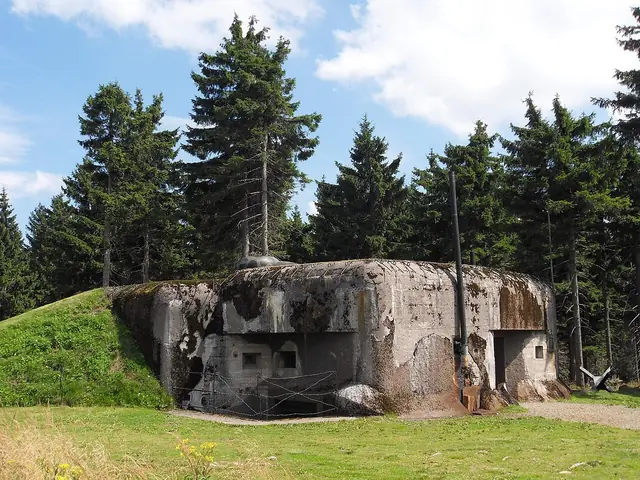
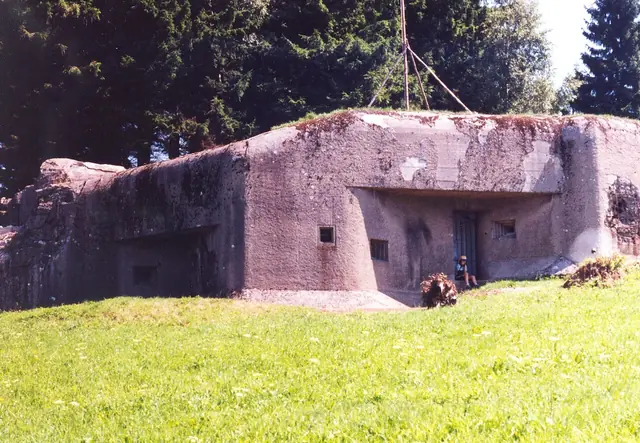
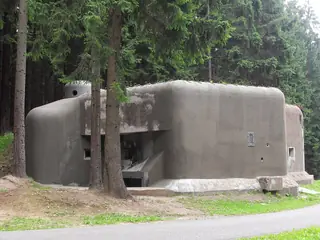
The R-S 72 Nízká infantry bunker (pěchotní srub) is part of the Czechoslovak heavy fortifications in the Orlické hory (Eagle Mountains). It was concreted over three days in September 1937 and assigned to the Kunvald sub-sector, which came under the Engineer Group Command in Rokytnice v Orlických horách. The two-storey structure, built to resistance class 2, was meant to withstand hits from artillery shells of up to 180 mm calibre. It has two firing rooms with twin heavy machine guns vz. 37 in the fortress version “O”. On the lower floor, a 9 cm casemate mortar with a range of 4.2 km was to be installed in a further firing room, intended to fire towards Anenský vrch and the neighbouring infantry bunkers. Close defence was provided by four auxiliary embrasures for the vz. 26 machine gun, and a four-embrasure armoured cupola weighing 15.9 t in the ceiling of the structure served for observation. The crew consisted of 24 men.
After the occupation of the border region in 1938, the German army carried out tests on the bunker. The armoured cupola was damaged by a shaped charge, then torn out and taken to German steelworks. All the embrasures bear traces of further engineer charges, the rear walls were shelled by artillery at close range, and an internal explosion wrecked the lower floor between the mortar room and the rest of the structure.
In 1996, members of the Klub historického vojenství Brno founded the loose association Spolek R-72. Its aim is to restore the bunker to its state of September 1938, or to the condition it was meant to be in once completed and equipped. The association cleared the structure of rubble, rebuilt all the brick and concrete partitions, installed a copy of the thick-walled sheet-steel doors and of one embrasure destroyed by an explosion, restored a large part of the earth cover and repaired the shot-through rear walls. The armoured cupola was replaced by a replica in the original dimensions, and the destroyed protective collar around it was re-concreted. The electrical and ventilation systems, including the filter room and machine room, were restored, and mock-ups of the water tanks and the special barrel toilet were also built.
The bunker is at the same time a small museum of Czechoslovak fortifications. The exhibition focuses on fortress mortars and the equipment of this type of structure: it shows a 5 cm grenade launcher intended for armoured cupolas and a complete mock-up of the vz. 38 casemate mortar, the only one of its kind in this form. The association also collects exhibits related to the construction of the fortifications and researches archive documents on their crews.
Permanent exhibition
- Expozice československého opevnění a pevnostních minometů – Exhibition in the infantry bunker on Czechoslovak fortifications with an emphasis on fortress mortars, featuring a mock-up of the 9 cm vz. 38 casemate mortar and a 5 cm grenade launcher.
- Operated by
- Spolek R-72
Admission & discounts
Admission is free.
Admission is voluntary.
Accessibility
- Partially wheelchair accessible
- Elevator: no information
- Accessible restroom: no information
- Accessible parking: no information
- Service dogs welcome: no information
- Tactile models & exhibits: no information
- Sign language tours: no information
- Easy-to-read materials: no information
- Audio description: no information
Because of the construction itself there are some difficulties, but the upper floor of the structure is accessible to wheelchair users.
Kids & families
Great for kids & families
A very suitable place for families with children.
Getting there & parking
By public transit
Panské Pole · 800 m
The Panské Pole bus stop is right by the car park, about 800 m from the bunker along an asphalt forest track. The nearest railway station is Rokytnice v Orlických horách (about 4 km).
By car
Free parking · 800 m to the entrance
Car park in the village of Panské Pole on the Rokytnice v Orlických horách – Bartošovice road, capacity about 100 cars, free of charge.
From the car park an asphalt path of about 800 m leads through the forest directly to the bunker; the red hiking trail marking follows it as well. Access to the bunker by car is not possible (driving into the forest is prohibited). GPS: 50°10′48,9″ N, 16°30′36,6″ E.
Get directionsAddress & contact
R-S 72 NízkáRokytnice v Orlických horách
Hradec Králové, Czechia
Amenities & dining
Right in the car park at Panské Pole is the kiosk “Áčko” with snacks, hot drinks and meals; in the season it is open daily except Mondays, out of season at weekends (current times at https://www.facebook.com/panskepole/).
Events & venue rental
As far as we know, the museum does not rent out spaces for external events.
The museum does not rent out its premises. Events are held only exceptionally; information on the association’s Facebook page.
Plan your visit
| Guided tours | yes |
|---|---|
| Good to know | Tours are led by members of the association; on request also in the surroundings of the bunker and to neighbouring fortification structures, and lectures on the history of the fortifications are also possible. Dogs are not allowed inside the structure, but while they wait the association will offer them a bowl of water. |
Visitor experiences
Loading experiences …