Musée d'art et d'histoire Paul Éluard
Museum of Saint-Denis housed in the former Carmel: medieval archaeology, industrial history, the apothecary, the Paris Commune and the Paul Éluard collection.
No sound? Check your device’s silent switch.
Have only individual sections read aloud
About the museum
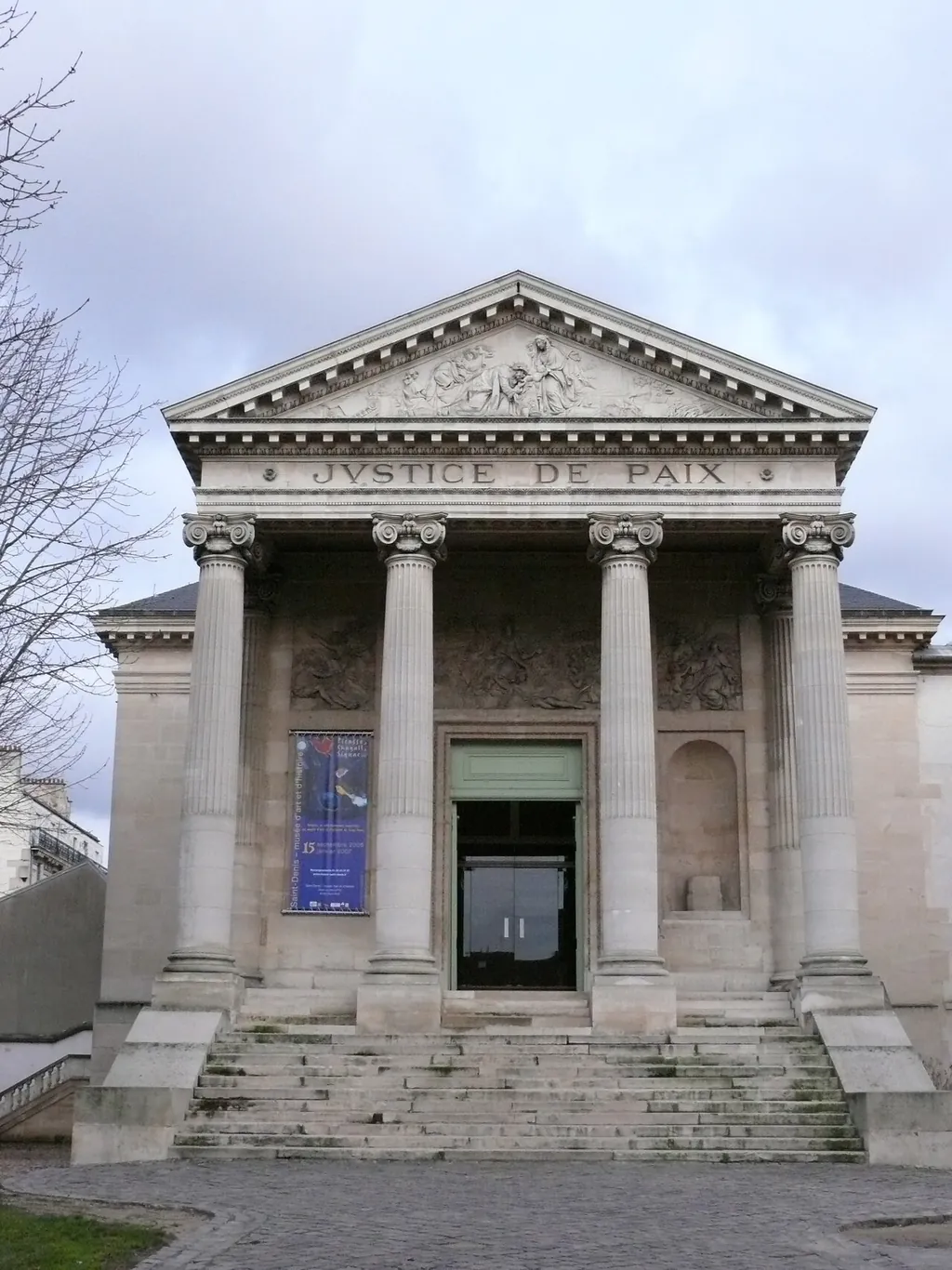
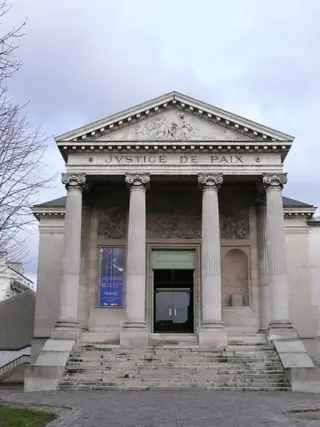
The Carmelite convent of Saint-Denis was founded in 1625; the foundation stone of its first church was laid in 1628 by Queen Marie de Médicis. In 1770, when the convent was in serious financial difficulty, the arrival of Madame Louise de France, daughter of Louis XV, saved it from seizure. She had numerous works carried out and in 1779 entrusted the reconstruction of the chapel to the architect Richard Mique, with a richly carved decoration by Joseph Deschamps. The chapel then served as a district court from 1895 to 1993.
The Musée de Saint-Denis was founded in 1899 and opened in 1901; it was first housed in the former Hôtel-Dieu, later together with the municipal library. In 1972 the city bought the Carmel, which had been saved from demolition, and restored it to house the museum of art and history, which opened in May 1981. The design sought a balance between presenting the collections and respecting the original architecture: a cloister with the gravestones of the nuns, austere cells and 174 mystical sentences painted on the walls. The arrangement received the European Museum of the Year Award in 1982.
The collections cover medieval archaeology, industrial history, the Hôtel-Dieu and its apothecary, the siege of Paris and the Commune of 1871, the collections of Francis Jourdain and Albert André, and the holdings devoted to the poet Paul Éluard. The museum also has gardens, including the Jardin des cinq sens.
Highlights
- Former 17th-century Carmel with cloister, cells and painted sentences
- Carmelite chapel by Richard Mique, decoration by Joseph Deschamps
- Hôtel-Dieu and apothecary
- Collection on the siege of Paris and the Commune of 1871
- Collections of Paul Éluard, Francis Jourdain and Albert André
Permanent exhibition
- Collections permanentes du Carmel – Medieval archaeology, industrial history, Hôtel-Dieu and apothecary, the Commune of 1871, and the Francis Jourdain and Paul Éluard collections.
- Founded
- 1899
- Operated by
- Ville de Saint-Denis
- Visitors per year
- approx. 35,110
Admission & discounts
| Adults | €5 |
|---|---|
| Reduced | €3Visitors over 65, groups of more than 10 people, members of archaeological and art-history societies (Société française d'archéologie, Société d'histoire de l'art français, Société de sauvegarde de l'art français, local history societies) and holders of the Pass'Pop Découverte |
| Children & teens | freefree up to age 25 · Free admission for visitors under 26 and for children in school groups and leisure centers, accompanied by their supervisors. |
| Seniors | €3Reduced rate from age 65. |
| Visitors with disabilities | freecompanion free · Free admission for visitors with disabilities, upon presentation of their card, and for one companion. |
| Students & apprentices | freeFree admission for students, upon proof of status. |
| Groups (11+ people) | €3 per personGroups of more than 10 people; a guided commentary by a museum educator for up to 25 people, by appointment: €60 in addition to admission. |
| Guided tour, activity or performance (admission included) | €6€4 per person entitled to free admission. |
| Family workshop-visit (one Sunday per month, 1 hour 30 minutes, per adult and per child) | €3 |
| Off-site visit for a group that cannot travel | €80 |
| Combined offer: one off-site visit and one museum visit | €120 |
Free admission: First Sunday of each month; reduced rate on other Sundays (excluding guided tours and workshops)
Admission is also free, on proof of status, for job seekers and recipients of social minimum benefits, tour guides, artists affiliated with the Maison des Artistes, holders of the Carte Culture, the ICOM card and the Pass Éducation, members of the Carmel de France, and journalists holding a national press card. School groups from Seine-Saint-Denis: free; from outside Seine-Saint-Denis: €25 per session for schools in REP or REP+ areas, €40 for all others.
Accessibility
- Wheelchair accessible: no information
- Elevator: no information
- Accessible restroom: no information
- Accessible parking: no information
- Service dogs welcome: no information
- Tactile models & exhibits: no information
- Sign language tours: no information
- Easy-to-read materials: no information
- Audio description: no information
The museum lends visit aids and folding chairs.
Kids & families
Great for kids & families
| Kids’ admission | free up to age 25 |
|---|
- Family tours & workshops
- Activity booklet, scavenger hunt or kids’ audio guide
Family workshop-visits one Sunday per month (1 hour 30 minutes), for children and their parents; visits with an educator or an artist followed by a workshop. A playful quiz with three levels of questions for young children, children and pre-teens helps families discover the museum.
Getting there & parking
By public transit
Porte de Paris (métro 13, bus, tramway T8)
Metro line 13 (Porte de Paris station, exit 3); RER B (La Plaine – Stade de France station, then bus 230 to Porte de Paris); RER D (Saint-Denis station, then tramway T8 to Pierre de Geyter); buses 170, 239, 253, 255 and 353 (Porte de Paris stop); tramway T8 (Porte de Paris or Pierre de Geyter stops).
By car
Parking available
Public car park at Porte de Paris.
Bike racks on the museum grounds; Vélib' station Franciade.
Get directionsAmenities & dining
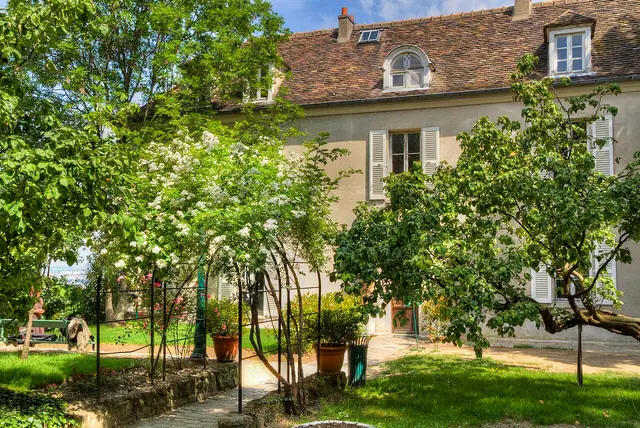
The museum has gardens, including the Jardin des cinq sens. Handbags are checked at the entrance (Vigipirate security plan); large luggage is not permitted.
Events & venue rental
The website has a dedicated page for businesses.
Inquiries & detailsPlan your visit
| Guided tours | yes |
|---|---|
| School programs | yes |
| Good to know | Guided tours, walks, workshops and lectures are offered (bookings at 01 83 72 24 57). The quiz and the booklets “Les Incontournables” and “Les Insolites” accompany self-guided visits. Booking is required for school groups, with a maximum of 25 children per group. |