Musée de l'Homme
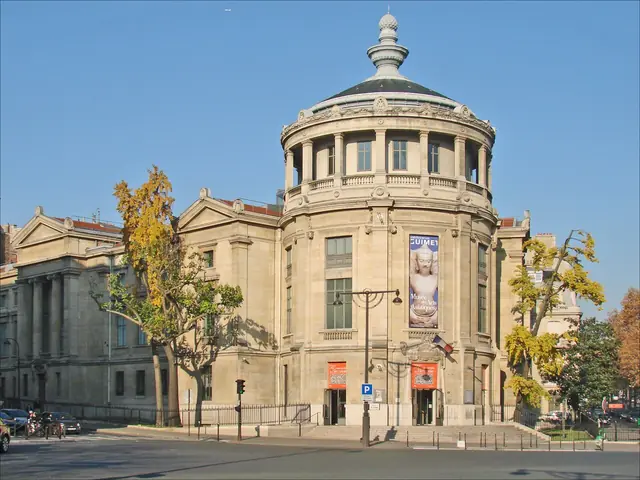
Museum of the Muséum national d’Histoire naturelle devoted to human evolution and the diversity of societies, in the Palais de Chaillot facing the Eiffel Tower.
No sound? Check your device’s silent switch.
Have only individual sections read aloud
About the museum
The Musée de l’Homme has its origins in the Musée d’Ethnographie du Trocadéro, founded in 1882 by Ernest Hamy in the palace built for the 1878 World’s Fair. Paul Rivet, an anthropologist and director of the Muséum, transformed it into the Musée de l’Homme for the 1937 World’s Fair; it has occupied the Passy wing of the Palais de Chaillot ever since. Rivet wanted to bring together a library and collections of ethnography, prehistory and anthropology in one place.
During the Second World War, the museum was the birthplace of one of the first resistance networks, led in particular by Boris Vildé, Anatole Lewitsky and Yvonne Oddon. After it closed in 2009, a large part of the ethnographic collections was transferred to the Musée du quai Branly, and the Musée de l’Homme was fully redesigned as a museum of human evolution. It reopened in October 2015.
The Galerie de l’Homme presents the history of humankind from the earliest fossils to the Neolithic, including remains of Cro-Magnon people and the skeleton of the Neanderthal from La Chapelle-aux-Saints. The collections comprise several hundred thousand prehistoric objects, as well as anthropological and ethnological pieces. The museum also hosts temporary exhibitions, a research library, a café and a restaurant with a view of the Eiffel Tower.
Highlights
- Galerie de l’Homme: human evolution from the earliest fossils to the Neolithic
- Cro-Magnon remains and the Neanderthal skeleton from La Chapelle-aux-Saints
- View of the Eiffel Tower from the balcony, plus the café and rooftop restaurant
- Free audioguide in six languages with commentary from researchers
- Free entry for under-26s
Permanent exhibition
- Galerie de l'Homme – A journey through human evolution from the earliest fossils to the Neolithic, with original remains and prehistoric objects.
- Founded
- 1937
- Operated by
- Muséum national d'Histoire naturelle
- Director
- Aurélie Clemente-Ruiz
- Visitors per year
- approx. 204,566 (2019)
Admission & discounts
| Adults | €15 |
|---|---|
| Reduced | €12Holders of the Pass Éducation, non-school groups of 20 or more, holders of a full-price ticket for another Muséum site in Paris issued within the last 3 months, annual subscribers to certain Muséum sites outside Paris |
| Children & teens | freefree up to age 25 · Free entry for under-26s (under 25 years of age completed, EU residents or not), with proof. |
| Visitors with disabilities | –companion free · Free entry for the person with a disability and their companion, with a MDPH certificate. |
The single ticket gives access to the permanent collection and temporary exhibitions. Also free with proof for job seekers, recipients of minimum social benefits, holders of the Muséum annual pass, the ICOM/ICOMOS card or a press card, teachers and military personnel holding the Sentinelle card. No free entry for holders of the Carte Culture. Prices may vary depending on the programme.
Accessibility
- Wheelchair accessible
- Elevator: no information
- Accessible restroom: no information
- Accessible parking
- Service dogs welcome
- Tactile models & exhibits
- Sign language tours
- Easy-to-read materials: no information
- Audio description: no information
The whole museum is accessible to people with reduced mobility from the outdoor ramp. Wheelchairs, folding seats and optical aids are lent free of charge against an ID at the group reception (first floor). Induction loops in the reception areas, the Galerie de l’Homme, the auditorium and the workshops. Videos are subtitled in French and many are available in French Sign Language. A tactile model of the building is located on the first floor. The Kléber-Longchamp car park has 3 reserved spaces; other GIG-GIC spaces are around the museum. Guide dogs and assistance dogs are admitted and must be kept on a lead.
Kids & families
Great for kids & familiesRecommended for ages 6+
| Kids’ admission | free up to age 25 |
|---|
- Family tours & workshops
- Activity booklet, scavenger hunt or kids’ audio guide
- Stroller-friendly
- Baby changing facilities
Recommended from age 6. Workshops and activities (for example “Peindre à la Préhistoire” and “Ma science animée” every Sunday), the illustrated booklet “Ariol au Musée de l’Homme” and activity booklets. Strollers are not stored at the cloakroom but may be used in the museum; changing tables are in the first-floor restrooms of the Galerie de l’Homme.
Getting there & parking
By public transit
Trocadéro
Metro: lines 6 and 9, Trocadéro station (exit no. 6, avenue Paul Doumer – Musée de l’Homme); buses 22 and 32 (Sheffers or Trocadéro stop), 30 and 63 (Trocadéro), 72 (Pont d’Iéna); river shuttles, Tour Eiffel stop.
By car
Parking available
The museum has no car park of its own; Kléber-Longchamp car park (265 spaces) at 67 avenue Kléber, 75016 Paris.
- Accessible parking
Taxi rank on avenue d’Eylau, 150 metres from the museum. Vélib’ stations nearby.
Get directionsAmenities & dining
- Café
- Restaurant
- Museum shop
- Coat check
- Lockers
- Wi-Fi
Café Lucy x Mozza & Co on the second floor (for ticket holders only) and Café de l’Homme, a rooftop restaurant open to all. Bookshop in the entrance hall. Cloakroom and lockers as space allows; luggage over 55 x 35 x 25 cm and scooters are refused. The museum’s free Wi-Fi can be used for the audioguide.
Events & venue rental
- Spaces for rent
- Private parties
Spaces available for private hire, some with a view of the Eiffel Tower and the Trocadéro gardens. Terms and prices are on the Muséum website.
Inquiries & detailsPlan your visit
| Guided tours | yes |
|---|---|
| Audio guide | yes (FR, EN, ES, IT, DE, ZH) |
| School programs | yes |
| Good to know | The audioguide is free, accessible from a smartphone without a download (QR code at the entrance), and offers around two hours of commentary by Muséum scientists. Booking is required for groups of 10 or more. Animals other than assistance dogs are not allowed. |