For the 50th anniversary of the Groupe militaire de haute montagne, more than 120 expedition objects, archive photographs and unpublished documents illustrate work at very high altitude and in extreme cold, from the Himalayas to Greenland.
About the museum
The museum was created on February 1, 1988, by decision of the Army Chief of Staff. It continues a tradition museum of the Alpine troops, launched by former chasseurs alpins for the centenary of the mountain troops. Its management was soon entrusted to the Association des Amis du Musée des Troupes de montagne, under military supervision.
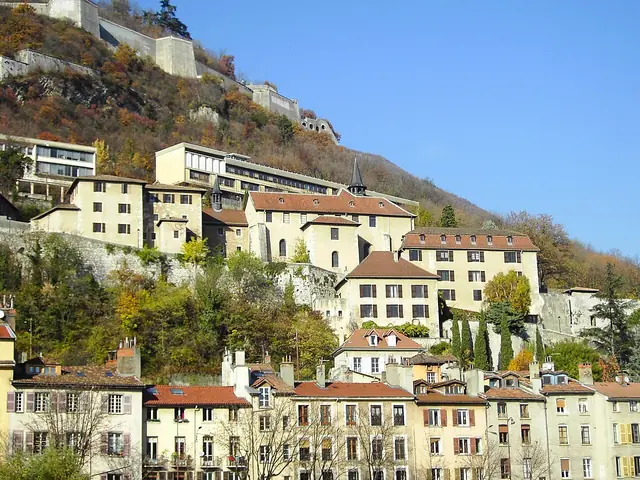
The first collections came from objects gathered in the honour rooms of the mountain units. Acquisitions and donations have enriched them for more than thirty years. The museum was first housed in the Hôtel du gouverneur in Grenoble, then joined the Bastille fort, which overlooks the city, in 2009.
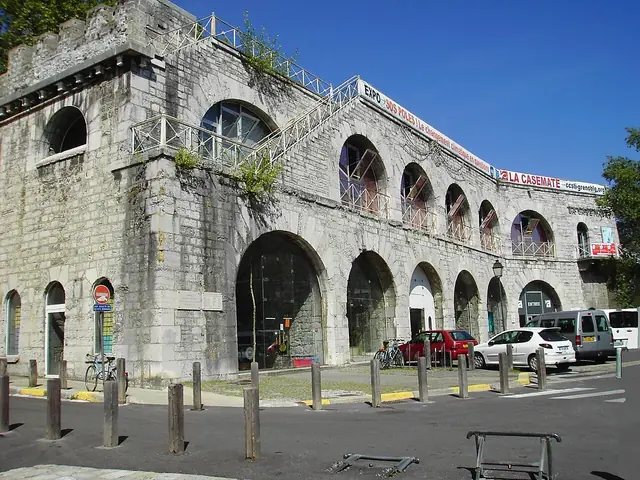
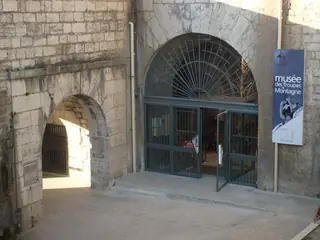
The route today occupies vaulted casemates in the fort. It traces the history of the mountain troops since their creation, from the trenches of the First World War to the Resistance, the Algerian War, Lebanon and Afghanistan. The collections include uniforms, weapons, sports and communications equipment, insignia, books and images. A heritage library completes the holdings.
Highlights
Route through the casemates of the Bastille fort
History of the mountain troops since 1888
Uniforms, weapons, sports and communications equipment
Reconstruction of First World War trenches
Audio guide in four languages
Free admission
Permanent exhibition
Parcours permanent sur l'histoire des troupes de montagne – An immersive route through the history of the mountain troops, from their origins to the present, with reconstructions such as a trench from 1914–1918.
Founded
1988
Operated by
Armée de terre (ministère des Armées), avec l'association MTM-Bastille
Admission & discounts
Admission is free.
Groups
€2 per personPrice per person, audio guide included; guided tours by appointment.
Audio guide (French, English, German, Italian)
€2Free for pupils and students, active-duty and reserve military personnel, veterans and visitors with reduced mobility, with proof.
Free museum admission. Payment by bank card or cheque. The cable car is paid and is not included in museum admission.
Accessibility
Wheelchair accessible
Elevator: no information
Accessible restroom: no information
Accessible parking: no information
Service dogs welcome: no information
Tactile models & exhibits: no information
Sign language tours: no information
Easy-to-read materials: no information
Audio description: no information
Access and facilities are described as suitable for visitors with reduced mobility, with adapted platforms. The audio guide is free for visitors with reduced mobility.
Kids & families
The museum hasn’t published any information on this.
Getting there & parking
By public transit
Victor Hugo (tram A, B, D)
Grenoble-Bastille cable car from Quai Stéphane Jay. Victor Hugo stop: tram lines A, B and D; buses C1, C3, C4, C8, C11, C12, T84 and T86.
By car
Parking available
Car park on the Bastille glacis via Chemin de la Bastille, with a limited number of spaces. In town, the paid Notre-Dame Musée car park is a 9-minute walk from the cable car departure point; the Montorge Téléphérique car park is temporarily closed.
The museum is in the Bastille fort. It can be reached by cable car (departure at 3 Quai Stéphane Jay, about a 13-minute walk from the station) or on foot via the Bastille paths.