Musée national de la Renaissance
National museum housed in the Château d'Écouen, built for Anne de Montmorency, with rich collections of Renaissance decorative arts.
No sound? Check your device’s silent switch.
Have only individual sections read aloud
About the museum
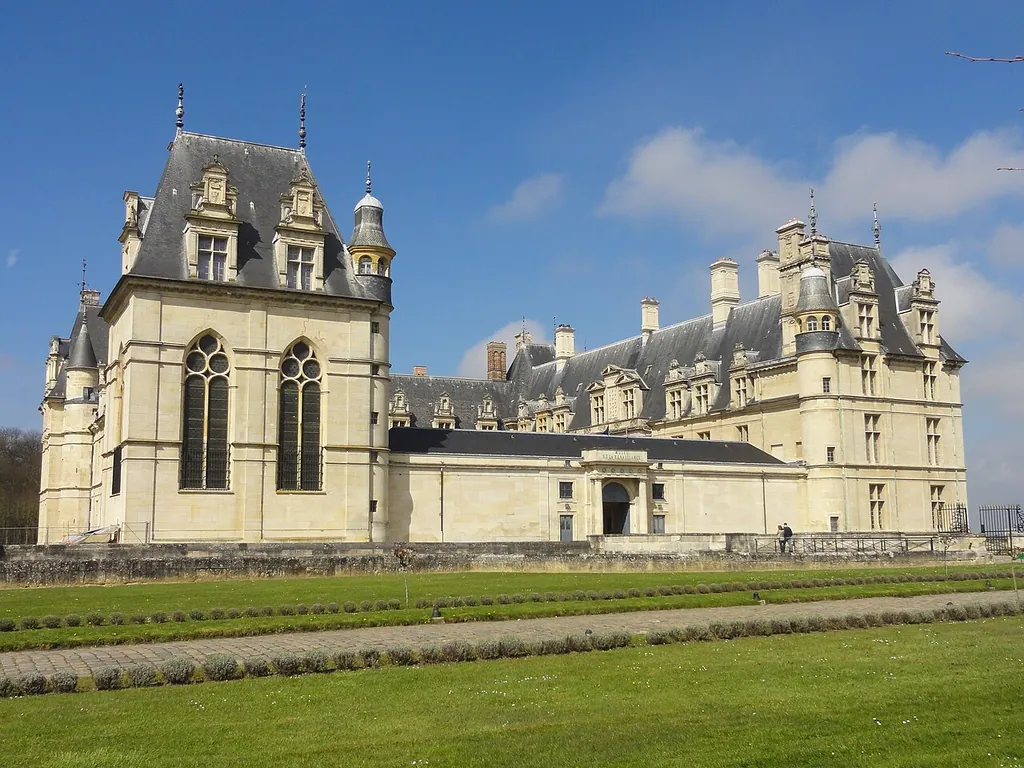
The Château d'Écouen was built between 1538 and 1555 for Anne de Montmorency, Constable of France, after a medieval castle was demolished. Many artists and craftsmen, including Jean Bullant, Bernard Palissy and Jean Goujon, worked on its construction and decoration. The estate remained in the Montmorency family until 1632 and then passed to the Condé family.
During the Revolution, the château served in turn as a meeting place, a military prison and a hospital. In 1805 Napoleon founded a school there for the daughters of members of the Légion d'honneur, which operated, with interruptions, until 1962. The entrance wing had been destroyed in 1787 by the Condés and was rebuilt in 1807.
The Ministry of Cultural Affairs later chose the château to house the Musée national de la Renaissance, which opened in 1977 after major restoration work. Most of the collections come from the Musée de Cluny, where Edmond du Sommerard had gathered them. Original elements of the château, such as stained-glass windows, floors and fittings, are integrated into the display.
The displays include tapestries, ceramics, enamels, goldsmiths' work, weapons, furniture and scientific objects from the 16th century. The large tapestry of David and Bathsheba, 75 meters long, is installed in the Galerie de Psyché.
Highlights
- Tapestry of David and Bathsheba (75 m long)
- Galerie de Psyché
- Iznik ceramics and Italian maiolica
- Enamels by Léonard Limosin and goldsmiths' work
- Stained-glass windows, floors and original château decoration
- Estate park, free admission
- Founded
- 1977
- Operated by
- Ministère de la Culture (musée national)
- Director
- Thierry Crépin-Leblond
Admission & discounts
| Adults | €8 |
|---|---|
| Reduced | €6Large families, people who also pay for a lecture tour or workshop on the same day, holders of Chèques Vacances, members of several learned societies and museum friends |
| Children & teens | freefree up to age 25 · Free for visitors under 26; proof may be requested. |
| Visitors with disabilities | freecompanion free · Free admission for the visitor with a disability and one companion, upon presentation of proof from the MDPH. |
| Students & apprentices | –Free admission for students of certain fields (art history, heritage, archaeology, architecture, arts, etc.) at public institutions, with proof. |
| Groups (10+ people) | –Reservation required for groups of 10 or more. Groups under 18 and school groups are free. |
Free admission: First Sunday of each month
Admission gives access to the permanent collections and may be increased during temporary exhibitions. Because of the façade works, the reduced rate of €6 applies to all visitors. Free admission with proof is also granted to job seekers, recipients of social minimum benefits, teachers, journalists, and members of ICOM and ICOMOS, among others. The park is free to enter.
Accessibility
- Partially wheelchair accessible
- Elevator
- Accessible restroom: no information
- Accessible parking
- Service dogs welcome: no information
- Tactile models & exhibits: no information
- Sign language tours
- Easy-to-read materials: no information
- Audio description: no information
Ramps and a lift serving all three levels provide access to about 90% of the rooms. A wheelchair and seat canes can be lent. Three parking spaces are reserved in front of the château entrance (permit required), but vehicle access to the grounds is restricted on weekdays during the works on the honor gate (grille d'honneur). Because of the works, the museum is currently not accessible to blind or visually impaired visitors. Specialized guided tours exist for mental and emotional disabilities (groups of 12 people maximum), and tours in French Sign Language are offered.
Kids & families
Great for kids & families
| Time needed | approx. 60 min |
|---|---|
| Kids’ admission | free up to age 25 |
- Family tours & workshops
- Activity booklet, scavenger hunt or kids’ audio guide
Two activity booklets to download (ages 4–7 and 7–12) allow a self-guided visit. Workshop tours for parents, children and grandparents are led by a guide; reservation is required.
Getting there & parking
By public transit
Mairie/Château (bus 269)
Transilien line H from Paris Gare du Nord (about 25 minutes) to Écouen-Ézanville station, then bus 269 towards Garges-Sarcelles to the Mairie/Château stop (about 5 minutes).
By car
Parking available
Visitor parking is available, with a space for coaches. During the works on the honor gate, cars cannot enter the grounds on weekdays.
- Accessible parking
By car: A1 motorway from the Porte de la Chapelle, Francilienne exit (N104) towards Cergy-Pontoise, then Écouen exit (RD316). From Écouen-Ézanville station, the museum can also be reached on foot in 20 minutes through the forest. The bus stop may be moved because of works at the station.
Get directionsAmenities & dining
Online museum shop. The website refers visitors to the tourist office for places to eat in Écouen and the surrounding area.
Events & venue rental
- Spaces for rent
- Corporate events
Seminars, receptions and private visits for companies, for 19 to 200 people in the museum rooms and more than 800 guests in the courtyard or park. Available spaces: bath apartment, Iznik ceramics room, the Great Queen's Room, Galerie de Psyché, inner courtyard, north terrace and west parterre.
Inquiries & detailsPlan your visit
| Guided tours | yes · approx. 1.5 hrs |
|---|---|
| School programs | yes |
| Good to know | Self-guided visits are free. A leaflet handed out at the reception suggests a minimal circuit of about one hour, and room sheets are available. Lecture tours “Du château au musée” take place on Saturdays and Sundays at 11:00 and 14:15, with no reservation for individual visitors; the lecture fee is paid at the reception desk. The stated duration of 1 hour 30 minutes applies to lecture tours for school classes. Workshops and sensory visits are also offered. |